

UNICEF Warns of Rising Adolescent Risks in Maldives Amid Education and Employment Gaps
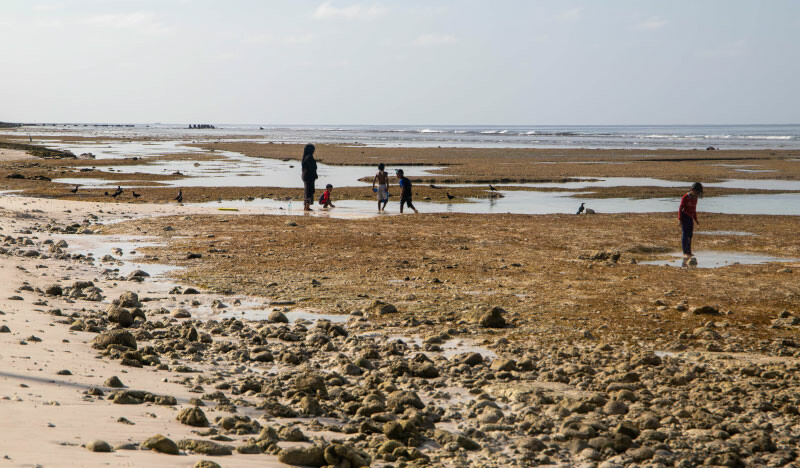
Children playing in shallow pools left by the receding tide on a rocky beach of a Maldivian island. | Photo credit: UNICEF Maldives
The Maldives marked National Children’s Day on Friday by highlighting major advancements in child health, education, and legal protections, while UNICEF warned of rising challenges including limited access to higher education, growing adolescent vulnerability, and gaps in child protection services.
UNICEF Maldives noted the nation’s position as a regional leader in advancing the rights and well-being of children, highlighting strong gains in areas such as education and healthcare. These include near-universal access to primary and secondary education, a 99% immunisation coverage rate, and the enactment of critical legislative frameworks such as the Child Rights Protection Act (18/2019), Juvenile Justice Act (19/2019), and Education Act (24/2020).
advertisement

advertisement
advertisement

Despite this progress, UNICEF emphasised the emergence of “second-generation” challenges linked to the country’s rapid socioeconomic development. These extend beyond basic service provision, pointing to systemic gaps in inclusion, service quality and support for vulnerable groups.
Among the issues raised was the limited transition to higher secondary education, with only 44.5% of children making the shift after completing lower secondary. Additionally, one in five young people in the Maldives is currently not engaged in education, employment, or training (NEET). UNICEF warned that this is contributing to increased adolescent vulnerability, with concerning outcomes such as violence, deviant behaviours, mental health struggles, and a rising number of children coming into conflict with the law.
Further challenges include limited implementation of existing child protection laws, persistent barriers to quality social services, and insufficient inclusion of children and youth with disabilities. These are being compounded by evolving family dynamics, the growing impacts of climate change, and economic uncertainties, all of which pose risks to hard-won gains in child health, education and safety.
In light of these developments, UNICEF called on all stakeholders to reaffirm their commitment to children’s rights, as outlined in both the UN Convention on the Rights of the Child and national legislation. The agency urged continued investment in basic services, improved inclusion and quality of care, especially for children with disabilities, and targeted interventions for adolescents at risk.
Additionally, UNICEF stressed the importance of incorporating child- and youth-sensitive approaches in climate policies and infrastructure development to ensure resilience in the face of future challenges.
“For every child in the Maldives to reach their full potential, we must go beyond celebrating past progress and we must start working together to do more, and do better for the future of our children and young people,” said Dr Edward Addai, UNICEF Representative to the Maldives. He reiterated UNICEF’s commitment to supporting the Government in ensuring that no child is left behind.
UNICEF also used the occasion to draw attention to the global plight of children affected by conflict, particularly those in Gaza, who are facing what the organisation described as the “worst humanitarian crisis” amid aid blockades, bombardments, and mass displacement. The agency renewed its call for a ceasefire and expressed solidarity with humanitarian workers striving to uphold the rights of children worldwide.