

Yameen Warns of Weak T-bill Demand, Rising Short-term Debt
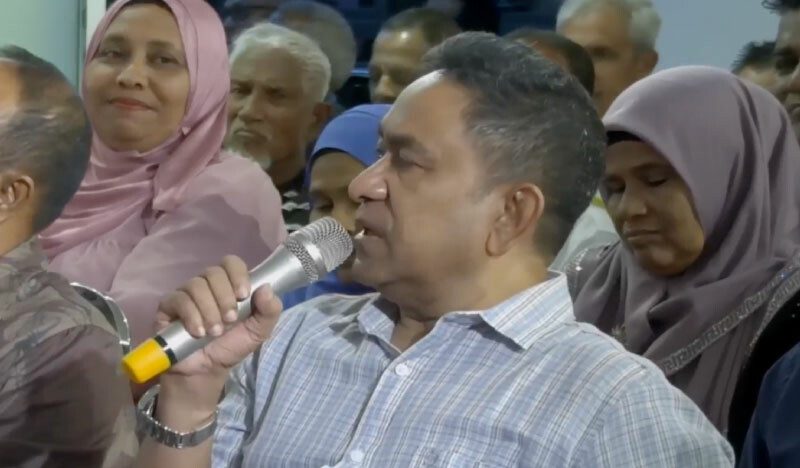
Former president Abdulla Yameen
Former president Abdulla Yameen has claimed that banks and other major investors are no longer interested in buying Maldivian Treasury bills (T-bills), warning that the government is increasingly relying on short-term borrowing to cover day-to-day spending.
Speaking at the Progressive National Front (PNF)’s weekly townhall meeting, Yameen said the administration sold “a large number” of repayable T-bills last year to meet expenses, but suggested demand had since weakened. T-bills are commonly purchased by institutional investors such as pension funds, banks, state-owned enterprises and some private companies as a low-risk investment.
Yameen also alleged that the government was attempting to “launder money” through the Maldives Pension Office, linking the claim to a series of resignations by senior figures involved in a controversial investment decision. He provided no evidence to substantiate the allegation.
The row centres on a decision by the Pension Office last year to invest funds into a government bond after the Maldives Monetary Authority (MMA), the central bank, invested MVR 2.5 billion in the pension fund, according to remarks cited by Yameen and separate public statements.
The Pension Office’s board chair, Dr Ahmed Inaaz, resigned, while Saruvash Adam—who represented private businesses on the board—and Hawwa Fajuwa, the office’s chief financial officer, also stepped down following the bond decision, Yameen said.
In a series of posts on X, Inaaz said that despite “extensive deliberations”, the board failed to reach what he described as a sustainable solution regarding the bond. He raised concerns in particular about the decision to secure funds through the MMA.
Yameen argued that government finances were under increasing strain, saying the administration was seeking to issue sukuk because it “does not have money”. He claimed the government aimed to raise funds through a sukuk issuance to meet an existing sukuk repayment due in April.
Maldives is due to pay an estimated total of USD 1.1 billion in debt this year, including a one-off payment of USD 500 million in April, according to figures cited during the meeting.
President Dr Mohamed Muizzu has previously rejected claims that his administration is pursuing inflationary policies. He has said government payments do not involve printing new currency and has reiterated a commitment to fiscal discipline.
Nevertheless, the resignations of the Pension Office chair, its CFO and a key board member have intensified public debate over the governance of retirement funds. Critics have argued that using the pension system to support central bank-backed government debt could heighten inflation risks and weaken the institution’s independence, while government officials have maintained that their approach is responsible and within fiscal limits.