
How Rashu Plastic Project is Turning Waste into Wearable Art
On the small island of Vaavu Atoll, Felidhoo, a quiet environmental movement is taking shape, one that makes a difference in plastic pollution.
The Rashu Plastic Project, an inspiring local initiative in the Maldives, transforms discarded plastic into handcrafted jewellery and art. What started as a simple beach walk has evolved into a significant sustainability movement, creating pieces that embody both beauty and purpose.
The project began in July this year, because a hermit crab was using a plastic bottle cap as a home. “That moment really hit us,” the founders say. “We realised how deeply plastic pollution had embedded itself in our island life. We wanted to do something.” The crab has since become the project’s logo and symbol, a small creature carrying a big message.
Rashu Plastic Project keeps the process entirely local. Based in Felidhoo, the team wanted to find a way to recycle on-island, keeping both jobs and economic value within their own community. “Starting small, we thought jewellery and souvenirs would be the best way to show what’s possible,” they explain.
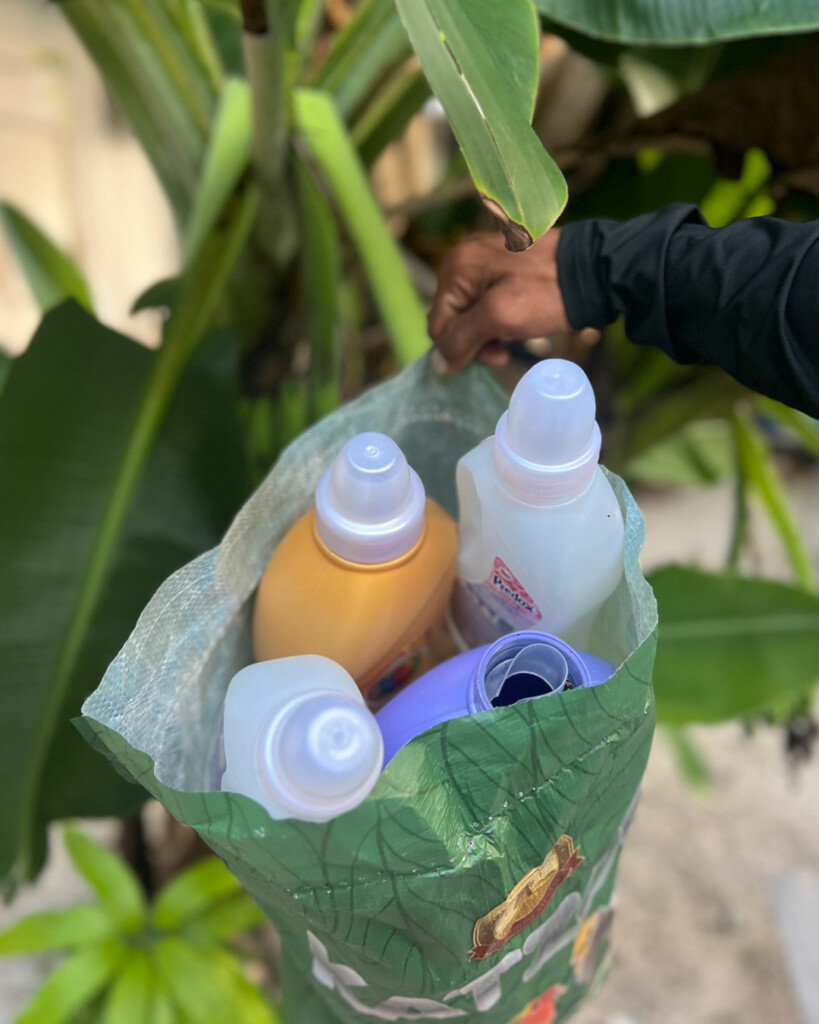
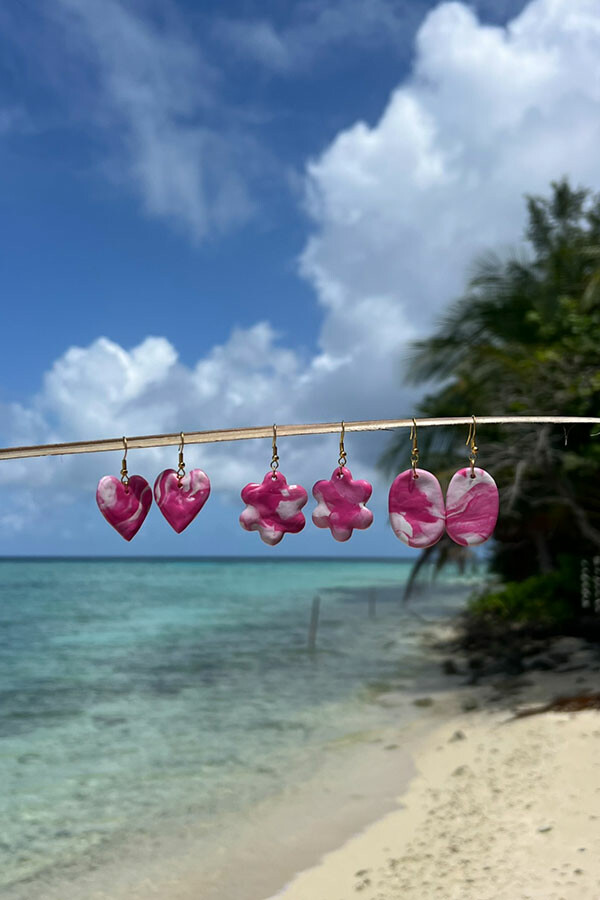
The process itself is as artistic as it is practical. Plastic is collected from beach cleanups, households, and local waste areas. Each piece is washed, sorted by colour, cut down by hand, yes, with scissors and melted into vivid swirls of blue, yellow, and coral pink. Using moulds and cutters, the molten plastic is shaped into earrings, pendants, and other accessories that look nothing like before. “The melting stage is the most rewarding,” they share. “Every pattern is unique, and you never know how it will turn out. No two pieces are ever the same.”
But Rashu Plastic Project isn’t just about jewellery. It’s about reimagining what’s possible for small island communities. The team envisions making Felidhoo the first island in the Maldives to recycle 100% of its plastic waste. An ambitious goal that requires community partnerships, funding, and perseverance. For now, their biggest hurdle is a lack of resources. “We still shred plastic by hand, but we’re expecting a new hand-crank shredder soon,” they say. “It’ll make a big difference.”
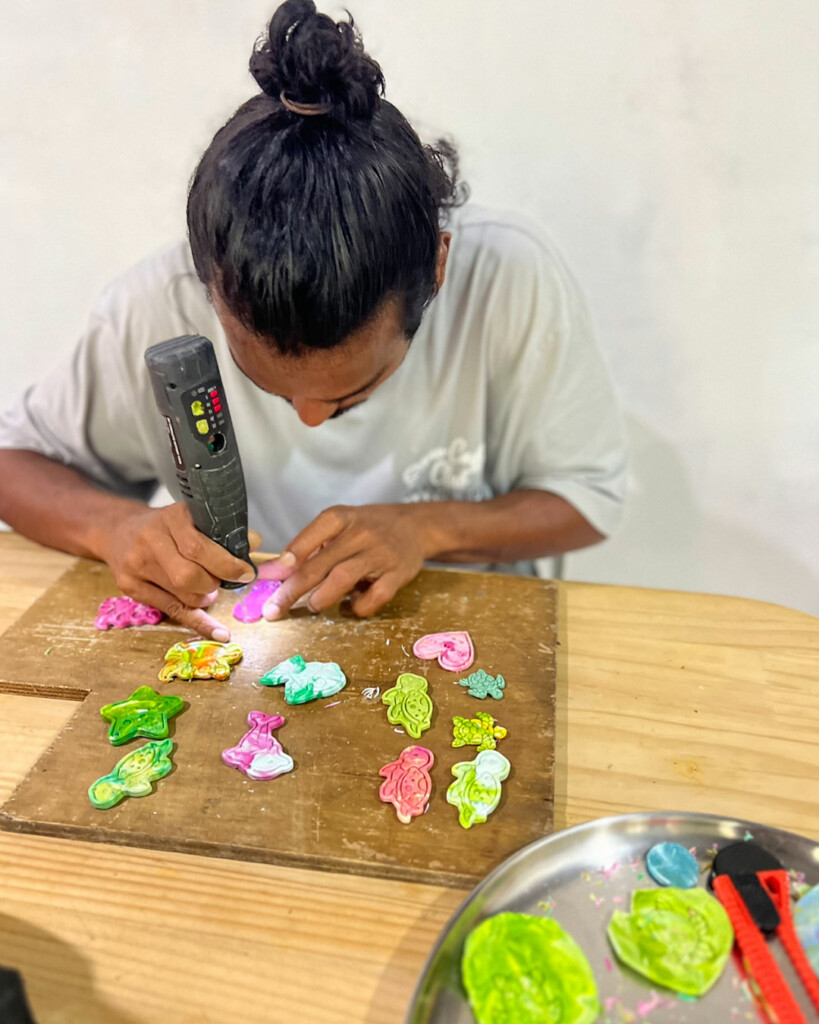
The enthusiasm for the Rashu Plastic Project remains strong, even when faced with difficulties. The founders aim to expand their small workspace into a community hub, where locals, schoolchildren, and tourists can learn about recycling, take part in workshops, and create their own recycled souvenirs. “We want this to be something everyone feels part of,” they say. “It’s about inspiring pride and showing that sustainability can start right here.”
Their pieces are more than just fashion; they’re activism made tangible. Each bracelet or pendant carries a story of transformation, a reminder of what collective action can achieve. Tourists love them not only for their colours but for their conscience. “We want people to feel proud wearing something that helps protect the planet,” the team says. “It’s about giving back to the Maldives, not taking from it.”
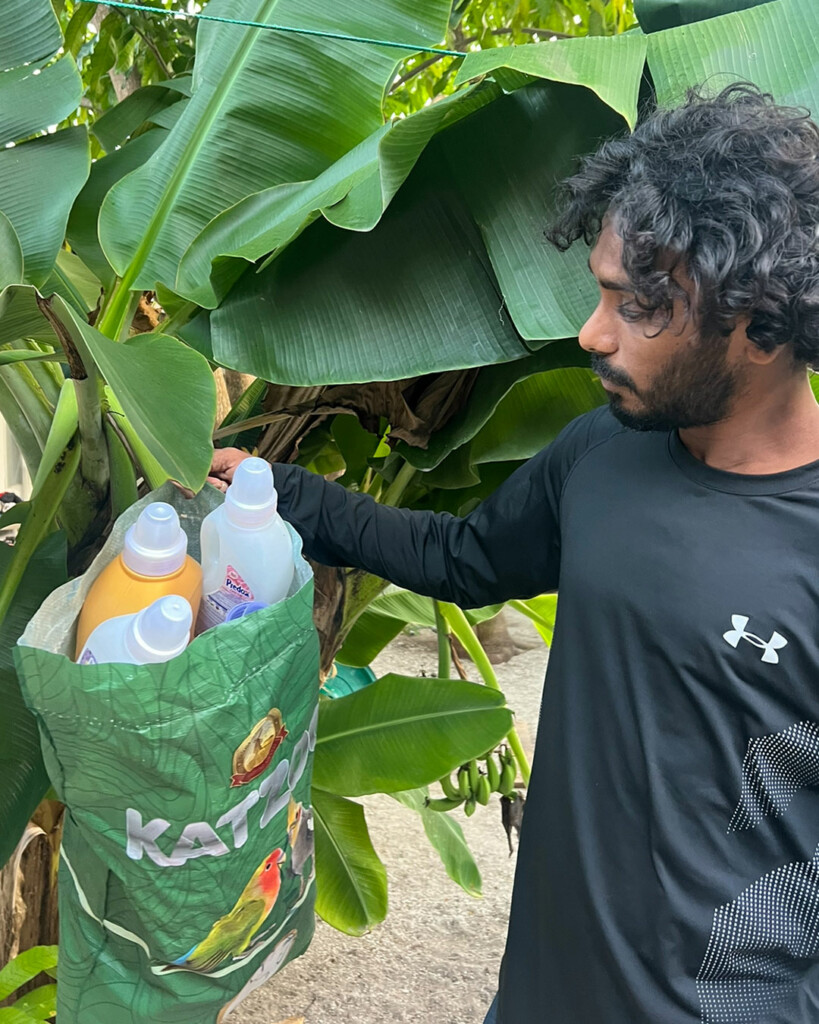
The response so far has been overwhelmingly positive. Locals have embraced the idea, and tourists are drawn to the authenticity of the project. “Most of our sales come from visitors during resort island tours,” they say. “The next step is to have our pieces stocked at resorts across the atoll; we’re hopeful.”
Looking ahead, the team dreams big: new designs, collaborations, and eventually larger-scale creations such as recycled furniture for local businesses. “As long as plastic exists, we’ll keep finding ways to turn it into something valuable,” they affirm.
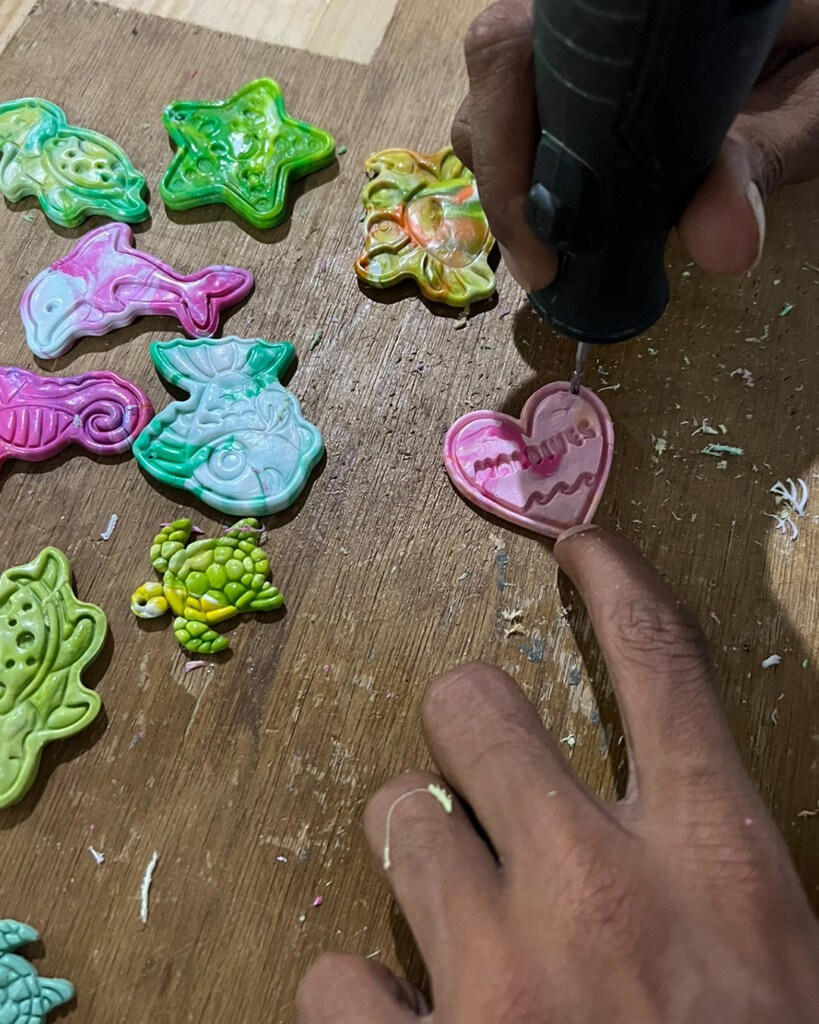
In a country known for its beauty, Rashu Plastic Project is adding a new kind of charm, one born from creativity, care, and community. From a hermit crab’s shell made of plastic to a movement that could reshape how islands view waste, Felidhoo’s story is a reminder that even the smallest islands can spark the biggest change.