
Six Years Later, Revisiting Huda’s The Bird and the Flying Fish
Six years after its first, fleeting appearance at the Maldives National Art Gallery, The Bird and the Flying Fish returns with renewed clarity and space to breathe. Currently on display and running until 28 February 2026, this presentation revisits a pivotal body of work by Aishath Huda, allowing audiences to encounter the paintings with the time and attentiveness they demand.
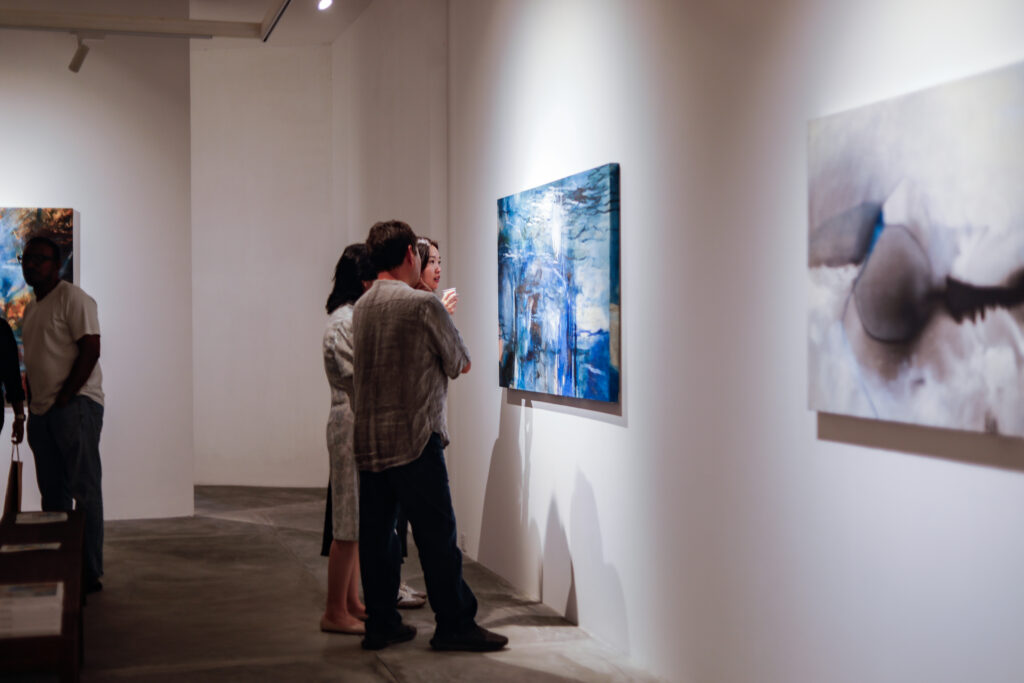
Originally realised over a two-year period and exhibited for only five days, The Bird and the Flying Fish now unfolds at a different pace. The extended duration invites reflection rather than immediacy, offering viewers the opportunity to drift in and out of the works, to re-enter them across multiple visits, and to notice how perception subtly shifts over time. This return feels less like a reprise and more like a continuation, a considered gesture that honours the quiet complexity of the series.
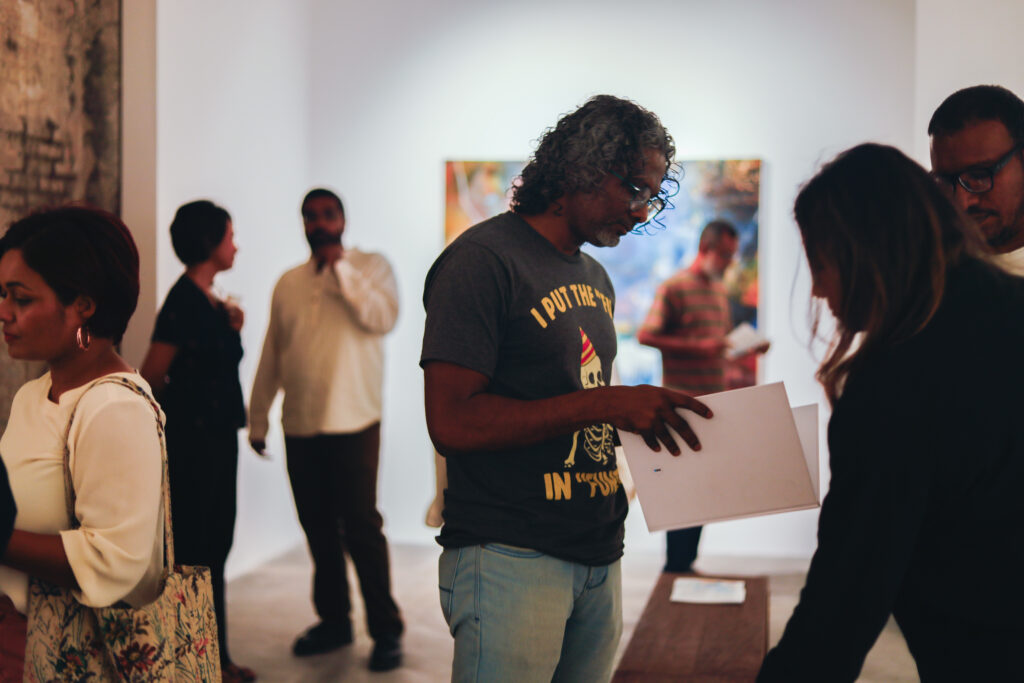
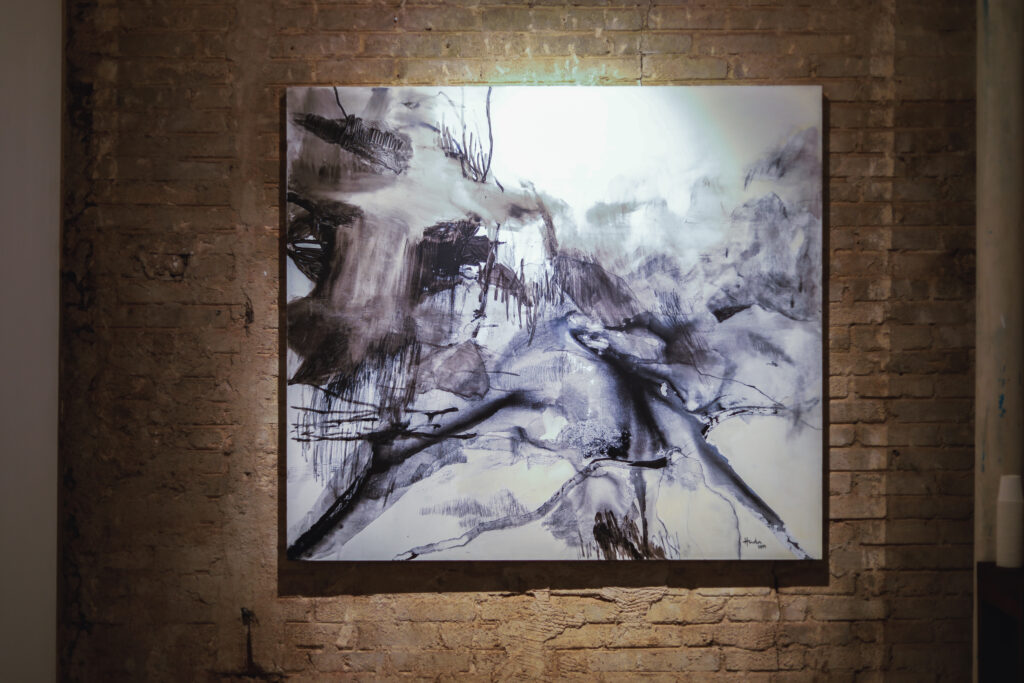
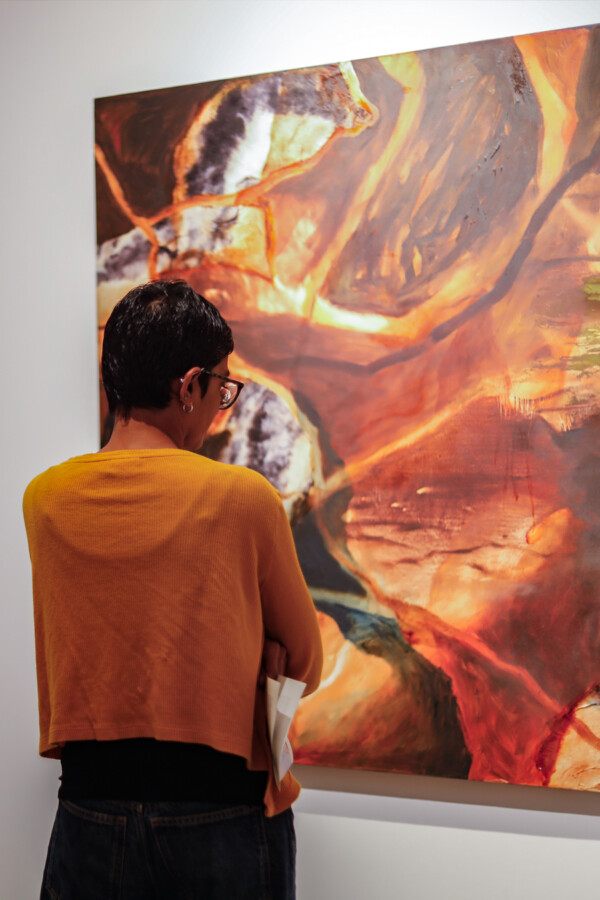
Huda’s practice operates at the intersection of observation and imagination. In The Bird and the Flying Fish, she explores the boundaries of perception and the emotional resonance of colour, constructing painterly worlds that appear suspended between states. Timelines collapse and reconcile, while surfaces vibrate with a sense of latent energy. The paintings resist fixed interpretation, instead holding space for ambiguity, transition and movement.
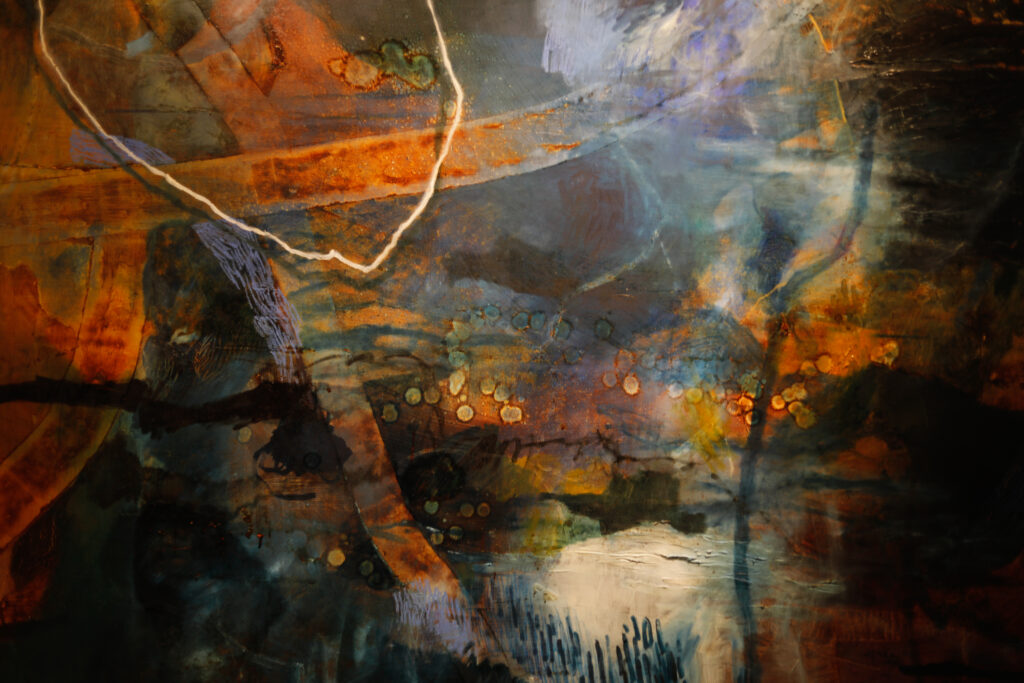
Across the exhibition, forms interrelate and overlap, while colours fuse or push against one another. There is a constant negotiation between harmony and resistance. Nine paintings make up the presentation, each composed through a rich layering of materials, including oils, raw pigments, pastels, charcoal, graphite, thread and Chinese ink. These varied elements introduce texture and depth, embedding traces of process and time within the surface of each work.
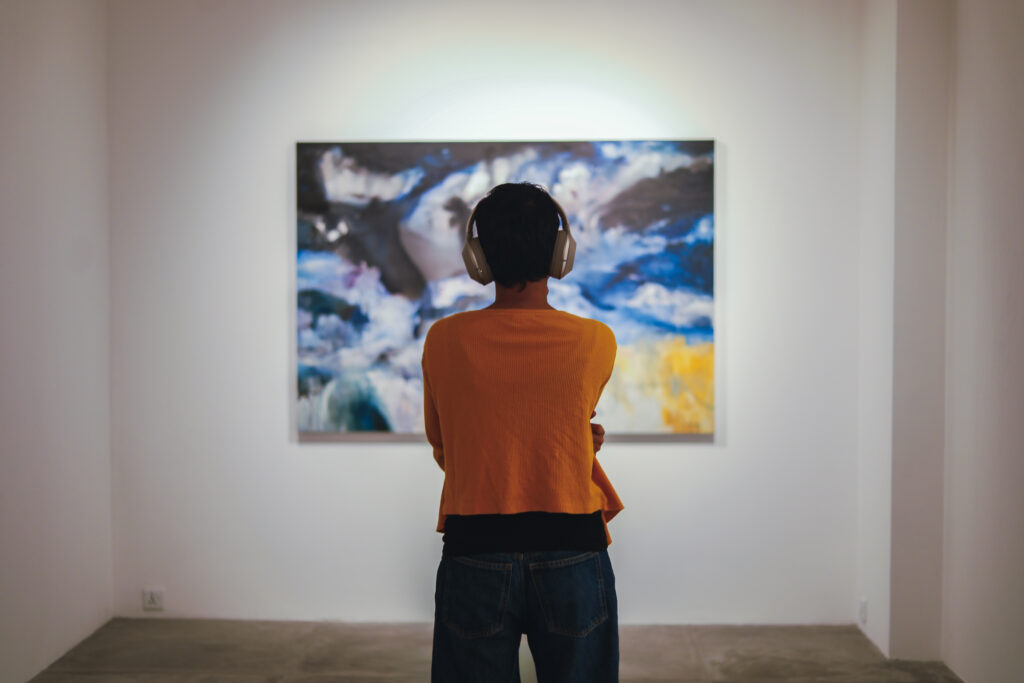
The exhibition title underscores Huda’s interest in non-human perspectives. Rather than centring a singular, human viewpoint, she imagines ways of seeing from shifting positions — those of birds, fish, plants, water and air. This multiplicity of perspectives destabilises conventional spatial logic and encourages viewers to consider alternative modes of perception. The paintings do not describe specific locations; instead, they evoke environments shaped by movement, sensation and relational experience.
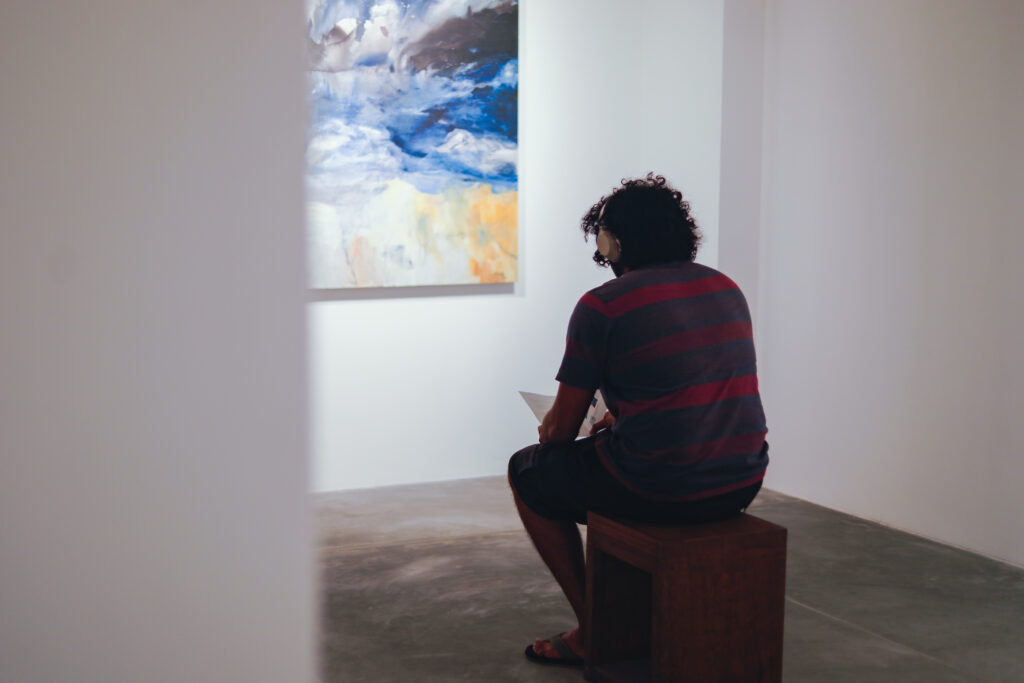
Works such as Sea Dance (2019) and Sound of Blackbirds through Thunderstorms (2019) suggest rhythm and resonance, where marks and gestures echo natural phenomena without literal depiction. In Consciously Floating (2019), scale becomes immersive, drawing the viewer into a field of colour and motion that feels both expansive and intimate. Elsewhere, pieces like Obscured Conversations (2019) introduce thread into the composition, subtly binding and interrupting the painted surface, hinting at communication that remains partial or unresolved.
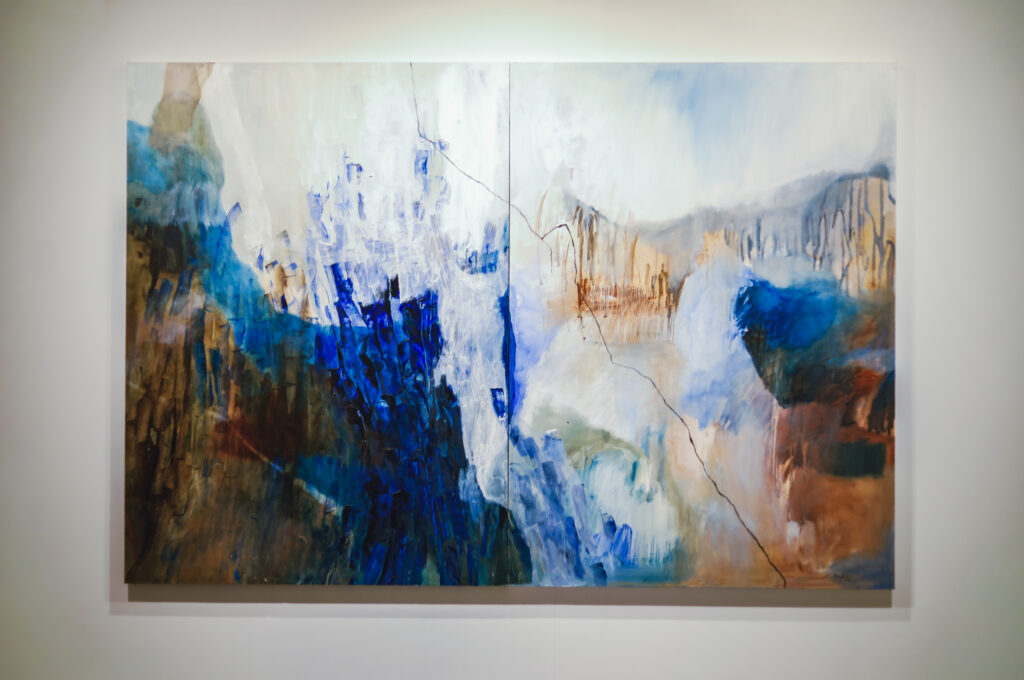
Throughout the exhibition, Huda’s approach encourages a slower form of looking. The works ask viewers to pause and to feel, without urgency or the need for definitive understanding. As the artist herself notes, the intention is to invite the viewer to look into the painting rather than at it — to wander beyond the surface, alongside the paint and brush marks, and to spend time without the pressure of conclusion.
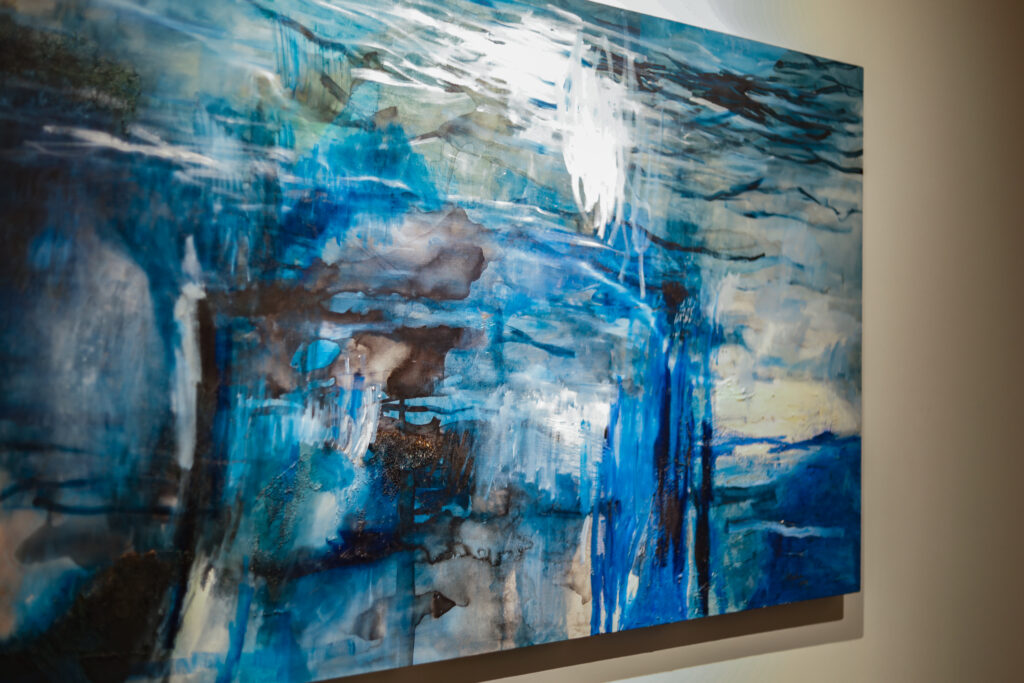
Huda’s wider practice engages deeply with materiality and environment. She often works with water as both subject and method, bearing witness to the ecological relationships between bodies and landscapes. Attuned to what materials hold their memories, constraints and embedded time. Her paintings, prints, sculptures and installations register subtle connections between place, event and experience.
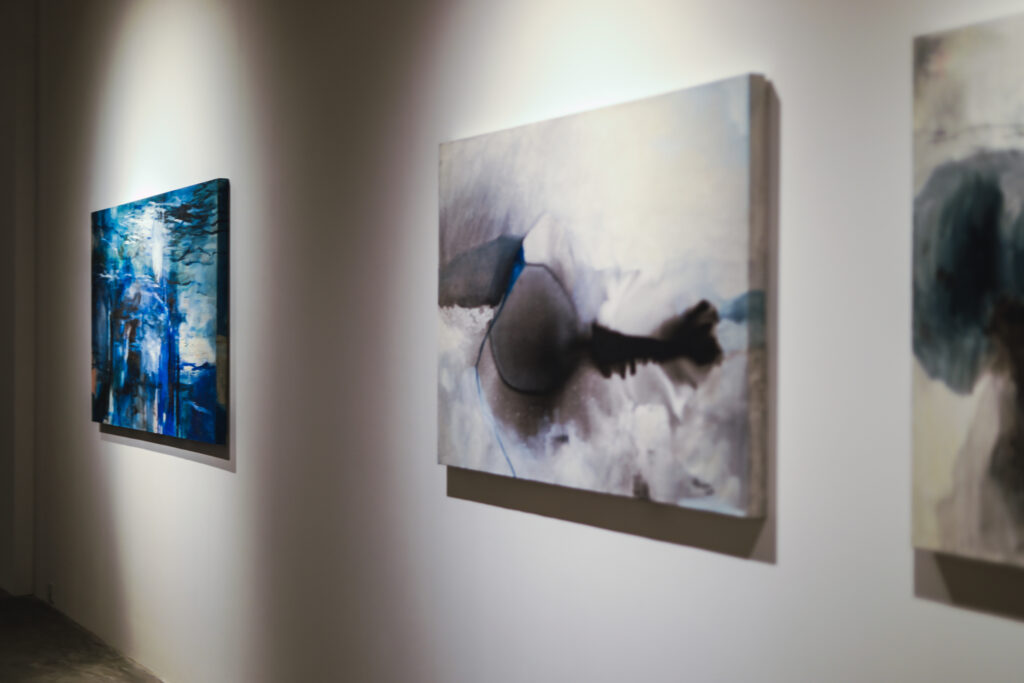
Educated at the China Academy of Art in Hangzhou and the University of Illinois Chicago, Huda has exhibited widely across Asia, Europe, Africa and the United States. She is currently based in Chicago, where she teaches painting as an adjunct assistant professor.
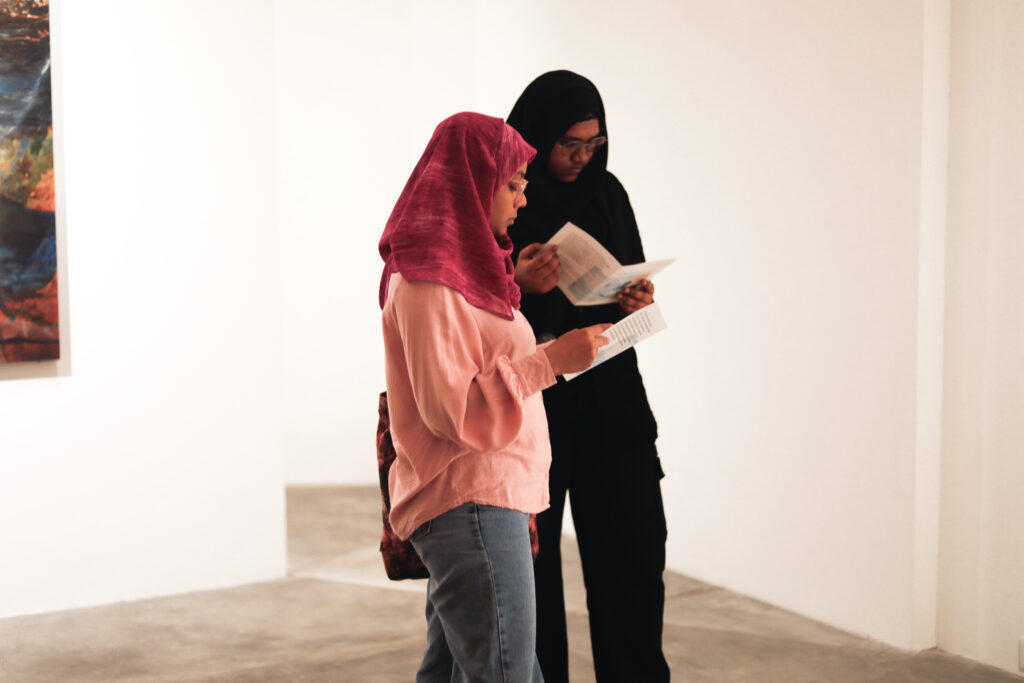
In revisiting The Bird and the Flying Fish, this exhibition offers more than a second viewing; it provides the conditions for deeper engagement. It is an invitation to slow down, to notice, and to inhabit the in-between spaces that Huda so carefully constructs worlds where perception remains fluid, and meaning emerges through sustained attention.