

MPs Call for Strict Measures Against Gambling to Safeguard Future Generations
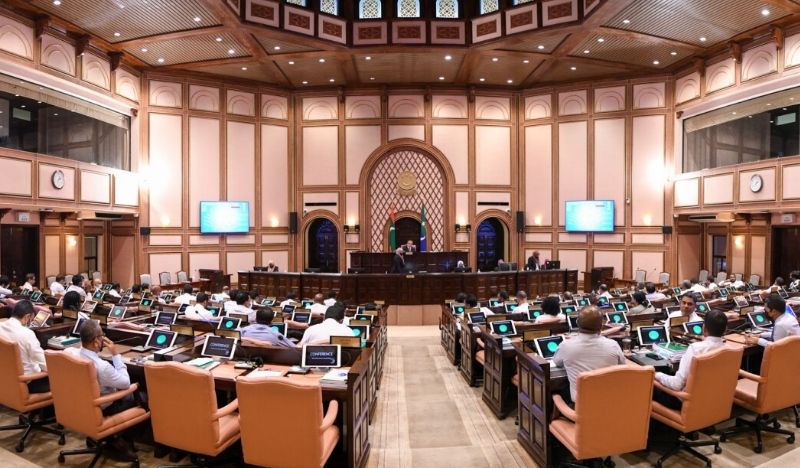
MPs urged a gambling ban, highlighting risks to national productivity and the wellbeing of youth | Photo: Poeple’s Majlis
Members of Parliament have strongly advocated for a ban on gambling, citing its detrimental impact on national productivity and the well-being of younger generations.
The discussion focused on a government-proposed amendment to the Penal Code, introduced by Hithadhoo Central MP Ahmed Azaan Marzooq, which seeks to criminalise gambling activities.
advertisement

advertisement

Lawmakers highlighted the rising prevalence of gambling, particularly among Maldivian youth, and its association with false promises of quick wealth. They noted that international studies indicate gambling significantly reduces productivity and disproportionately harms low- and middle-income earners.
Concerns were also raised about online gambling platforms and the role of local companies in facilitating international gambling operations through small, untraceable transactions, with youth often targeted through advertising, including on football jerseys.
While expressing broad support for the bill, several MPs emphasised the importance of effective implementation. They warned that passing legislation alone would be insufficient without providing enforcement institutions with adequate resources and authority. There was a clear cross-party consensus that the amendment must be passed promptly to curb gambling and protect the financial security and productivity of the nation’s next generation.
During the same extraordinary parliamentary sitting, lawmakers debated a proposed constitutional amendment to synchronise the presidential and parliamentary elections. Parliament majority leader and Inguraidhoo MP Ibrahim Falah argued that merging the two national polls could save the state over USD 5 million.
Falah acknowledged that the change would require shortening the current 20th parliamentary term by six months but stressed that the financial and logistical benefits outweighed individual inconvenience. He cited the cost of a standalone parliamentary election, estimated between USD 3.9 million and USD 5.2 million, and noted that a combined election would result in direct savings of this amount.
The proposal also includes holding a public referendum to approve the constitutional amendment, scheduled to coincide with the upcoming local council elections in April. With broad political support and the democratic mechanism of a public vote, Falah maintained that the measure is a practical and necessary step for the nation’s economic and administrative efficiency.