
MJA Launches Petition to Repeal Media Regulation Act
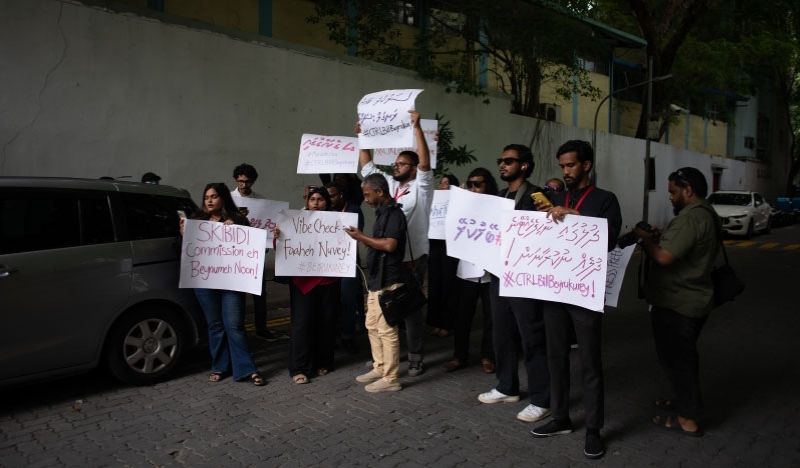
Maldivian journalists protesting against the Maldives Media and Broadcasting Regulation Bill in 2025 | Photo: MV+
The Maldives Journalists Association (MJA) has submitted an e-petition to Parliament calling for the repeal of the Maldives Media and Broadcasting Regulation Act.
Submitted on 3 May to mark World Press Freedom Day, the petition calls for the existing law to be repealed and replaced with new legislation that incorporates legal frameworks for media regulation while protecting media rights and freedoms. MJA said the proposed law should be drafted in consultation with media organisations and civil society groups.
advertisement

The association has urged the public to support the petition, which requires at least 2,100 signatures to trigger a mandatory parliamentary debate. As of publication, the petition had received 17 signatures. The petition closes on 16 June 2026.
We need 2,100 signatures to force a mandatory debate on the @mvpeoplesmajlis floor to repeal the Media Control Law.
Sign the E-Petition NOW: https://t.co/b7sbMjkk25 pic.twitter.com/ljtnSTect9— Maldives Journalists Association (@mjamaldives) May 3, 2026
In the petition, MJA said the Maldives Media and Broadcasting Regulation Bill was passed and ratified despite concerns raised by journalists and civil society organisations advocating for press freedom and freedom of expression.
MJA said it had previously requested four months to conduct a study on existing media laws and broadcasting regulations before the bill was passed.
The petition argues that the law undermines several constitutional rights, including:
- the right to equality,
- freedom of expression,
- freedom of the press,
- freedom to acquire and impart information,
- the right to work, and
- the right to fair administrative action.
MJA also referred to Article 16 of the Constitution, which states that fundamental rights can only be restricted through laws that are demonstrably justifiable in a free and democratic society.
The petition further cited the International Covenant on Civil and Political Rights, outlining three internationally recognised conditions for restricting rights:
- restrictions must be clearly prescribed by law,
- pursue a legitimate aim, and
- be necessary and proportionate.
According to MJA, the Media and Broadcasting Regulation Act does not meet these standards and contains broad and unclear terms such as “national security”, “public social standards”, and “news that may be a lie or distort the truth”.
The association argued that the law grants excessive powers to the commission established under the Act, including the authority to suspend content or withhold licences from media outlets while investigations are ongoing and before final decisions are reached.