

Authorities Discuss National Framework for Hazardous Chemicals and Waste Management
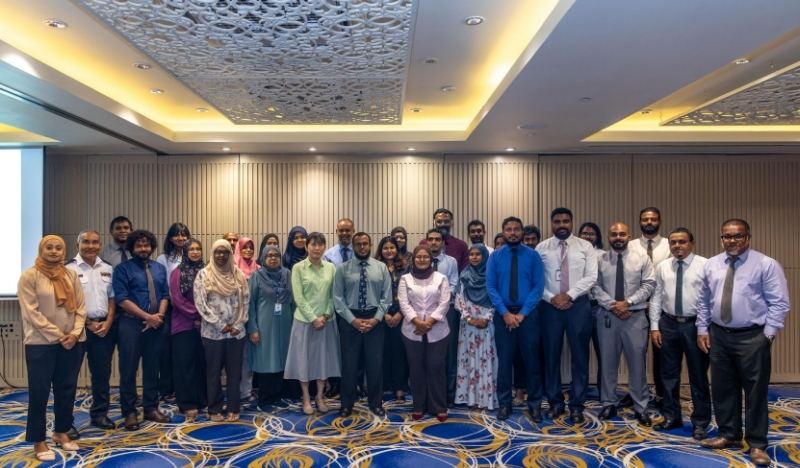
A national consultation led by the Ministry of Climate Change, Environment and Energy has brought together key government institutions and stakeholders to discuss the development of a strengthened national framework for hazardous chemicals and waste management in the Maldives.
The meeting brought together representatives from the Ministry of Health, Ministry of Fisheries, Agriculture and Marine Resources, Environmental Protection Agency, Maldives Food and Drug Authority (MFDA), Maldives Customs Service, Waste Management Corporation (WAMCO), Malé City Council, Housing Development Corporation (HDC), the Maldives National University (MNU) and Villa College.
advertisement

The consultation focused on addressing regulatory and operational gaps across the full lifecycle of hazardous chemicals, including importation, storage, transportation, use and final disposal.
Officials noted that several key sectors, including healthcare, agriculture, tourism, fisheries, construction and energy, rely heavily on imported chemicals and chemical products. However, they highlighted persistent challenges in ensuring safe management, citing limited waste disposal capacity, the geographic dispersion of islands, rising volumes of hazardous waste and the need for stronger inter-agency coordination.
Discussions centred on establishing consistent national standards and improving coordination across institutions responsible for regulating different stages of chemical handling and waste management.
Minister of Climate Change, Environment and Energy Ali Shareef said chemical management requires collective responsibility across all sectors and stages of handling, from import to disposal. He emphasised that businesses importing chemicals must comply with regulatory requirements and ensure safe handling, storage and disposal practices.
Based on the discussions, stakeholders proposed recommendations across three priority areas, which have been incorporated into a draft National Action Plan. The plan aims to strengthen inter-agency coordination, align sectoral policies and build institutional technical capacity in chemical management.
Implementation responsibilities and timelines have been assigned to relevant agencies, with the Ministry of Climate Change, Environment and Energy serving as the lead coordinating body.
The consultation was conducted under the project Eliminating Persistent Organic Pollutants Through Sound Management of Chemicals, implemented in partnership with the United Nations Development Programme (UNDP) and funded by the Global Environment Facility (GEF). Temporary chemical storage facilities have already been established in Addu City and R. Vandhoo as part of ongoing efforts to improve national waste management capacity.