

Public Backlash Grows Over MediaNet–PSM 2026 FIFA World Cup Broadcast Agreement
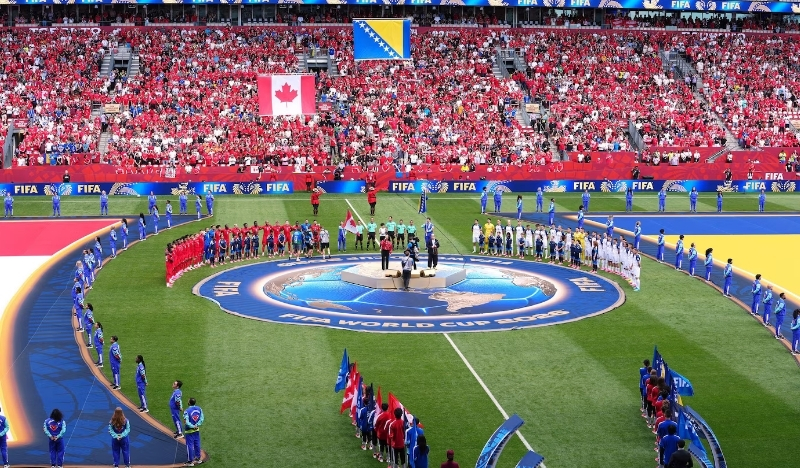
Canadian National being played before the FIFA World Cup 2026 match between Canada v Bosnia and Herzegovina June 12. | Photo: Kevin Sousa/IMAGN Images via Reuters
Public debate has intensified in the Maldives over an agreement between state broadcaster Public Service Media (PSM) and pay-TV provider MediaNet to broadcast the 2026 FIFA World Cup, with criticism centred on how viewers will access matches and the role of a dominant private platform in their distribution.
Under the arrangement announced in April 2026, officials said all World Cup matches would be available free of charge through designated PSM channels. However, the distribution of these channels through MediaNet’s cable, IPTV and application-based platforms has prompted questions over whether viewers will be able to watch the tournament without relying on the private provider’s systems.
advertisement

Social media users and commentators have raised concerns that, despite the broadcasts being described as free to viewers, access could still require activation procedures or the use of MediaNet platforms. Some critics have argued that these requirements could encourage viewers to use the company’s wider services.
Questions have also been raised about the transparency of the agreement, including whether it involves public expenditure, operational costs or other financial commitments. No official information confirming direct payments or the use of public funds has been released.
Critics have also pointed to MediaNet’s strong position in the Maldivian pay-TV market, arguing that the arrangement reflects wider concerns over competition and the country’s reliance on a single distribution network for major public broadcasts.
There have been calls for PSM, MediaNet and relevant regulators to provide further details on how the matches will be made available nationwide, particularly to households that do not subscribe to MediaNet or use its platforms.
Official statements have presented the agreement as an initiative to expand public access to the tournament and make the matches available to a wider audience, including younger viewers.
PSM and MediaNet have yet to publicly address the specific concerns being raised over access, activation requirements and the commercial terms of the agreement. The debate has also renewed discussion over media market concentration and the relationship between public service broadcasting obligations and privately controlled distribution infrastructure.