


Gov’t Introduces New Framework for Non-Residential Land Leasing and Registration
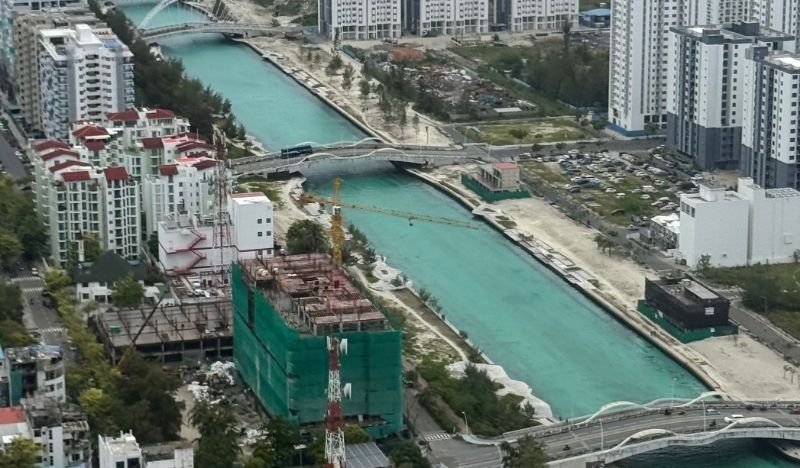
Aerial photo of Hulhumalé | Photo: MV+
The government has introduced a new framework governing how non-residential land is leased, transferred and registered, replacing the existing regulation with revised procedures for land allocation, ownership records and lease agreements.
The Ministry of Infrastructure, Housing and Urban Development published the Regulation on Lease and Registration of Land for Non-Residential Purposes on August 5 under the authority granted by the Maldives Land Act. The new regulation came into effect upon publication and repeals the previous Regulation No. 2024/R-414 on the Allocation and Registration of Land for Non-Residential Purposes.
advertisement

advertisement

The regulation establishes procedures for allocating non-residential land, preparing and maintaining land registers, outlining the rights of parties receiving allocated land and setting mandatory provisions for lease agreements.
The new framework applies to land leased for non-residential purposes by councils, ministries and other government authorities. Existing agreements entered into by other state institutions will remain valid, with relevant information required to be shared with the ministry and councils within six months to update land records.
Under the regulation, non-residential land may be leased through rent arrangements, sold, temporarily handed over for specific purposes, allocated to state institutions to carry out government duties, or transferred to state-owned companies where the government holds a majority share.
Councils will have the authority to lease land through bidding processes, public announcements or, in specific cases, without an announcement. Direct allocation without an announcement may be allowed for activities such as fish processing, agriculture, livestock farming, and land maintenance, subject to specified time limits.
The regulation allows councils to collect rent for such arrangements, while lease and sale prices will be determined by a Land Evaluation Committee established under the regulation.
The committee will consist of nine members representing ministries responsible for finance, land administration, economic development, fisheries, tourism, construction, agriculture and the Local Government Authority.
The President will appoint the chairperson from among the nine members, while the committee will require five members to form a quorum.
The committee may set different lease rates for land within the same island or city based on factors including land availability, demand and economic conditions.
The regulation also introduces procedures for registering land allocated for more than 15 years. Land registers issued before the regulation came into effect will remain valid.
Fees for issuing or replacing land registers vary depending on whether the land falls under council jurisdiction. For council-managed land, a new register will cost MVR 500, while replacement due to loss or damage will cost MVR 1,000. For land outside council jurisdiction, the fees are MVR 5,000 for a new register and MVR 10,000 for replacement.