

Tourism Advisor Khaleel Resigns Over 40 Per Cent Foreign Currency Exchange Requirement
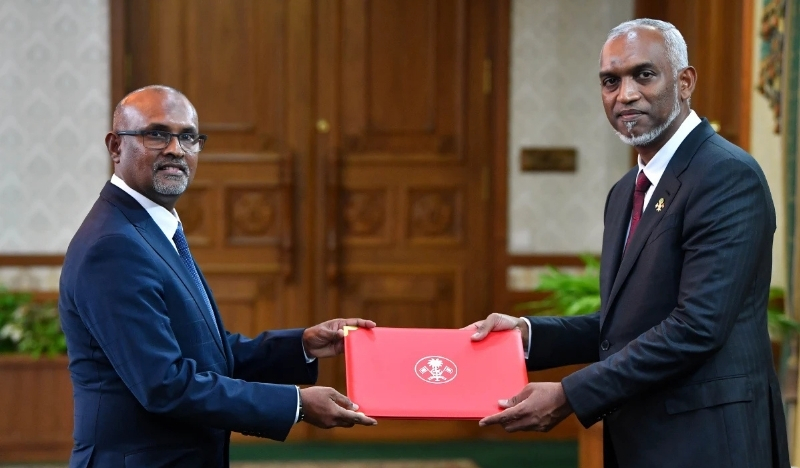
Mohamed Khaleel, Managing Director of Pulse Hotels & Resorts and a shareholder in Manta Air, has resigned from his position as Advisor to President Mohamed Muizzu, citing concerns over the newly approved requirement for tourism businesses to exchange 40 per cent of their foreign currency earnings through local banks.
Khalil, who was appointed as a presidential advisor in November 2023, told local media that the mandatory exchange requirement could harm the tourism industry. He said that, given his position and the circumstances surrounding the new requirement, he felt it was no longer appropriate for him to continue serving as an adviser.
advertisement

advertisement

The resignation follows Parliament’s passage of amendments to the Foreign Currency Act requiring Category A businesses, including resorts and other major foreign currency-earning businesses, to exchange 40 per cent of their monthly foreign currency earnings through Maldivian banks. The requirement will take effect from the first day of next month.
The legislation was passed with 47 votes in favour and 12 against, with opposition MDP MPs voting against the measure. The 40 per cent requirement was introduced through an amendment submitted by Funadhoo MP Mohamed Mamdhooh to a bill initially submitted by Holhudhoo MP Abdul Suttar Mohamed.
The original proposal sought to revise the foreign currency exchange requirements for businesses earning foreign currency. The government had initially proposed removing an existing option that allowed resorts to exchange either 20 per cent of their earnings or USD 500 per tourist, making the 20 per cent requirement mandatory. Economic Minister Mohamed Saeed later told Parliament that the government was considering increasing the requirement to 40 per cent.
The Maldives Association of Tourism Industry (MATI) has criticised the 40 per cent requirement, warning that it could place significant financial pressure on tourism operators. The association said resorts have substantial expenses that must be settled in US dollars, including fuel, salaries, service charges, taxes, lease payments and foreign loan obligations.
MATI has also rejected claims that the wider tourism industry should be held responsible for the foreign currency black market following investigations into alleged illegal transactions involving some resort operators. The association said it was not aware of such activities and maintained that it regularly advises members to comply with all applicable laws and regulations.
The association said it was unfair to attribute the foreign exchange market’s difficulties to the entire tourism industry based on alleged activities involving a limited number of operators.
The new requirement comes as the government seeks to increase the availability of US dollars through the formal banking system, while tourism operators have raised concerns over the impact of mandatory currency conversion on their ability to meet foreign currency obligations and maintain operations.