


Maldivian Market Demand Driven by Seasonal Catch Scarcity Leads to Rise in Skipjack Tuna Prices
Eligibility remains restricted to entities registered with the Ministry of Economic Development. | Photo: Envato
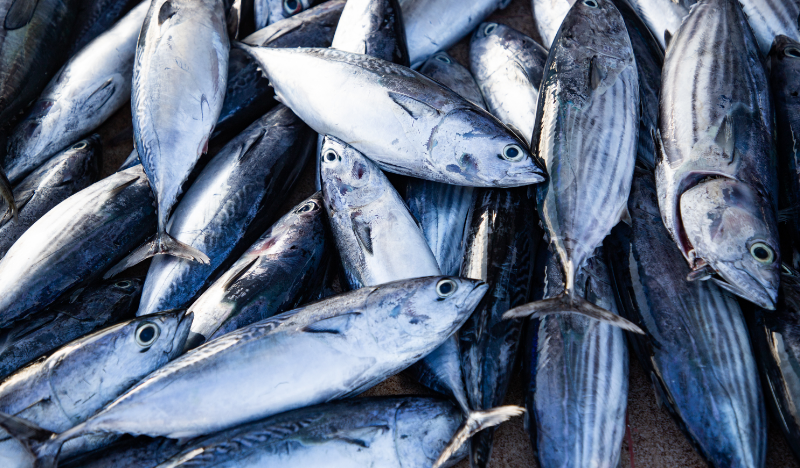
Local skipjack tuna (kalu bilamas) prices have reached MVR 21.00 per kilogramme across primary regional purchasing operations, reflecting a MVR 1.00 increase over the previous benchmark rate established in mid-June.
The price adjustment comes amidst a widespread downturn in daily fish yields across all regions of the archipelago, which has significantly tightened raw fish supply and increased competition within the domestic market.
advertisement

advertisement

The national fisheries sector is currently navigating a period of low catch rates, a seasonal shift that has led to heightened domestic demand for tuna. Prior to this latest upward adjustment, raw skipjack tuna had been purchasing at a fixed rate of MVR 20.00 per kilogramme since 14 June.
Under current market dynamics, official purchasing platforms continually review purchase valuations to reflect real-time supply and demand balances alongside prevailing global price trends.
The higher rate of MVR 21.00 per kilogramme has immediately taken effect across major industrial complex jetties and offshore collector vessels serving the archipelago’s fleet. Participating collection points include key regional infrastructure hubs such as the Kooddoo Fisheries Complex (KFC) jetty, the Addu Fisheries Complex (AFC) jetty, and the Felivaru Fisheries Complex (FFC) jetty. The updated price structure also extends to offshore operations on active collector vessels, including the Randhi-20, Randhi-23, Randhi-25, Randhi-29, and KAL 401.
To safeguard local livelihoods and buffer vessel operators against fluctuations in catch volume, national fisheries policy remains focused on maximizing earnings for vessel crews during low-yield cycles.
Authorities report that ongoing development initiatives aim to diversify raw catch into higher-value processed products, expand regional cold storage capacities, strengthen post-harvest quality controls, and optimize international logistics to maintain steady export performance when domestic supply drops.