

MDP Raises Concerns Over Dollar Shortage and Economic Strain
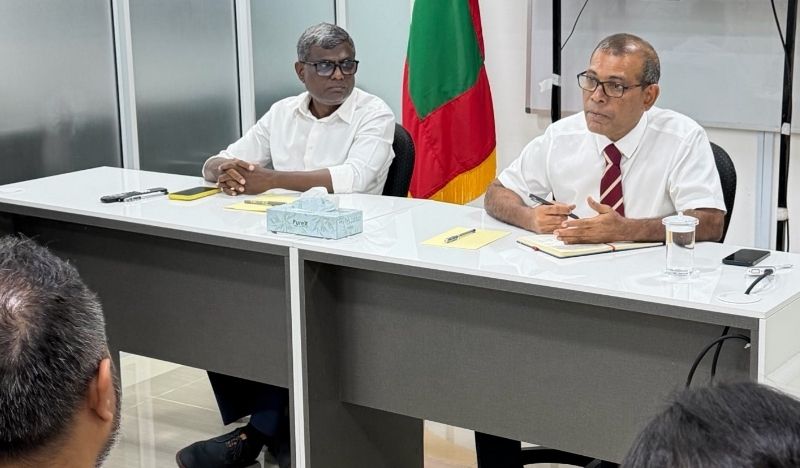
Photo: The Maldives Democratic Party
The Maldivian Democratic Party (MDP) has expressed grave concerns over an escalating dollar shortage and broader financial crisis, warning that the national economy faces the risk of collapse due to government mismanagement, low reserves, and a lack of reform.
MDP highlighted four primary areas of concern: the heavy toll on local businesses, the erosion of foreign investor confidence, the complete absence of fiscal reforms, and the overarching threat to the nation’s economic stability.
advertisement

advertisement

With official usable reserves dropping to critical levels that cover only nine days to two weeks of imports, the opposition noted that the country retains virtually no financial buffer to secure essential supplies such as food, fuel, and medicine.
According to MDP, heavy foreign debt obligations, including treasury bills, currency swaps, and mature sukuk payments drawn from the domestic market, have severely drained foreign exchange reserves. To offset the shortfall, the government abruptly raised mandatory dollar conversion rates for resorts and major foreign currency earners to 40 per cent without a transition period, while also rushing through a 17 per cent Tourism GST on foreign travel operators.
The party warned that these sudden measures violate initial investment agreements, spark double-taxation concerns among hundreds of international tour operators, and risk driving foreign capital away from the Maldives.
MDP further criticised the government’s claim that the dollar exchange rate has naturally dropped to around MVR 19, stating the rate is being artificially suppressed through forced trading schedules and heavy financial penalties imposed on money changers. As money changers cannot legally sell above mandated rates or below their original purchase costs, dollars have effectively disappeared from the market.
Despite collecting foreign currency, the state is failing to distribute it, leaving local banks unable to process telegraphic transfers or domestic bank-to-bank transfers.
These ongoing restrictions are severely harming local businesses and everyday citizens, who face delayed supply shipments, rising prices, and strict daily limits on card spending and online transactions. Families are currently struggling to fund overseas medical care, student expenses, and routine purchases due to these banking constraints.
MDP concluded that the administration has no credible economic plan to resolve the crisis, relying instead on penalties, restrictions, and artificial rates while withholding clear information from the public regarding the actual state of the nation’s reserves.
MDP Chairperson Mohamed Nasheed took to social media platform X to warn about the upcoming maturity of the state Treasury bill on Thursday. He also contended that using central bank reserves to settle the debt would deplete the foreign currency needed to import vital supplies, such as food, fuel, and medicine. However, the Maldivian government has fully repaid the final USD 50 million instalment of the USD 150 million Treasury bill facility obtained through the State Bank of India (SBI), bringing the outstanding facility to an end.
According to the Ministry of Finance, the facility, originally secured under the former administration to support budget financing, was settled through a phased payment schedule. Under these terms, the current government cleared a USD 50 million instalment in January 2024, followed by another USD 50 million payment on May 11 of this year.
The Finance Ministry noted that today’s payment of the final USD 50 million upon maturity officially closes the debt facility. With this last instalment settled, the full USD 150 million Treasury bill facility has now been cleared completely.