

Staff Shortages and Infrastructure Gaps Drive Delays in Prison Medical Care, HRCM Reports
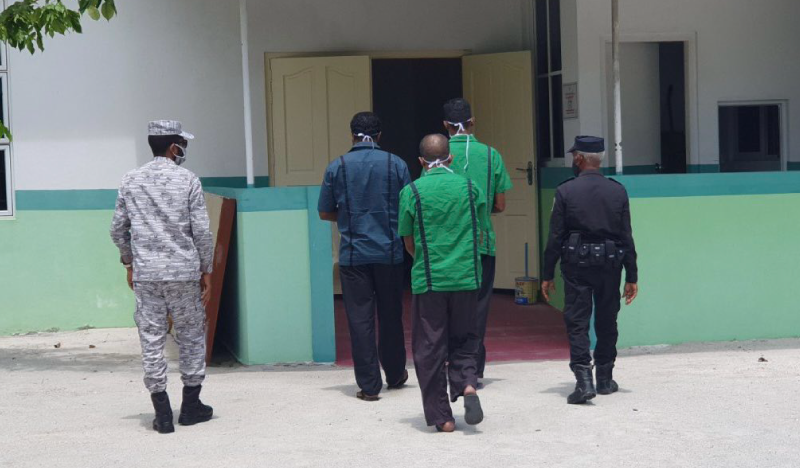
Photo: Maldives Correctional Service
Shortages of prison officers and gaps in medical infrastructure are contributing to delays in detainees accessing healthcare, according to updated statistics from the Human Rights Commission of the Maldives (HRCM).
The commission said the unavailability of prison officers to escort detainees to medical appointments remained the main issue raised in health-related complaints.
Up to the end of July 2026, escort-related difficulties accounted for 63.2 per cent of health complaints received by the HRCM. The proportion has increased from 46.9 per cent of such complaints in 2025 and 49.5 per cent in 2024.
Delays in obtaining specialist medical appointments accounted for a further 15.8 per cent of complaints recorded up to July this year. While the figure is lower than the 20.3 per cent recorded in 2025 and 18.5 per cent in 2024, the HRCM identified access to specialist healthcare as a continuing concern for detainees.
The commission said the complaints point to ongoing administrative and operational difficulties within the correctional system.
HRCM also highlighted infrastructure-related challenges affecting the delivery of medical care in prisons.
According to the commission, space constraints and limited medical facilities at Maafushi Prison, the country’s main detention facility, continue to affect access to healthcare.
The absence of transit accommodation or designated holding facilities in Malé for detainees transferred from other islands for specialist treatment was also identified as a factor contributing to delays.
Detainees from facilities outside the capital may need to travel to Malé to access specialised medical services. Without suitable temporary accommodation or holding facilities, arranging and managing such transfers can create additional logistical difficulties.
The overall number of medical-care complaints recorded by the HRCM has varied in recent years.
The commission received 34 formal complaints concerning delays in medical care up to July 2026, compared with 51 cases recorded during the whole of 2025 and 58 in 2024.
While the number of cases recorded so far this year is lower than the totals for the previous two years, escort-related complaints account for a larger share of health-related grievances.
The HRCM’s findings highlight continuing operational challenges for the Maldives Correctional Service in providing timely access to medical treatment for detainees.
The commission’s figures cover complaints submitted to the HRCM and therefore do not necessarily represent every instance of delayed medical care across the country’s correctional facilities.