


GDP Falls 12.3 Per Cent in Q2 Amid Tourism and Fisheries Decline
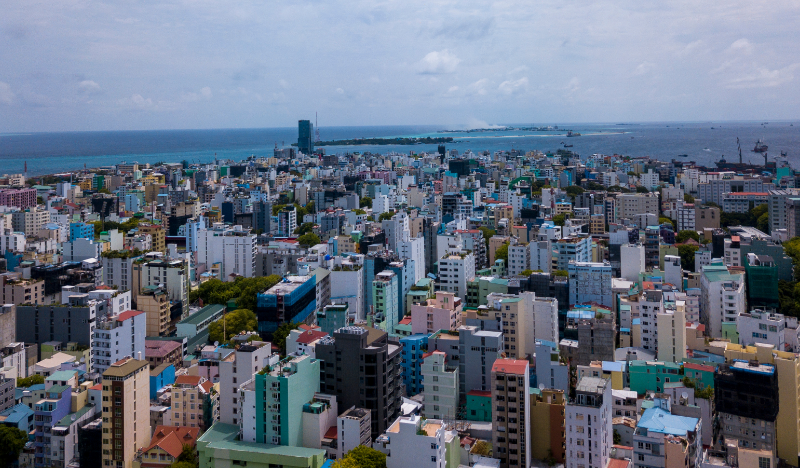
Secondary industries and domestic services kept annual growth from turning negative. | Photo: MV+
The Maldivian economy contracted by 12.3 per cent in the second quarter of 2026 relative to the preceding quarter, according to the latest Quarterly National Accounts published by the Maldives Bureau of Statistics (MBS).
The figures paint a picture of an economy facing significant headwinds, as seasonal dips and structural drops in core industries offset strong expansions in construction and financial services.
advertisement

advertisement

Real GDP Registers Quarter-on-Quarter Slump
Real Gross Domestic Product (GDP) at market prices stood at MVR 25.1 billion in the second quarter, marking a sequential drop of MVR 3.5 billion compared to MVR 28.6 billion of the previous quarter. On an annual basis, economic activity effectively stalled, registering a marginal expansion of just 0.03 per cent relative to the same period in 2025.
Nominal output fell 17.4 per cent quarter-on-quarter to MVR 29.1 billion, though it managed a 4.6 per cent gain year-on-year. Meanwhile, the Implicit Price Deflator, which tracks broader economic price changes, rose by 4.6 per cent annually to reach 115.7.
Core Sectors Suffer Heavy Losses
The overall economic slowdown stems primarily from steep declines in the country’s primary economic engines, namely tourism and fisheries.
The Accommodation and Food Services sector—the pillar of the national economy—recorded a 34.1 per cent contraction quarter-on-quarter and dropped 14.3 per cent compared to the previous year. MBS attributed this downturn to a decline in tourist bed-nights, which fell by 1.6 million sequentially and by over 425,000 year-on-year. Despite this setback, the sector retained the largest single share of real GDP at 18.1 per cent.
The fisheries sector suffered the steepest annual contraction of any major industry, plunging 50.8 per cent year-on-year to MVR 429 million and subtracting 1.8 percentage points from overall growth. Similarly, the Transport and Communication sector declined by 16.8 per cent sequentially and 1.2 per cent annually, weighed down by reduced activity in passenger travel, warehousing, and logistics.
Construction and Financial Services Offer Support
While key primary and service sectors contracted, secondary industries and domestic services prevented the broader economy from dipping into negative territory on an annual basis.
Financial services expanded by 21.7 per cent year-on-year to reach MVR 2.1 billion, emerging as the top contributor to annual growth. The construction sector also staged a strong performance, surging 33.7 per cent annually and 19.1 per cent quarter-on-quarter on the back of higher building material imports. Wholesale and retail trade grew 14.4 per cent year-on-year, supported by a 15.1 per cent rise in deflated import volumes. Utilities—encompassing electricity, water, and waste management—posted steady gains, rising 3.9 per cent annually.
Revisions and Statistical Reliability
In its revisions analysis, the MBS noted that preliminary estimates undergo periodic adjustments as comprehensive annual administrative data becomes available. Tracking shows that historical revisions to quarterly growth figures have remained small, with a Mean Absolute Revision of 1.0 per cent across the series. The MBS will release its third-quarter national accounts on 31 December 2026.