

AG Points to Yameen-Era Laws in Rebuttal to Rasmalé Land Sale Allegations
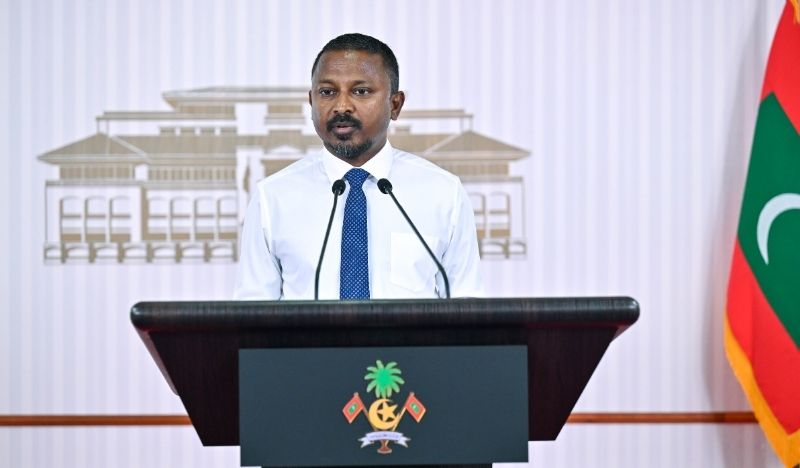
Attorney General Ahmed Usham speaking at a press conference held in the President’s Office on May6, 2026 | Photo: President’s Office
Responding to opposition criticism over the 99-year lease granted for the USD 20 billion Rasmalé project, Attorney General Ahmed Usham noted that 99-year lease extensions were originally introduced into Maldivian law during former President Abdulla Yameen’s administration.
The Attorney General made the statement on social media to address opposition allegations that the government is engaged in an unlawful sale of state land to foreign interests.
ރައީސް ޔާމީން މިއަދު ހަނދުމަފުޅުނެތީ ކަމަށް ވެދާނެ. އެހެންނަމަވެސް ރިޒޯޓުތައް ކުއްޔަށް ދޫކުރާ މުއްދަތު 99 އަހަރަށް ބަދަލުކޮށްފައިވަނީ ރައީސް ޔާމީންގެ ވެރިކަމުގައި.
— Ahmed Usham (@a_usham) September 29, 2026
ދިވެހިރާއްޖޭގައި އެންމެ ފުރަތަމަ ޓޫރިޒަމާ ބެހޭ ޤާނޫނެއް އެކުލަވާލެވުނީ 1999 ވަނަ އަހަރު. އޭރު ޤާނޫނުގެ ދަށުން… https://t.co/8EsaBnfvul
The controversy follows a deal signed on 21 September between the Maldivian government and Abu Dhabi developer Eagle Hills to construct a waterfront and marina development in Rasmalé, which includes leasing 500 hectares of reclaimed land to the developer for 99 years.
Outlining the statutory evolution of lease terms, Usham highlighted that the original 1999 Tourism Act capped resort leases at 25 years. This duration was extended to 50 years under President Mohamed Nasheed in 2010, before being increased to 99 years under President Yameen in 2015.
Usham noted that under Section 8 of the Tourism Act, the state is legally required to buy back the depreciated residual value of investments when 99-year resort leases expire.
Usham emphasised that the Rasmalé project will not fall under the Tourism Act. Instead, it will be regulated by a dedicated Real Estate Act currently being drafted by the government.
He clarified that the agreement signed on 21 September is a non-binding Letter of Intent detailing commercial terms. Final, definitive contracts will require further negotiations, as well as the passage of enabling primary legislation by the People’s Majlis, before physical work can begin.
The Attorney General maintained that the government will ensure all arrangements remain strictly within constitutional and legal parameters.