

Panel Discussion Explores Coffee Entrepreneurship to Inspire Young People
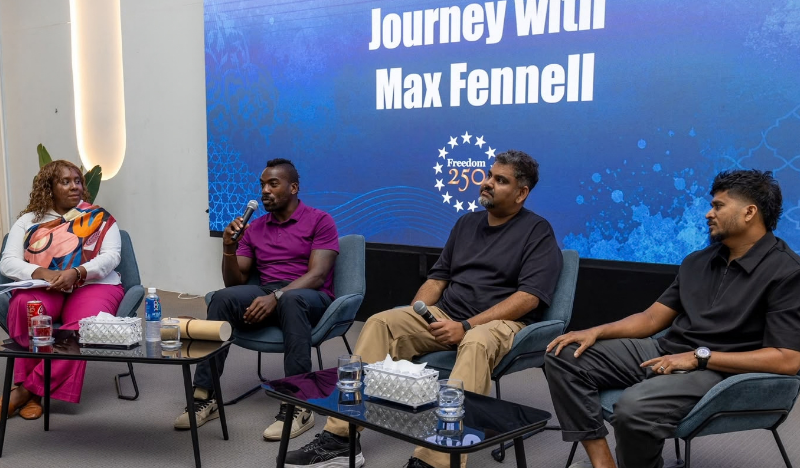
The event brought together young people, aspiring entrepreneurs, and industry figures. | Photo: US Embassy in Maldives
The United States Embassy in the Maldives, in collaboration with the Ministry of Youth Empowerment, Sports, and Fitness, has held an interactive panel discussion on entrepreneurship, skill development, and the evolving coffee industry.
The event brought together young people, aspiring entrepreneurs, and industry figures to explore pathways towards building sustainable commercial ventures. The discussion was carried out among the panelists: Max Fennell, U.S. Triathlete and CEO of Fenn Coffee, Mabrouq Azeez, Founder of Meraki Coffee Roasters, and Ahmed Zaim, Head Judge for Maldives’ annual Barista and Mocktail competition – Lavazza Training Center Maldives, with host, Sheimaliz Glover, Public Affairs Officer of U.S. Embassy Maldives.
advertisement

advertisement
Commemorating the event, Deputy State Minister Mohamed Aseel highlighted that education must extend beyond formal classroom settings, noting that practical skills, mentorship, and industry exposure are vital to preparing young people for the future. He stressed that a solid business idea, backed by determination and technical knowledge, can create both individual livelihood and employment for others.
The discussion began with panelists sharing how flexibility, market alignment, and continuous study shaped their paths into coffee. Fennell started Fenn Coffee with USD 5,000—an investment from a friend—learning to adapt branding early on. Mabrouq launched Meraki after an inspiring cup of coffee that sparked his desire to open a cafe, noting that key lessons from his journey included listening to the market and understanding that what works for an individual entrepreneur may not always work for the broader consumer base. Zaim began with no experience or interest in coffee, then advanced through intensive training in Italy and Dubai to become an authorized trainer.
Throughout the discussion, each speaker established market separation through clear positioning. Fennell targeted endurance athletes with 4 oz cold-brew espresso shots, with Mabrouq structuring Meraki’s pricing around fair employee compensation instead of market averages. Zaim introduced a non-smoking boutique model to focus strictly on coffee quality, working to transition local consumers from instant coffee to traditional espresso.
Furthermore, the speakers highlighted that commercial sustainability relies on lean operations and strong networks,with Fennell eliminating physical cafe overhead by supplying whole-bean coffee to 16 grocery stores and selling online. Mabrouq highlighted how mobile setups lower entry barriers, recalling how a direct email secured his first corporate client, Soneva. Zaim then shared that his organization runs the second-largest Lavazza training center outside Italy, driving vocational barista education across the Maldives.
Additionally, the panel discussion emphasised that success in the coffee trade demands discipline, timing, and empathy. Elaborating on this, Zaim emphasized viewing barista work as a skilled profession that rewards consistency and formal training, while Mabrouq advised launching without waiting for a “perfect time,” stressing that resilience and cash-flow management beat aggressive growth. Fennell defined strong leadership as prioritizing livable wages and putting team needs before personal profits.
Answering questions from the audience, the speakers noted that environmental strategies range from packaging to operational efficiency. Fennell explained how he reduced waste, which was by serving cold brew in reusable glass mason jars. Mabrouq noted global farming shifts to cooler regions, adding that local cafes can drive sustainability through energy-efficient machines and plastic-free operations. Additionally, Zaim highlighted compostable capsules and organic certifications as practical eco-friendly solutions.
The discussion also highlighted that thriving in small domestic markets requires strict financial control. Mabrouq noted that tight-knit markets aid quick networking, but warned against confusing revenue with cash flow or buying expensive gear too soon, while Fennell encouraged treating market size as an opportunity to solve local gaps in tourism and infrastructure. Zaim cautioned that high initial debt and thin margins easily sink low-volume startups.
Overall, the panel discussion demonstrated that building a successful coffee venture in the Maldives requires a balance of passion, practical financial discipline, and continuous adaptability. By sharing their distinct journeys—from low-overhead distribution models to specialized vocational training—Max Fennell, Mabrouq Azeez, and Ahmed Zaim underscored that long-term commercial viability hinges on resilience, empathetic leadership, and sustainable operational choices rather than rapid, unchecked expansion.
Ultimately, the discussion reinforced that while navigating small domestic markets presents unique hurdles, aspiring entrepreneurs can thrive by focusing on quality product positioning, smart cash-flow management, and an unwavering commitment to vocational skill development.