

Who Will Inherit These Islands?
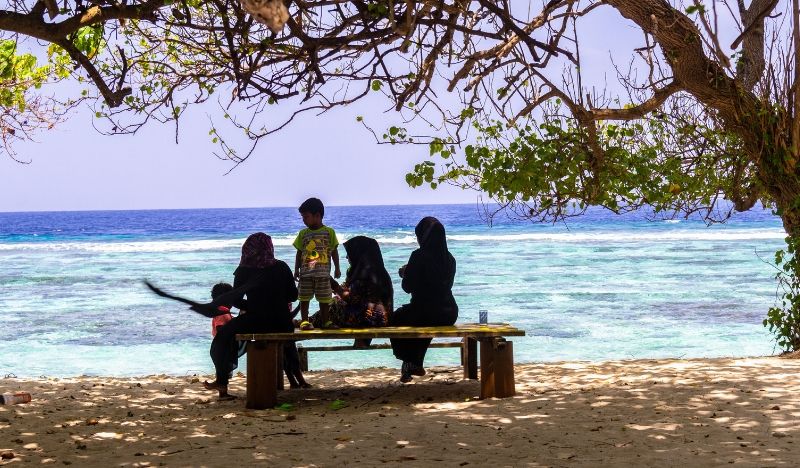
For generations, having children was an ordinary part of imagining a future in the Maldives. Today, for many young Maldivians, that future no longer feels quite so certain. The cost of building a home, financial insecurity, concerns around pregnancy and healthcare, and changing ideas about parenthood are making some question whether having children is something they want — or can afford.
The numbers reflect that shift. The Maldives’ fertility rate has fallen dramatically, from more than six children per woman in the late 1980s to below the replacement level of 2.1 today.
advertisement

advertisement

For an island nation, the implications reach far beyond the size of individual families. Much has been said about rising seas as an existential threat to the Maldives. But another, quieter demographic change is taking place at the same time. If fewer children are born with each generation, who will be here to inherit these islands?
The Maldives’ total fertility rate, the average number of children a woman would have over her lifetime if current age-specific fertility rates remained constant, has fallen from over 6.0 in the late 1980s to well below the replacement level of 2.1 today.
Why are young people not having kids?
Beyond macro statistics, the lived realities of young Maldivians expose a complex mix of systemic anxieties, cultural expectations, and personal fears.
For some, the hesitation stems from the unspoken physical and emotional toll that accompanies motherhood. “What about postpartum depression and everything that follows birth?” asks Reesha, 30, pointing to the inadequate psychological support systems available to new mothers amidst an already strained healthcare setup.
For others, the decision to have children is tied directly to social security in a country lacking formal retirement safety nets. “There is no such thing as elderly care homes here,” says Aiham, 29. “The only thing you are going to have is your children. Although it sounds selfish, it’s about survival and how things work in the Maldives.”
Yet, the romanticised perception of parenthood often collides with long-term responsibility. “Some people just want babies, but babies stay babies for a very short period of time,” notes Malsha, 27. “Birth is a beautiful thing, but raising a child here is an entirely different reality.”
Paradoxically, this demographic decline unfolds against a backdrop of historic achievements in maternal healthcare. In the year 2000, maternal mortality stood at 522 per 100,000 live births. By 2020, that number had plummeted to 32, marking substantial national progress in safeguarding childbirth.
Yet, as highlighted in a recent situation analysis published by the United Nations Population Fund (UNFPA), critical gaps remain in family planning, adolescent health, and STI prevention- unaddressed vulnerabilities that threaten to stall or reverse these hard-won gains.
Maldives, Once a Young Population
It was August of 1990. Addressing the nation at the opening of the National Seminar on Safe Motherhood, President Maumoon Abdul Gayoom noted that out of the approximately 55,000 residents in Malé, 17,000 were children under the age of 15, representing 41 per cent of the capital’s population. Nationwide, over 70 per cent of the Maldivian population was under the age of 30. The Maldives, President Maumoon emphasised, was a remarkably young nation.
In his address, the President noted that Islam affirms birth spacing is not only permitted but necessary when rapid, consecutive pregnancies threaten a mother’s health or the well-being of existing children. “Proper birth spacing stands as one of the most effective measures to ensure safe motherhood,” President Maumoon said.
He noted that in South Asia alone, approximately 300,000 women were dying every year during childbirth, a staggering figure that should alarm every citizen. In the Maldives, the number of women losing their lives or suffering permanent health impairments during delivery remained significant. In a developing health infrastructure, prioritising safe motherhood was a national imperative.
And thus, the national birth spacing program began a policy success that successfully safeguarded maternal health, but gradually set the stage for the demographic contraction facing the nation today.
Today, an Ageing Nation
Three decades after those initial public health campaigns, the demographic profile of the Maldives looks starkly different. The success of maternal healthcare and widespread birth spacing, combined with rising living costs and shifting social priorities, has fundamentally reshaped the nation’s age structure.
By 2052, the Maldives is set to become a super-aged population, joining a global shift towards older societies, according to a joint population study by the Maldives Bureau of Statistics and the UNFPA.
The study shows that in 2022, only five per cent of resident Maldivians were aged 65 and above. However, between 2026 and 2044, the country is projected to transition into an ageing society, with the proportion of elderly people doubling to more than 10 per cent.
Between 2045 and 2051, the Maldives is expected to move into the category of an aged population. By 2052, the country will officially enter the ranks of super-aged societies, with one in every four Maldivians aged 65 or older. The study notes that around half of all countries worldwide are projected to reach this milestone by that time.
The policy that successfully protected mothers 30 years ago has achieved its primary goal but without new structural incentives to support young families today, the nation faces the real prospect of a shrinking generation.
What is the government doing?
The state has tried to address this by spending more. The government has spent MVR 15.2 million through the Fertility Care Trust Fund since 2024, assisting 105 individuals and resulting in 25 successful births at a success rate of roughly 23.8 per cent. But these numbers only tell part of the story, and even so, these figures remain alarmingly small compared to the scale of the crisis.
Speaking at a press conference at the President’s Office, Minister Of Health Familiy and welfare Geela Ali provided an update on state assistance for reproductive health conditions, noting that 921 people received support for conditions including endometriosis and Polyendocrine Metabolic Ovarian Syndrome (PMOS), formerly known as Polycystic Ovary Syndrome (PCOS), in 2024, followed by 903 recipients in 2025.
In addition, state provisions opened opportunities for 50 couples to undergo in vitro fertilisation (IVF). Of these, five couples received financial assistance in 2024 and three in 2025, according to Minister Geela.
The first child conceived through IVF at the National Fertility Centre (opened at IGMH in 2024) was born on 7th January 2026.
The Policy Gap: What Challenges Remain?
While clinical subsidies for IVF and IUI have provided relief to couples experiencing medical infertility, demographic analysts and health bodies note that financial subsidies alone do not address the core social drivers of the declining birth rate.
Reflecting on these underlying barriers, former UNFPA Country Director for the Maldives, Kunle Adeniyi, urged policymakers to look beyond raw demographic targets and confront fundamental questions of equity.
“Let us challenge ourselves to ask new questions about population data that revolve around inequality, rights, and choices,” Adeniyi stated. “Who has the right to have children, and who doesn’t?”
Adeniyi emphasised that evidence consistently shows that when individuals have expanding economic opportunities, adequate healthcare, education, and genuine reproductive choices, entire societies flourish.
Yet in the Maldives today, those choices are increasingly constrained by basic living conditions, chief among them the urban housing crisis. According to a 2020 rental survey by the Maldives Bureau of Statistics, in collaboration with the Ministry of Housing, Land and Urban Development, 60 per cent of households in Malé live in rented accommodation.
With exorbitant rent prices devouring a massive share of average household incomes in the capital, young couples are routinely forced to delay or forgo starting a family, turning what should be a personal choice into a financial impossibility.
Maldives Ranks Highest in South Asia for Cost of Living Country 2025 2026 Maldives USD 840.4 USD 812 Sri Lanka USD 507.6 USD 449 Afghanistan USD 381.8 USD 397 Bhutan USD 387.2 USD 380 Pakistan USD 340.4 USD 354 Bangladesh USD 348.9 USD 348 Nepal USD 335.6 USD 312 India USD 313.4 USD 292
*excluding rent. according to data compiled from Numbeo and reported by Fintech News BD.
The world’s happiest nations Finland, Denmark, and Sweden consistently demonstrate that societal resilience is built on strong social safety nets, accessible housing, low-cost childcare, and gender equity. These countries maintain higher fertility floors not through cash incentives, but by ensuring that raising a child does not force families into economic precarity or career sacrifice.
For the Maldives, the lesson is clear: medical interventions like IVF subsidies treat the symptom of falling birth rates, but only structural social policy can address the cause.
- Transitioning young families out of exorbitant rentals in Malé through dedicated public housing priorities, mirrored after successful social models like Singapore’s HDB schemes.
- Subsidising early childhood daycare and establishing state eldercare infrastructure so the burden of caregiving does not fall solely on young parents.
- Expanding housing, healthcare, and job creation across outer atolls to make family life viable outside the hyper-congested capital.
Without these foundational policy shifts, the question will no longer be how to fund the next generation, but whether there will be a generation left to inherit these islands at all.