

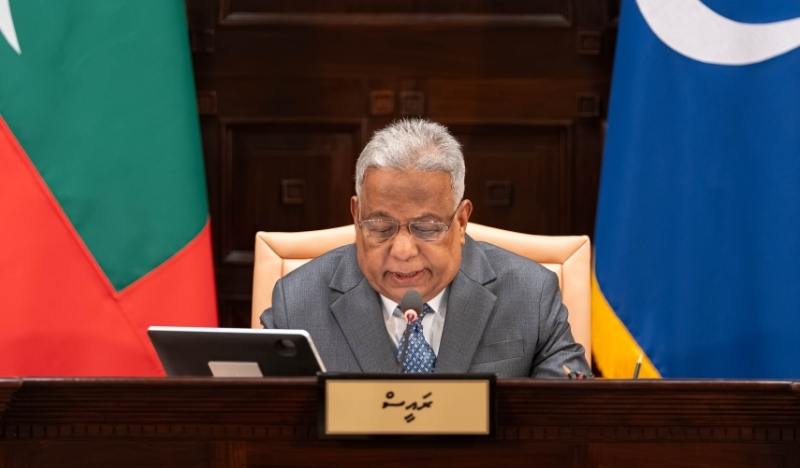
The People’s Majlis has sent the proposed Asset Recovery Bill to its Judiciary Committee for further deliberation and review after 56 MPs voted in favour of accepting the legislation following debate.
The bill was submitted on behalf of the government by Fuvahmulah Central MP Ali Fazad of the ruling People’s National Congress (PNC). Although opposition Maldivian Democratic Party (MDP) members criticised the bill during the debate, no MPs voted against accepting it.
advertisement

advertisement

The proposed legislation seeks to prevent individuals convicted of serious crimes, as well as those whose assets are linked to criminal activity, from retaining or benefiting from illegally acquired property.
A key provision would introduce a civil forfeiture system, allowing the Prosecutor General to seek court orders to restrain or confiscate property without a criminal conviction, provided the assets are proven to be proceeds of crime under the applicable civil standard.
The bill would also allow law enforcement agencies to seek court orders for covert monitoring of bank accounts where there are reasonable grounds to believe they contain assets liable to forfeiture. Such orders could remain in force for up to three months without notifying the account holder.
Individuals or financial institutions that unlawfully disclose information about the existence or execution of a covert monitoring order could face fines ranging from MVR 100,000 to MVR 1 million.
Under the proposed framework, forfeited assets could be sold through public tenders or auctions, but not to their former owners or members of their families.
The legislation also proposes establishing an Asset Recovery Fund within two months of the law coming into effect. The fund would use proceeds from forfeited assets to support crime prevention efforts, compensate victims and cover administrative costs associated with asset recovery.
An Asset Management Authority would be established under the Ministry of Finance within 30 days of enactment. It would be responsible for managing, valuing and cataloguing assets seized by the state, as well as administering victim compensation. The authority would operate independently while remaining accountable to Parliament.
The bill would apply retrospectively, allowing authorities to restrain or confiscate assets linked to offences committed before the legislation comes into force, including property associated with convictions handed down before enactment.
The proposed law covers a range of serious offences, including money laundering, terrorism financing, murder, drug and human trafficking, corruption, organised crime, arms trafficking, insider trading and market manipulation.
It would also cover certain tax evasion cases involving MVR 500,000 or more, as well as robbery, theft, embezzlement, trafficking in stolen goods and smuggling involving more than MVR 100,000.
The Judiciary Committee will further examine the bill before it proceeds through the legislative process.