

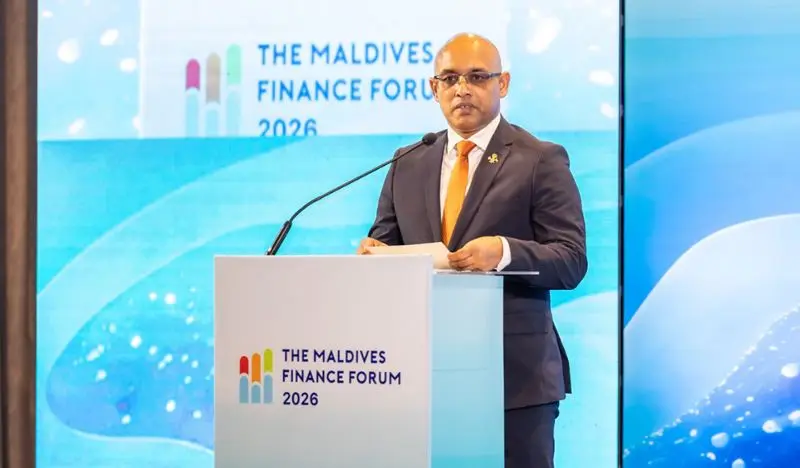
The Maldives must invest heavily in renewable energy, environmental protection, and water security to achieve its goal of becoming a developed nation by 2040, Minister of Finance and Planning Hassan Zareer has stated.
Addressing attendees as the guest of honour at the 13th Maldives Finance Forum 2026, Zareer identified climate change as a direct threat to the nation’s economy and the livelihoods of its citizens. He underscored the vital role marine ecosystems play in sustaining the tourism and fisheries sectors while protecting the islands, stressing that authorities must integrate climate resilience into the planning and financing of national development projects.


“Climate risk is economic risk. And economic risks are things that must be managed,” Zareer said.
While the state budget, international aid, and concessional loans remain essential for building robust infrastructure and safeguarding basic services, Zareer noted that public funds alone are insufficient. He called for private capital and long-term commitments from financial institutions to meet infrastructure demands without burdening future generations with excessive debt.
Substantial capital will also be necessary to hit the government’s target of generating 33 per cent of the country’s energy needs from renewable sources by 2028, the minister added. Expanding clean energy capacity will directly reduce the Maldives’ reliance on imported fuel.
Outlining ongoing policy initiatives, Zareer highlighted the government’s rollout of the National Sustainable Finance Roadmap and the National Financial Inclusion Strategy. He also congratulated the Maldives Finance and Leasing Company (MFLC) on becoming the first Maldivian entity accredited for direct access to the Green Climate Fund, describing the milestone as a significant boost for securing international climate financing.
Zareer urged commercial banks to introduce tailored financial products for sustainable initiatives and called on local businesses to submit viable, bankable proposals. Ultimately, he stated, authorities must measure the success of green finance through executed projects and tangible results—specifically resilient infrastructure, reduced fuel dependency in power generation, and greater financial security for Maldivians.
The annual Maldives Finance Forum brings together policymakers, regulators, financial institutions, development partners, and civil society organisations to address key economic and financial priorities.