

Compensation to Be Given for Deregistered 20-Year-Old Vehicles, Minister Says

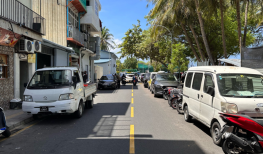
The primary goal of the legislation is to guarantee individual public safety. | Photo: Ministry of Economic Development,Transport & Trade
The government will pay financial compensation to vehicle owners before scrapping any land vehicle over 20 years old, Economic Development and Trade Minister Mohamed Saeed announced today at a press conference held at the President’s Office.
Speaking to journalists regarding the new Land Transport Act set to take effect on 1 October, Minister Saeed stated that third-party assessors will evaluate affected vehicles before authorities cancel their registrations.
advertisement

advertisement

“Even if a situation arises where a vehicle must be decommissioned, we will not proceed without a third-party assessment of its current value and provision of compensation, or ensuring the owner receives an alternative vehicle,” Saeed explained, adding that extensive public consultations will inform the upcoming regulatory details.
Under Article 23 of the newly enacted legislation, authorities will cap the operational lifespan of all land vehicles at 20 years from their manufacture date, excluding specific exempted categories. Once a vehicle reaches this limit, officials will issue a notice to the owner before revoking its registration.
The law includes a transitional arrangement for vehicles currently registered that are between 18 and 20 years old. Under Section 23(e), authorities will deregister these vehicles three years from the date the legislation takes effect.
Minister Saeed emphasised that setting vehicle age limits represents just one component of a broader strategy to resolve traffic congestion in the Greater Malé Region. The primary goal of the legislation, he noted, is to guarantee individual public safety.
As part of these urban transport reforms, the administration plans to designate the entire Greater Malé Region as a Vehicle Registration Control Zone. Minister Saeed clarified that the designation will not prohibit vehicle registration outright, but will instead mandate regulated growth based on specific standards.
“Unless we establish the Greater Malé Area as a registration control zone, finding a lasting solution to this issue will prove difficult,” Saeed said. He added that the framework allows the government to declare other areas as registration control zones if necessary.
To complement the legislative framework, the government will establish a dedicated Traffic Monitoring Centre and redevelop Malé’s road network to modern standards using financial assistance from the Chinese government. The administration has conducted extensive consultations with business owners, local councils, government bodies, and members of the public to refine the policy measures.