

European Tour Operators Raise Concerns Over 40 Per Cent Forex Rule, says Nasheed
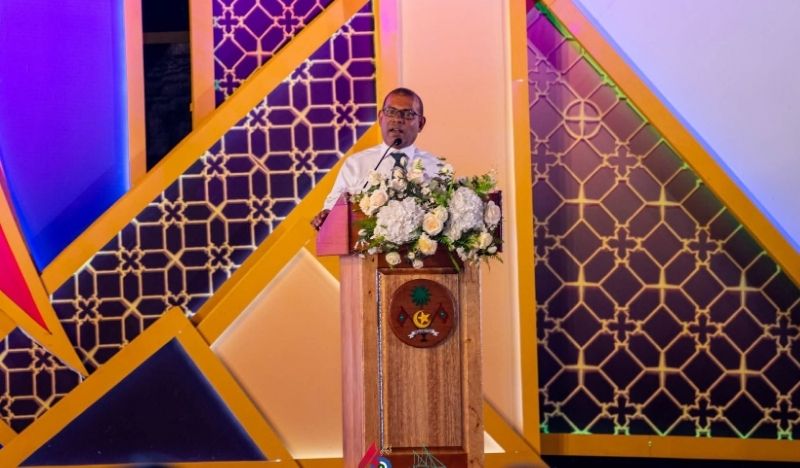
Former President Mohamed Nasheed speaking at the Aabaadhee 60 event in Thinadhoo City, Gaafu Dhaalu Atoll, on August 22, 2026 | Photo: Thinadhoo City Council
Former President and opposition Maldivian Democratic Party (MDP) Chairperson Mohamed Nasheed says major European tour operators and business owners have raised concerns with him over the impact of the Maldives’ new 40 per cent foreign currency conversion requirement.
In a post on X, Nasheed said the businesses were concerned that after complying with the mandatory conversion requirement, covering daily operating costs and repaying loans, insufficient funds would remain for dividends.
advertisement

advertisement

Nasheed also raised concerns over the tax burden faced by tourism businesses, saying European operators already pay 20 per cent GST while companies registered in the Maldives pay Tourism Goods and Services Tax (T-GST) to the Maldives Inland Revenue Authority (MIRA).
Europe ge bodethi tour operatarunnaai viyafaariverin alhugandah eba gulhaa; e beyfulhunge kanboduvumakee 40% maarukuraan jehumun dhuvahuge kharadhu hingaafai, loan ah kandaafai dividend ah ekasheegenvaa minvareh nethun adhi mihaaru ves GST ge gothuga Europe gai 20% dhakkaa iru…— Mohamed Nasheed (@MohamedNasheed) September 16, 2026
He said no resolution was currently in sight for the concerns and warned that the situation was pushing the Maldives towards bankruptcy.
The comments follow amendments to the Foreign Exchange Act passed by Parliament last month with the support of the ruling People’s National Congress (PNC) supermajority.
Under the amended law, Category A tourism establishments must convert 40 per cent of their monthly gross sales through banks. The previous option to convert USD 500 per tourist was removed.
Category B tourism establishments must convert either USD 25 per tourist arrival or 20 per cent of their monthly gross sales.
The changes have faced criticism from the opposition MDP and tourism industry stakeholders, including the Tourism Employees Association of Maldives (TEAM) and the Maldives Association of Tourism Industry (MATI), as well as from major European tour operators as well.
Following the gratification of the amendments, the European Travel Agents’ and Tour Operators’ Associations (ECTAA) raised concerns with the Maldivian authorities over planned changes to GST obligations for offshore travel businesses.
In a letter sent on 2 September to Maldives Ambassador to Belgium and the European Union Uza Fathimath Dhiyana, ECTAA Secretary General Eric Drésin urged the authorities to postpone the extension of GST obligations to offshore travel businesses.
ECTAA said implementing the changes from October 1 would provide limited time for European operators to adjust, as winter holiday packages had already been marketed and sold at fixed prices.
The association said European operators may be unable to pass the additional tax on to customers after bookings are made due to requirements under the EU Package Travel Directive, potentially leaving them to absorb the additional cost through their margins.
Additionally, MATI has warned that the 40 per cent requirement could increase financial pressure on resorts, which continue to have significant US dollar expenses including fuel, salaries, service charges, taxes, lease payments and foreign loan obligations.
TEAM also launched a campaign last month opposing the conversion of resort employees’ salaries and service charges from US dollars to Maldivian rufiyaa.