

Foreigners Make Up 80% of Resident Population in Non-Administrative Islands
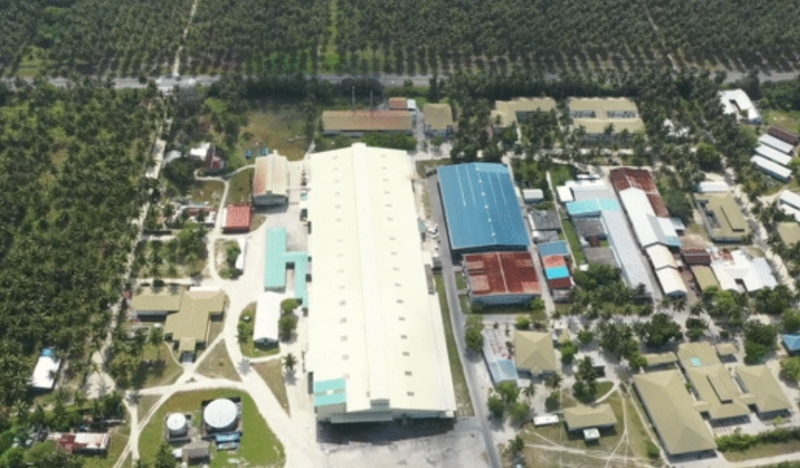
Maandhoo Fisheries Complex, Laamu atoll. Places such as Maandhoo Fisheries, large industrial complexes, houses many expatriate workers brought to work specifically in such factories. | Photo: Horizon Fisheries
Foreign nationals account for 80 per cent of residents living in non-administrative islands of the Maldives, highlighting the growing reliance on migrant labour in remote communities where agriculture, development projects and private businesses have increased demand for foreign workers.
According to population data released by the Maldives Bureau of Statistics for World Population Day 2026, non-administrative islands have a resident population made up largely of foreigners, with Maldivians accounting for only 20 per cent of residents in these areas.
advertisement

The figures show that while foreigners make up around one-third of the country’s total resident population, their presence is significantly higher in certain island communities due to labour demand in sectors that rely heavily on expatriate workers.
The high foreign population in non-administrative islands is linked to the demand for workers in agriculture, construction, fisheries-related activities, resort and tourism developments, and other private sector businesses operating outside population centres.
In some islands, foreign workers have been brought in by companies and individuals involved in farming and agricultural activities to support cultivation, livestock work and other labour-intensive operations. Large-scale development projects and infrastructure works in islands have also contributed to increased demand for migrant labour.
The data shows that the Maldives’ projected resident population in 2026 stands at 590,079, comprising 394,054 Maldivians and 196,024 foreigners.
Foreign residents are concentrated in both urban and island communities, with Malé recording 85,625 foreign residents compared to 168,931 Maldivian residents. Across the atolls, there are 110,399 foreign residents and 225,123 Maldivian residents.
The statistics also show that foreign residents are predominantly male, with 174,005 foreign men accounting for 89 per cent of the foreign population, compared to 22,019 foreign women.
The Maldives has historically relied on foreign labour to support economic activity, particularly in sectors facing shortages of local workers. The increase in migrant populations in smaller islands has also raised discussions around population planning, service delivery and the long-term development needs of island communities.