
A proposed law on the right to protection of name and reputation could allow individuals to sue over non-verbal expressions, including gestures and facial expressions, if they are considered defamatory, potentially extending legal liability beyond spoken and written statements.
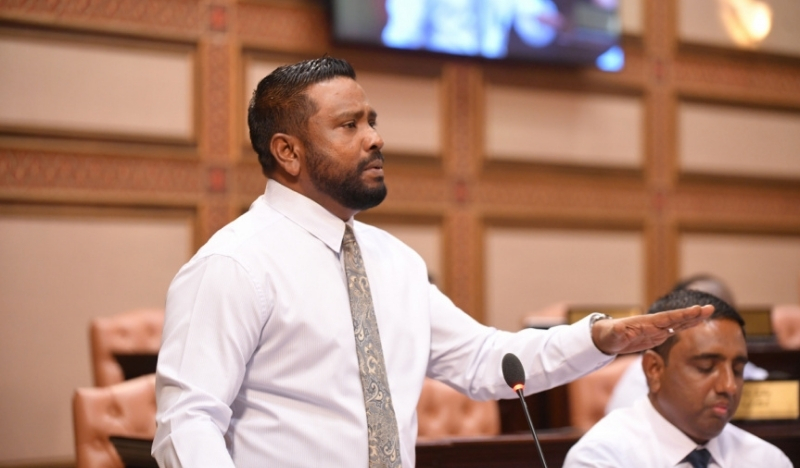
The Bill on the Right to Protection of Name and Reputation, submitted to the People’s Majlis yesterday on behalf of the Government by Vilimalé MP, Mohamed Ismail, defines defamation broadly to include representations that could cause a person to be ridiculed, hated, shunned or held in lower esteem by others. It also covers conduct that causes financial or commercial harm.
advertisement

advertisement

The proposed legislation treats defamation as a civil wrong rather than a criminal offence. However, its scope extends across different forms of communication and expression, including speech, broadcasts, print, drawings, cartoons, electronic messages, websites and social media.
This means that an expression does not necessarily have to be communicated through words to potentially give rise to a defamation claim. A gesture or other form of non-verbal communication could also fall within the law’s scope if it meets the definition of defamation.
Proposed remedies and damages
Under the bill, individuals and organisations could bring civil defamation cases against anyone whose statements or representations meet the legal definition. The legislation applies to Maldivian citizens, foreign nationals, companies, associations, media organisations, publishers and administrators of digital platforms.
The proposed law sets out the following remedies:
- Compensation: Courts could award moral damages ranging from MVR 50,000 to MVR 500,000, depending on the severity and reach of the alleged defamation.
- Material damages: Compensation could also cover proven financial losses, lost income and commercial harm.
- Public apology: Courts could order an unconditional public apology.
- Retraction and removal: Courts could order the publication of corrections or retractions, or the removal of articles, recordings and other content found to be defamatory.
The bill also allows the court to reduce damages where the accused party has promptly apologised, retracted the statement or otherwise made amends.
A person seeking to bring a defamation case must first issue written notice identifying the allegedly defamatory material and requesting a remedy. The recipient must be given seven days to respond.
Cases must be filed within one year of the expression or publication in question, while courts would be required to conclude proceedings within six months of filing.
The bill also provides defenses for statements that are substantially true and opinions based on true facts, provided they are made honestly and without malice.
Statements made during parliamentary proceedings and formal judicial proceedings would receive absolute privilege. Fair and accurate reporting of official proceedings, government inquiries and certain other public reports would receive qualified privilege.
Yameen’s defamation law to the proposed legislation
The proposed legislation comes after successive changes to the Maldives’ legal framework governing defamation, including the controversial law introduced under former President Abdulla Yameen.
Yameen ratified the Defamation and Freedom of Speech Act on 11 August 2016, criminalising defamation and introducing substantial financial penalties, alongside powers to suspend broadcasting services and shut down media outlets.
The law was strongly opposed by journalists and media organisations, who argued that its broad definitions and severe penalties threatened freedom of expression and press freedom.
Following the 2018 presidential election, Parliament passed legislation to repeal the controversial law on 14 November. President Ibrahim Mohamed Solih ratified the repeal on 22 November 2018, bringing an end to the 2016 Act.
However, the repeal did not remove defamation provisions from the country’s legal framework altogether.
The regulation governing compensation for defamation, which falls under the General Regulations Act (Act No. 6/2008), remained in effect. The 2008 legislation had originally provided a legal basis for regulations that lacked specific statutory provisions following the adoption of the Constitution.
The General Regulations Act was extended several times, with its defamation compensation regulation remaining in place after the repeal of the 2016 law.
Unlike the 2016 legislation, the proposed bill expressly classifies defamation as a civil wrong, meaning those found liable would face civil remedies rather than criminal punishment under this legislation.