
The Government of the Republic of Maldives has reaffirmed its commitment to the One China Principle, recognising the Government of the People’s Republic of China as the sole legal government representing the entirety of China.
In a statement, the Government said the Maldives remains consistent with its long-standing position, maintained since the establishment of diplomatic relations with the People’s Republic of China, that Taiwan is an inalienable part of China’s territory, in line with United Nations General Assembly Resolution 2758 and established principles of international law.


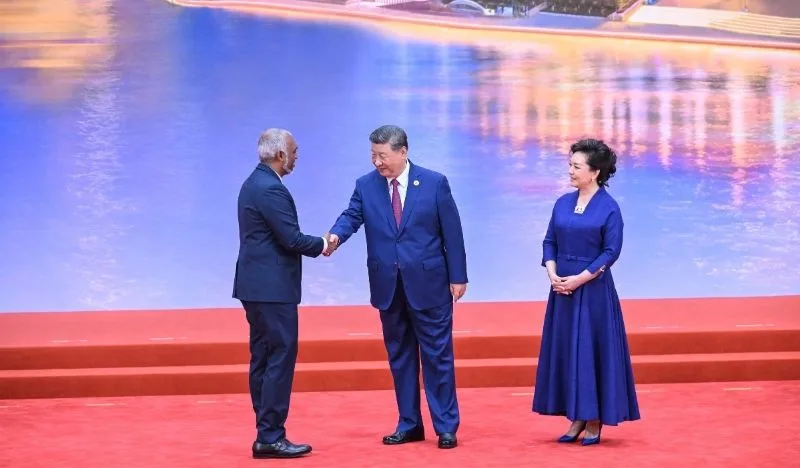
The Government added that it remains committed to further strengthening its partnership with the People’s Republic of China, highlighting continued cooperation in socio-economic development and expressing support for deepening ties based on peace, stability and mutual benefit.
The statement comes following recent bilateral talks between the United States and China, during which international media reports indicated that Presidents Xi Jinping and Donald Trump discussed issues related to Taiwan, including its political status.
In the aftermath of the talks, Taiwanese President Lai Ching-te publicly responded, reiterating Taiwan’s position on sovereignty amid differing international interpretations of the discussions.