

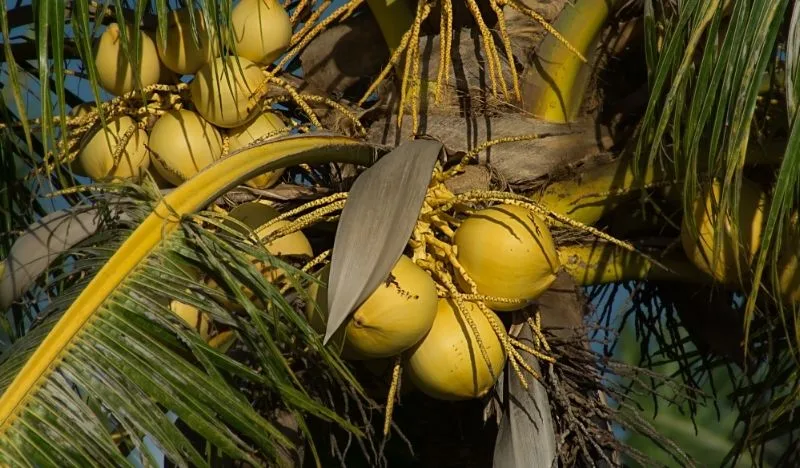
The Ministry of Fisheries, Agriculture and Ocean Resources has reminded importers that they must submit laboratory reports confirming that imported coconut palms and coconut palm products are free from specified diseases.
The ministry said in a gazetted notice published yesterday that the report must be issued by a competent laboratory in the exporting country as part of plant quarantine measures aimed at protecting the Maldives’ coconut palms from serious pests and diseases found in the region.


Following consultations with national plant protection organisations in countries exporting coconut palms and coconut products to the Maldives, India’s National Plant Protection Organisation confirmed through the Indian High Commission in the Maldives that Lethal Yellowing and Cadang-Cadang diseases are not present in India.
India’s NPPO has also identified plant quarantine station laboratories, Indian Agricultural Research Institute facilities and state agricultural universities as competent institutions to test for Bud Rot and Root Rot pathogens. The Ministry of Fisheries, Agriculture and Ocean Resources has published a list of eligible institutions in different Indian states.
Under the import procedure, applicants seeking to import coconut palms must submit a Plant and Plant Parts Import Application Form at least seven working days before the proposed import date. The application must include the correct scientific name and the exact number of palms to be imported.
The required laboratory report must be issued by an accredited laboratory with expertise in plant pathology or a laboratory recognised by the exporting country’s National Plant Protection Organisation. The report must confirm that the coconut plantation is free from Lethal Yellowing Disease, Bud Rot, Root Rot and Cadang-Cadang.
Imported live plants and plant parts must be free from soil and must not show dried-out or desiccated areas. Upon arrival, importers must present an approved plant import permit and an original phytosanitary certificate issued by the exporting country’s NPPO.
The phytosanitary certificate must also confirm that the shipment is free from Coconut Black-Headed Caterpillar (Opisina arenosella) and Palm Weevil (Rhynchophorus ferrugineus). Shipments may be detained if the original certificate is not submitted.
The ministry said coconut palms and plant parts may only enter the Maldives through Velana International Airport or Malé Commercial Harbour.
The announcement comes as the Maldives continues to address a widespread whitefly infestation affecting coconut palms across the country. The Ministry of Fisheries, Agriculture and Ocean Resources has begun distributing and applying pesticides to affected palms through island councils, following successful trials conducted at the Hanimaadhoo Agriculture Centre. The ministry said the pesticide will be distributed based on the number of coconut palms on each island, with the first application programme already carried out in collaboration with the HA. Baarah Council.