

Ihusaan Says Biometric Records Cover More Than 99 Per Cent of Expats
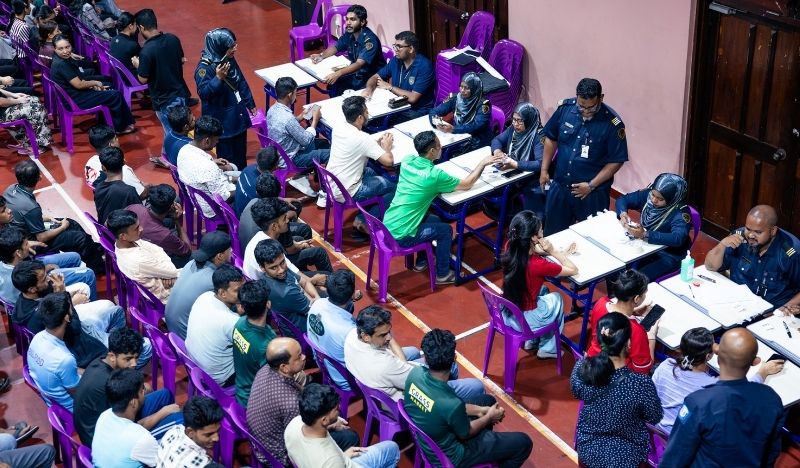
Maldives Immigration starting phase 3 of Operation Kurangi on May 9, 2026, which targets foreign workers in the Maldives who have not yet provided their biometric data to the authorities | Photo: Maldives Immigration
Homeland Security, Labour and Technology Minister Ali Ihusaan has said fewer than one per cent of expatriates in the Maldives currently lack biometric records, comparing the level of coverage with systems in Singapore and the United Arab Emirates.
Speaking during a session at the ongoing People’s National Congress (PNC) congress, Ihusaan said government records initially showed around 295,700 expatriates were authorised to remain in the country, but only about 22,700 had verified biometric records when the administration began addressing the issue.
advertisement

advertisement

He said targeted operations and the integration of technology had since increased biometric coverage among the approximately 240,000 workers targeted under the programme to 95 per cent.
According to Ihusaan, a further four per cent of those without biometric records have since left the Maldives, leaving approximately one per cent of the expatriate workforce currently in the country without registered biometric data or photographs.
The government has been conducting the biometric registration drive under Operation Kurangi, which includes the collection of fingerprints and facial photographs of expatriate workers. The administration has previously said the operation is intended to address undocumented foreign workers through identification, regularisation and enforcement.
Ihusaan said bringing the proportion of expatriates without biometric records below one per cent puts the Maldives alongside countries such as Singapore and the United Arab Emirates in terms of biometric coverage.
Both Singapore and the UAE operate centralised identification systems that incorporate biometric data into immigration and residency management. The UAE uses the Emirates ID system for foreign residents, while Singapore incorporates biometrics into its immigration and identity systems.