

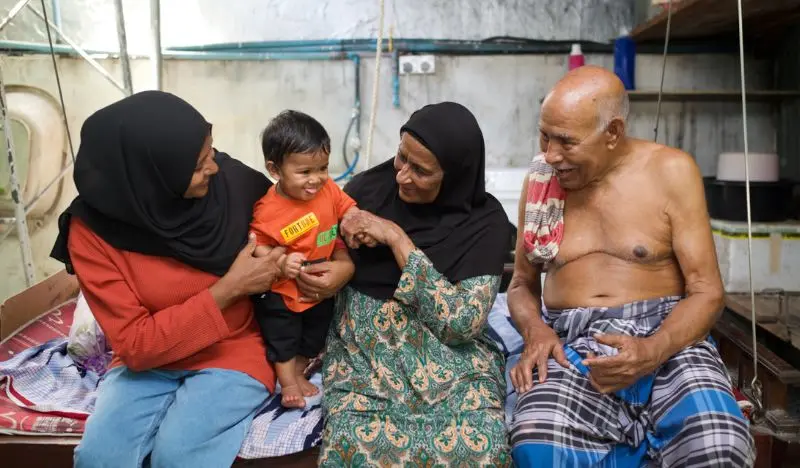
The World Bank has reported that the Maldives stands as the only country in South Asia capable of achieving high-income prosperity before its population becomes predominantly elderly, though it faces one of the fastest demographic transitions in the world.
This was reported in the publication, Demographic Change in South Asia: From Tailwinds to Headwinds for Development.


The publication additionally highlights that the Maldives’ comparatively high per capita income and steady economic growth place it on a different trajectory from its regional neighbours. While other South Asian nations risk growing old before growing rich, the World Bank projects that if the Maldives maintains the per capita growth rate recorded between 2013 and 2023, its per capita income will exceed USD 25,000 by 2044.
However, the report warns that policymakers have a narrow window to prepare for an unusually compressed demographic shift. The Maldives’ working-age population—those aged between 15 and 64—will peak in 2033 before beginning to decline.
By 2031, citizens aged 65 and older will account for 7 per cent of the population, officially classifying the Maldives as an ageing society. Just 13 years later, in 2044, that share will double to 14 per cent, marking the transition to an aged society. By 2050, more than 20 per cent of Maldivians will be aged 65 or older. By comparison, the regional average for transitioning from an ageing to an aged society across South Asia is 25 years.
Workforce and Youth Employment Challenges
To sustain economic momentum as the labour force shrinks after 2033, the World Bank urges the government to dismantle barriers preventing women from entering and remaining in the workforce, while creating pathways for older workers to upskill and extend their careers.
The report also flags mounting pressures on young jobseekers. Across South Asia, routine entry-level jobs for young people have fallen by 24 per cent due to artificial intelligence. For the Maldives, expanding financial assistance and modern skills training will be critical to helping young people adapt to evolving labour markets and launch private enterprises.
Healthcare and Fiscal Sustainability
Rapid ageing will place heavy demands on public services and state finances. The World Bank recommends shifting away from hospital-centric care towards a robust primary healthcare system capable of early detection of noncommunicable diseases, alongside training dedicated personnel for elderly care.
Simultaneously, the report stresses the need to overhaul the country’s pension framework to ensure long-term fiscal sustainability. As the ratio of retirees to working-age taxpayers rises, authorities will need to strengthen state revenue collection and improve the efficiency of public expenditure to support social protection and healthcare costs without destabilising public finances.