
Maldives Immigration has unveiled the Immigration Walk of Legacy, a permanent exhibition highlighting the institution’s history, milestones and development over the past 76 years.
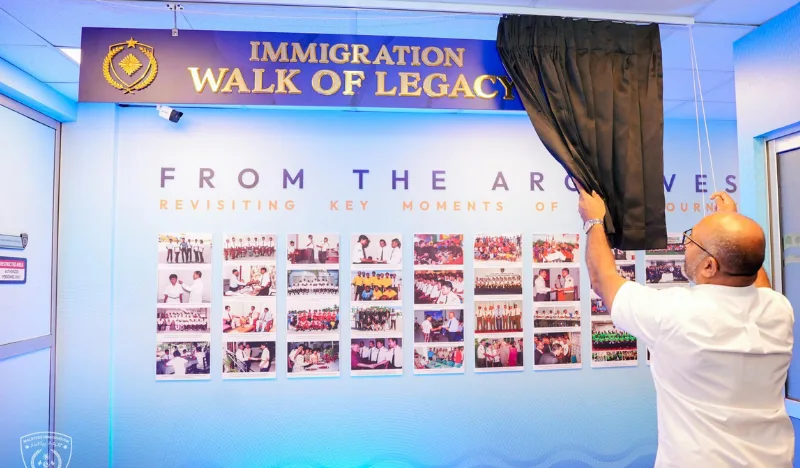
The exhibition was officially inaugurated by Minister of Homeland Security and Technology Ali Ihusan during a ceremony held on Thursday evening at the Immigration headquarters in the Velana Building. The event was attended by senior officials, retired officers, long-serving staff and businessman Mohamed Moosa, widely known as Uchu.


According to Maldives Immigration, the exhibition was established to preserve and showcase the institution’s history, transformation and achievements since its establishment in 1950.
The permanent exhibition takes visitors through a chronological timeline covering each decade from the 1950s to the 2020s, highlighting key milestones, developments and the evolution of the organisation.
It also features a ‘From the Archive’ gallery displaying historical photographs of the institution and its officers. Another section includes a map illustrating the expansion of Immigration services across the Maldives and the locations where passport services are currently available.
Dedicated exhibits showcase the institution’s core functions, including passport services, border security at airports and seaports, intelligence operations, enforcement activities and smart visa services. The displays combine historical records with major developments that have shaped each area over the years.
The exhibition also includes an Achievement Gallery recognising the institution’s major accomplishments, while its final section highlights the digital systems and technologies currently used to deliver Immigration services.
The inauguration brought together retired officers who served the institution over the years, as well as serving officers with more than 28 years of continuous service, in recognition of their contributions.
Controller General of Immigration Ahmed Faseeh said the project involved extensive work to collect and verify historical records and archival materials. He said the exhibition was created to preserve the institution’s history and ensure it remains accessible for future generations.