
The Malé City Council passed a resolution yesterday deciding to formally request control of the Olhuhiyaa cat facility from the Ministry of Fisheries and Ocean Resources if government authorities fail to clear stray cats from the capital’s streets within the next three months.
During a formal general meeting, councillors unanimously voted to send an official letter outlining the ultimatum to the Ministry of Fisheries, which currently oversees animal welfare operations.
advertisement

advertisement

The councillors expressed criticism over the facility’s mismanagement and the growing public health risks caused by the increasing stray cat population in Malé. Members raised alarms regarding diseased strays, animal waste on public streets, and the potential spread of dangerous infections among residents due to inadequate veterinary care and population control measures at the facility.
Council members also criticised the ministry for launching a secondary initiative named Baukalo while the primary Olhuhiyaa facility remains underutilised, accusing the government of wasting public funds without providing a tangible solution to the stray population. Malé Mayor Adam Azim stated that the city council possesses the capacity, resources, and operational readiness to manage the facility effectively and shelter the capital’s stray animals.
The Olhuhiyaa facility was inaugurated by President Dr Mohamed Muizzu in November 2024. The facility was built by Malé City Council; however, the current administration decided to take over the facility, which was initially managed by the Ministry of Agriculture and Animal Welfare before being transferred to the Ministry of Fisheries and Ocean Resources following a cabinet restructuring.
The ultimatum comes amid growing criticism from animal welfare advocates. A joint inspection report published by four local animal welfare organisations revealed severe sanitary lapses at Olhuhiyaa, including an outbreak of Mycoplasma caused by housing infected and healthy cats together, widespread lack of medical treatment, and high mortality rates among sheltered animals.
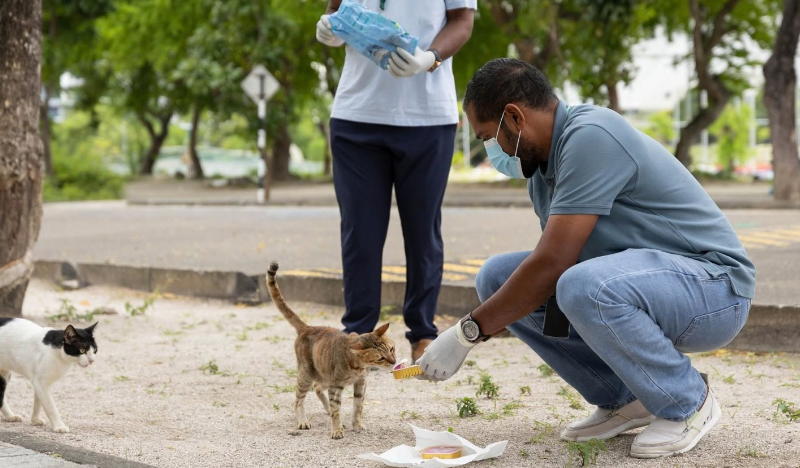
Meanwhile, the government has launched project Baukalo this week, a one-year national initiative aimed at improving animal welfare, maintaining cleaner public spaces, and promoting responsible coexistence between communities and animals.
Jointly spearheaded by the Ministry of Fisheries, Agriculture and Ocean Resources and the Housing Development Corporation (HDC), the pilot program in Hulhumalé focuses on the humane management of the city’s stray cat population through a mass Trap-Neuter-Return (TNR) program, adoption initiatives, responsible feeding guidelines, cleanliness protocols, and public awareness campaigns.