


MP Warns Criminal Procedure Reforms Will Fail Without Judicial Independence
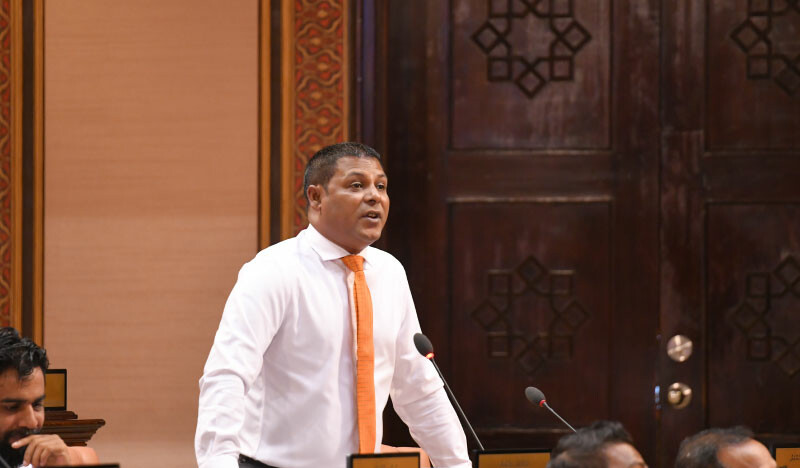
Photo: Parliament
Maldives Development Alliance (MDA) Velidhoo MP Mohamed Abbas has warned that proposed reforms to the Maldives’ criminal justice system will have limited impact unless the judiciary is protected from political interference.
Speaking during parliamentary debate on amendments to the Criminal Procedure Act and a proposed Asset Recovery Bill, Abbas questioned whether Maldivian courts had ever operated independently of the political influence of successive governments.
He argued that changes to legislation alone would not deliver meaningful reform without addressing concerns over judicial independence.
The parliamentary debate centres on a legislative package sponsored by Funadhoo MP Mohamed Mamdooh, which seeks to amend the Criminal Procedure Act, alongside an Asset Recovery Bill introduced by Central Fuvahmulah MP Ali Fazaad of the ruling People’s National Congress (PNC).
The proposed legislation would expand the state’s powers to trace, freeze and confiscate assets suspected of being linked to criminal activity. Under the Asset Recovery Bill, the Prosecutor General could seek civil asset forfeiture orders without a prior criminal conviction, applying the civil standard of proof known as the balance of probabilities.
The proposals would also allow law enforcement agencies to obtain court orders for covert monitoring of bank accounts for periods of up to three months. In addition, an asset management agency would be established under the Ministry of Finance, while civil asset recovery powers would apply retrospectively.
Proposed amendments to Section 130(a)(1) of the Criminal Procedure Act would also exempt certain internal investigative strategies, intelligence reports and agency documents from mandatory disclosure to defence counsel.
Opposition Warns of Due Process Risks and Political Misuse
The measures have drawn criticism from opposition MPs, who have raised concerns about due process, constitutional protections and the potential for political misuse.
South Galolhu MP Meekail Ahmed Naseem of the Maldivian Democratic Party (MDP) questioned the timing and purpose of the reforms, arguing that they could be used to intimidate local business owners ahead of the 2028 presidential election.
Meekail also raised concerns over provisions relating to confidential witnesses and argued that allowing assets to be confiscated without a criminal conviction would violate constitutional rights.
Ruling Party Invokes Shariah Principles on Evidence
The ruling party has defended the proposed changes, with Hulhumalé North MP Hussain Shareef emphasising the need for criminal procedure rules to comply with Islamic Shariah principles.
Addressing the admissibility of witness testimony, Shareef referred to historical disagreements within the judiciary over evidence provided by a faasiq, a term used in Islamic jurisprudence to describe a person regarded as transgressing religious or moral rules.
He called for greater legislative clarity on witness qualifications, highlighting differences between the Hanafi and Shafi’i schools of Islamic jurisprudence in their approaches to witness conduct and admissibility.
Call for Institutional Reform Over Procedural Changes
Despite the debate over evidentiary standards and asset recovery powers, Abbas maintained that procedural safeguards would be insufficient without broader institutional reform.
His intervention placed judicial independence at the centre of the debate, raising questions about whether the proposed changes would strengthen the administration of justice without adequate protection against political influence.
The legislative package is being considered amid wider disagreements over how the Maldives should balance the investigation and recovery of criminal assets with constitutional rights, fair trial guarantees and safeguards against the misuse of state powers.