

Nasheed to Run for MDP Chairpserson, Backs Fayyaz Ismail for 2028 and Outlines Major Governance Reforms
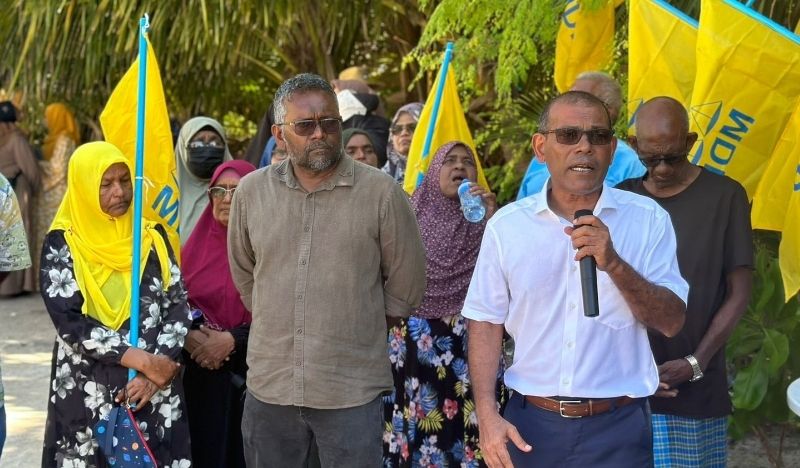
Former President Mohamed Nasheed (L) and former Chairperson of MDP, Fayyaz Ismail, on a campaign event on March 31, 2026 | Photo: MDP
Former President Mohamed Nasheed has said he plans to contest the Maldivian Democratic Party (MDP) chairperson post and expressed support for former party chairperson Fayyaz Ismail as the party’s presidential candidate for 2028.
Nasheed and Fayyaz presented their proposals at a press conference held today under the title Bodu Badhalu (The Big Change), where Fayyaz outlined a series of reforms they aim to introduce for the Maldives.
Dual Leadership Model Proposed
One of the central proposals involves restructuring the system of governance by introducing two separate leadership roles: a “Leader of the State” and a “Leader of the Government”.
Under the proposal, executive authority would remain with the “Leader of the Government”, who would continue to be elected by the public and oversee day-to-day administration.
The “Leader of the State” would serve as President in a largely non-political role, focusing on national matters and representing the state on key issues.
The proposal also suggests a new process for appointing and removing the state leader. Parliament and island councils would take part in the appointment process, while removal would require a national referendum.
Nasheed said he has proposed Fayyaz as the “Leader of the Government” under the reforms, effectively endorsing him as the MDP’s presidential candidate for 2028.
“I believe this needs to be done now, not in 2028,” Nasheed said.
The party plans to seek internal approval for the proposals before engaging the public for wider consultation.
Constitutional and Institutional Reforms
The proposals also include changes to the Constitution, Parliament, and governance structures aimed at strengthening oversight and accountability.
They call for the establishment of an oversight committee, appointed by Parliament, to monitor independent institutions. Members of independent commissions could face removal through a public referendum, similar to the proposed mechanism for Supreme Court justices, whose dismissal would require both a two-thirds parliamentary majority and a referendum.
The reforms also propose ensuring that key decisions require cooperation between Members of Parliament and local council representatives.
Parliamentary and Public Participation Changes
The plan introduces a cap on the number of Members of Parliament, to be defined in the Constitution. It also proposes restructuring Parliament to include members representing national interests alongside constituency representatives, as well as introducing quotas to increase women’s representation.
A recall mechanism would allow voters to remove MPs through a public vote.
The proposals further expand the use of referendums, including for the removal of the state leader and on major public issues. They also seek to increase the involvement of both MPs and council members in national decision-making processes.