


New GST Bill Targets Offshore Tourism Operators and Online Booking Platforms
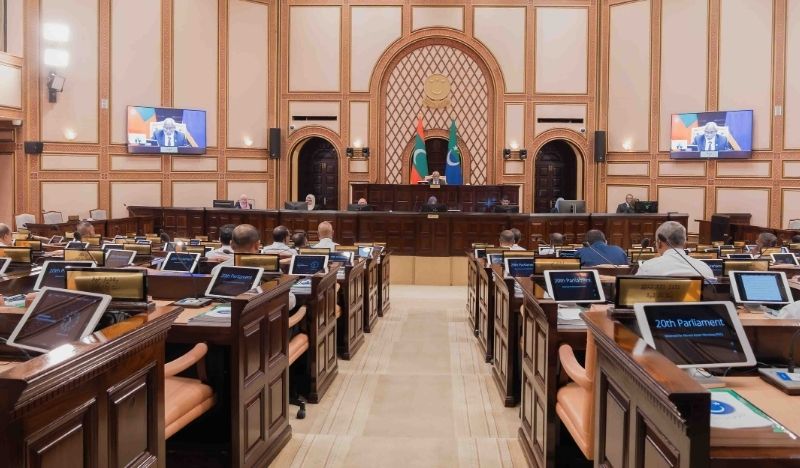
Parliament sitting on 08 March 2026 | Photo: People’s Majlis
The Maldivian government has submitted legislation seeking to extend Goods and Services Tax (GST) to foreign tour operators, overseas travel agents and online booking platforms that sell tourism-related services in the Maldives.
The bill, submitted to Parliament on behalf of the government by Kulhudhuffushi Constituency MP Mohamed Dawoodh, proposes amendments to the Goods and Services Tax Act to introduce the “Destination Principle”, under which tax would apply to qualifying tourism services based on where they are consumed rather than where the service provider is based.
advertisement

The proposed amendment fulfils a policy measure included in the state budget approved last year.
Under the existing framework, GST applies to businesses operating in the Maldives. The proposed changes would expand the definition of goods and services supplied in the country to include inbound tourism products sold by offshore entities without a permanent establishment in the Maldives.
The bill also proposes a broader definition of charter operations to specifically cover charter trips sold by safari vessels.
If approved, the amendments are scheduled to take effect on 1 October, with qualifying services supplied by foreign entities subject to the standard 17 per cent Tourism Goods and Services Tax (TGST) rate.
The government estimates that implementing the Destination Principle could generate an additional MVR 1.6 billion in annual revenue. Of this, MVR 1.3 billion is expected to come from foreign tour operators, while MVR 299.3 million is projected from overseas travel agents.
As TGST is payable in foreign currency, the government anticipates an additional $104.1 million in state revenue.
Establishing the necessary administrative mechanisms is expected to cost MVR 7.9 million, comprising MVR 2.8 million in one-off setup costs and MVR 5.1 million in annual recurrent expenditure, mainly for additional staffing.
As offshore booking platforms and travel agencies may not have a physical presence in the Maldives, the proposed system would require new administrative and payment mechanisms through the Maldives Inland Revenue Authority (MIRA).
The government expects revenue collection to increase gradually as MIRA develops compliance mechanisms and payment arrangements for international tourism operators and other offshore service providers.
The proposed legislation comes as the Maldives continues to face pressure on its foreign currency reserves. The shortage of US dollars in the domestic market has contributed to pressure on the local economy, with the government seeking measures to increase foreign currency inflows and strengthen official reserves.