
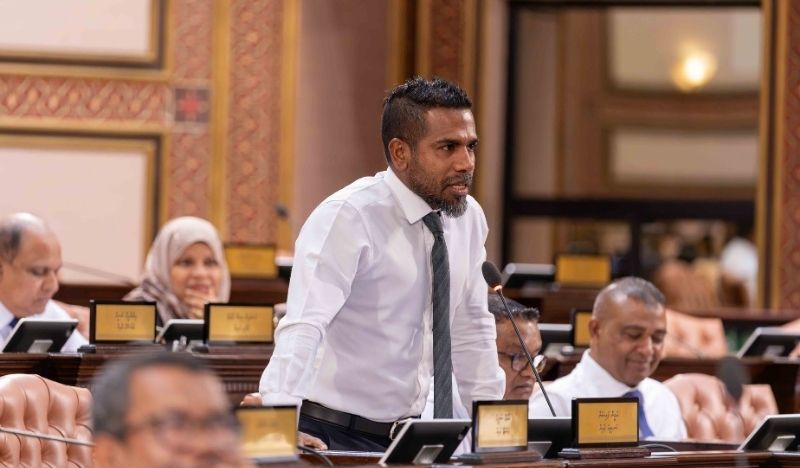
Imposing a statutory financial capability requirement on parents seeking to homeschool their children amounts to discrimination and risks shutting out vulnerable households, Kanditheemu MP Ameen Faisal warned during parliamentary debate.
Speaking on the floor of the People’s Majlis, MP stated that conditioning eligibility on household wealth would inevitably deprive low-income families of alternative educational avenues for children with exceptional learning needs.
advertisement

advertisement

“Imposing financial capacity as a statutory condition for homeschooling is discriminatory,” Ameen Faisal said. “This requirement risks disenfranchising and completely depriving children from families in need who genuinely require alternative learning arrangements.”
The contested provision forms part of a government-sponsored bill amending the Education Act, tabled on behalf of the administration by Huraa MP Dr Anara Naeem.
The legislation aims to create the Maldives’ first formal legal framework for home education, covering children unable to attend physical classrooms due to severe physical disabilities, mental health conditions, or other verified exceptional circumstances.
Under Section 16(b)(2) of the proposed legislation, parents or legal guardians must formally demonstrate the financial capacity necessary to sustain a child’s schooling before being granted approval to withdraw them from mainstream classrooms.
The requirement drew broader pushback across the chamber as lawmakers questioned both the equity and the social implications of the framework.
Galolhu South MP Meekail Naseem cautioned that the bill’s weak regulatory apparatus could be exploited by hardline religious elements who refuse to enroll their children in the public school system.
“There are currently many individuals adhering to extremist ideologies who keep their children out of school,” Meekail said, questioning the bill’s reliance on island councils for monitoring. “The regulatory mechanism established under this bill is exceedingly weak. It delegates this responsibility to local councils, raising serious questions over whether this oversight can function effectively in practice.”
Hanimaadhoo MP Abdul Ghafoor Moosa questioned whether the government had conducted adequate research before drafting the overhaul, arguing that genuine educational advancement relies on training qualified teachers and school leaders rather than fragmenting delivery models without empirical backing.
Beyond the homeschooling provisions, the bill legally anchors the start of the national academic year in January and grants the Ministry of Education authority to establish tutor standards, track student progress, and exempt children whose developmental conditions preclude any structured instruction.