
Nature is not a force that discriminates. Whether it is landslides in mountainous regions, shifting sand in desert oases, floods in villages near valleys, or the rising tide sweeping onto land and into the houses in small tropical islands, each and every country remains somewhat vulnerable to extreme climate conditions.
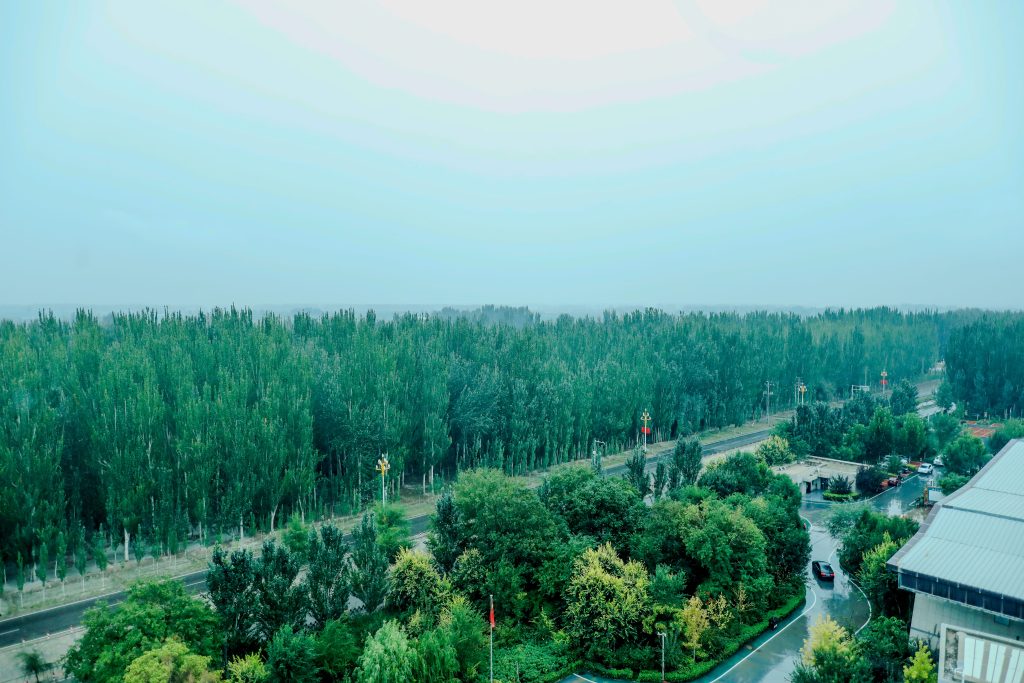
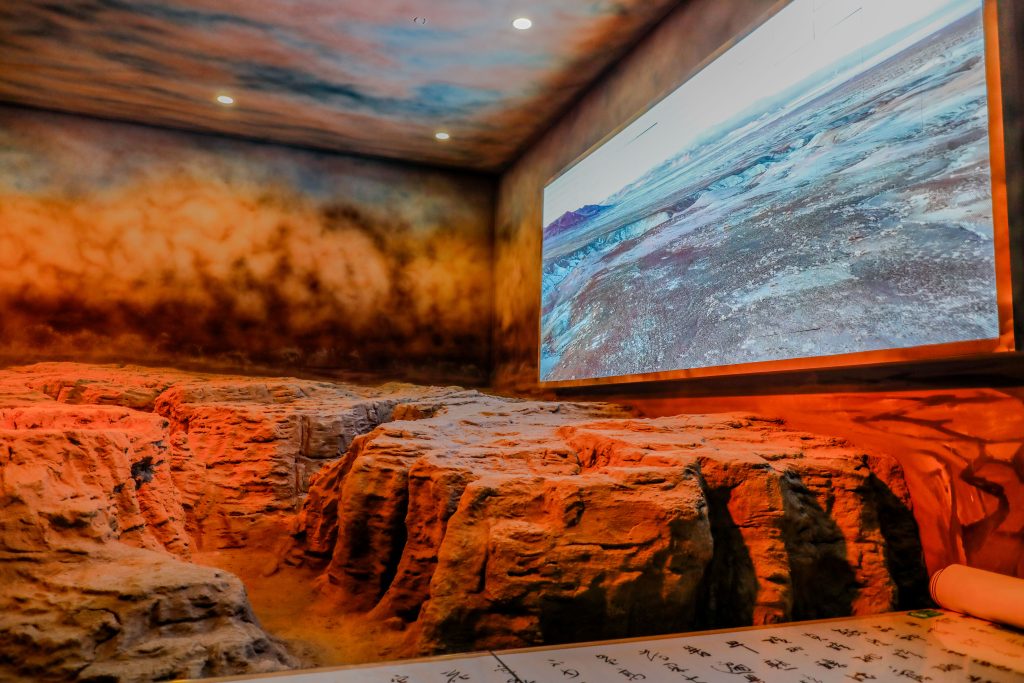
As I looked over at the green belt which runs through Aksu, one of the major prefecture in the Xinjiang Uyghur Autonomous Region in China, from on top of the Kekeya Memorial Hall, it is hard to imagine that this thriving oasis was once an unyielding wasteland. For generations, the Taklamakan Desert crept forward unchecked, threatening to swallow local communities under relentless waves of sand and dust.
advertisement

advertisement

Thousands of miles away in the Maldives, our threat looks entirely different. We face turquoise waves instead of yellow dunes, and ocean spray instead of stinging dust.
Yet the underlying human struggle is identical. Both regions feature populations standing at the edge of hyper-vulnerable terrain, locked in a fight to make fragile land habitable against hostile natural forces.

While the elements dividing our environments couldn’t be more distinct, the fundamental challenge remains the same: how does a nation engineer its own survival when the land beneath its feet is trying to disappear?
The Scale of Transformation of the Kekeya Afforestation Project
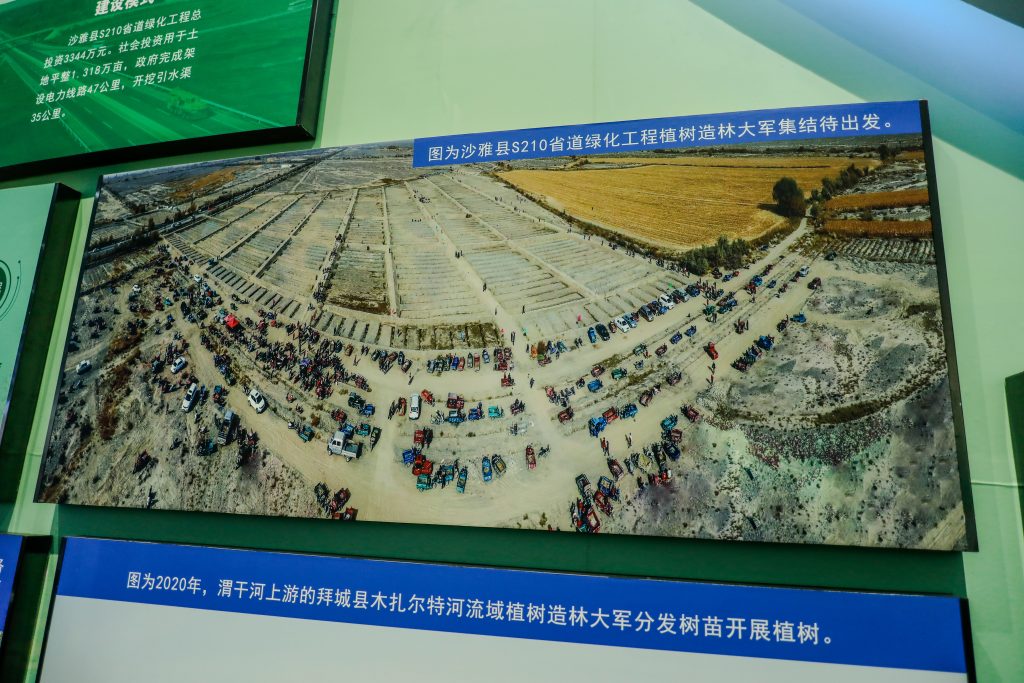
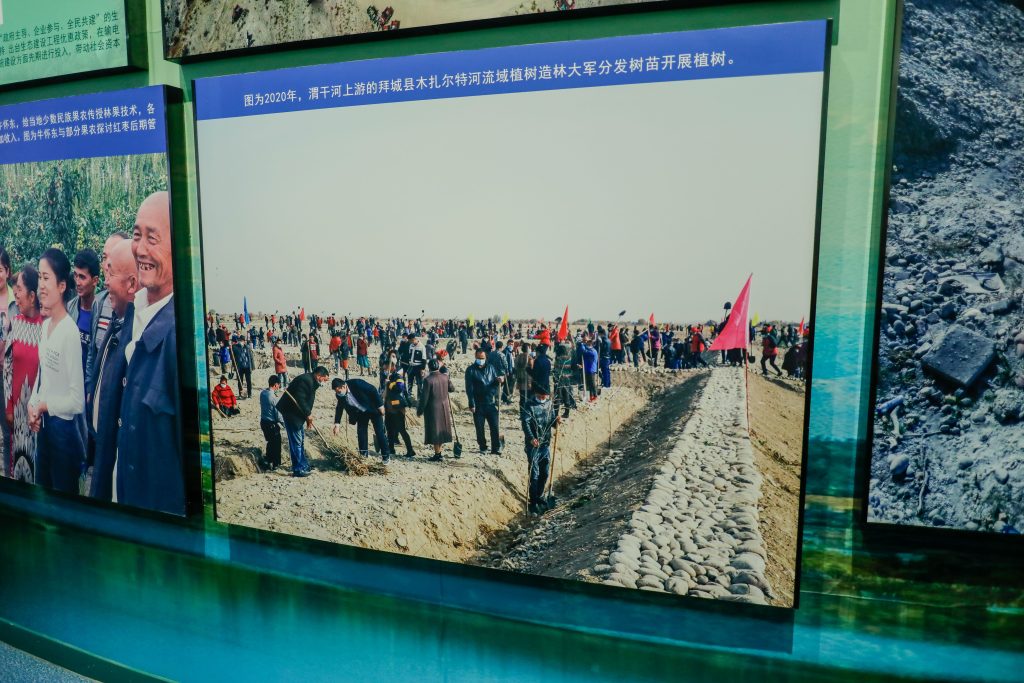
What unfolded across Aksu over the past four decades, beginning in the 1980s, was not a casual tree-planting initiative. It was a disciplined, multi-generational campaign against environmental change. Through five meticulous phases of afforestation, workers planted a staggering 25 million trees—five million in each phase—to build a massive green wall capable of pinning down the shifting sands.
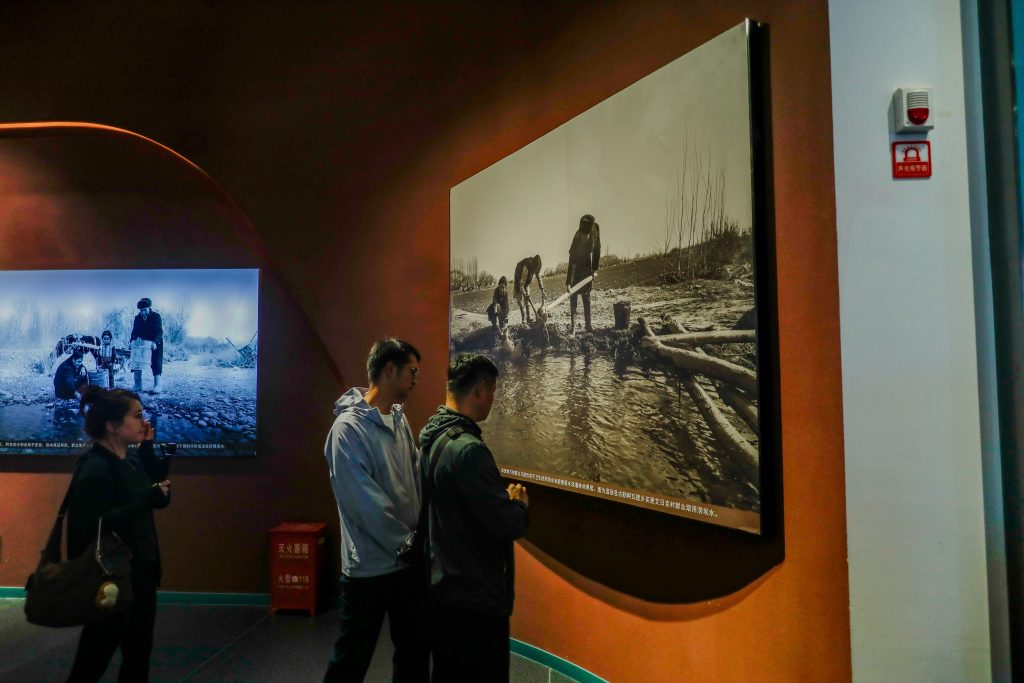
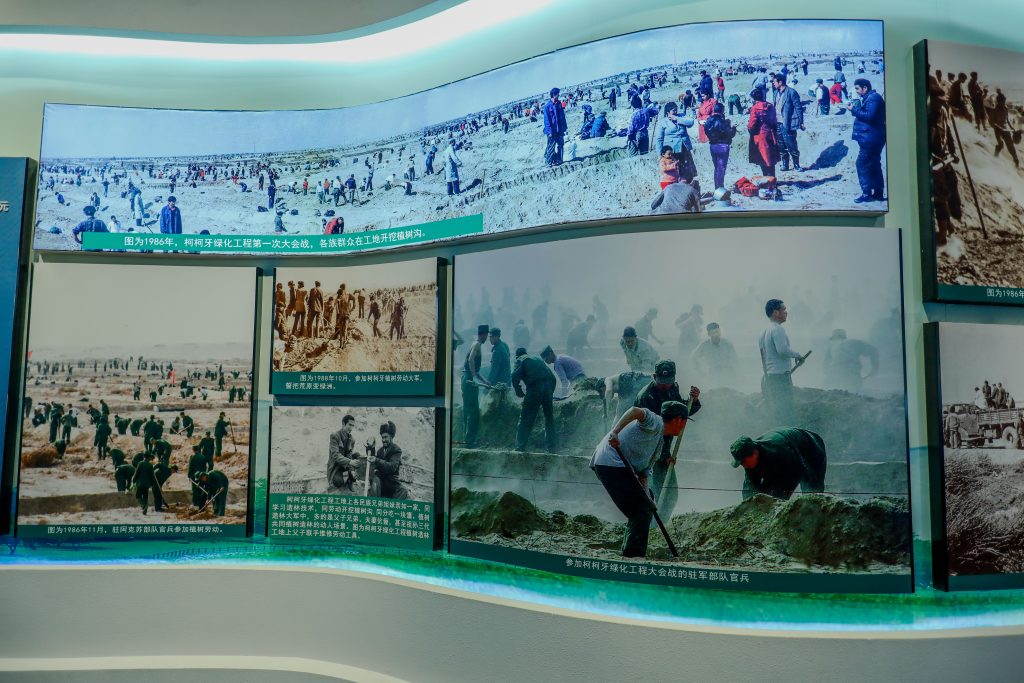
It would be amiss to not mention just who was involved in this group of workers. Hundreds of local people, from farmers, officers, military personnel, government officials — everyone and anyone who was able enough to dig and plant trees — joined in a powerful union to transform their land.
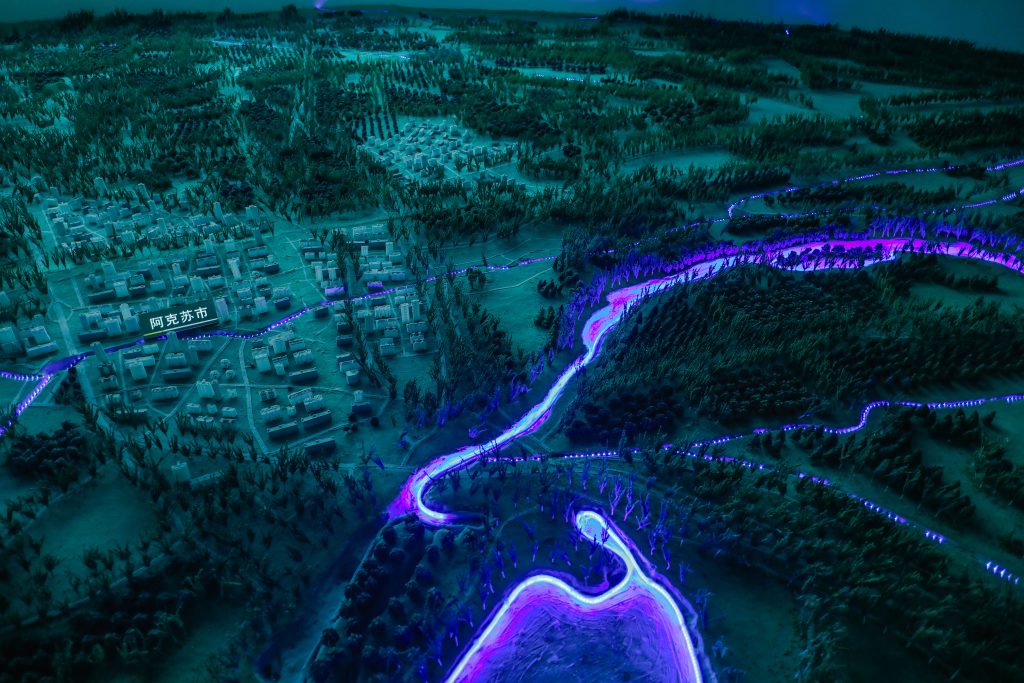
To keep millions of saplings alive in a region starved of rainfall, civil engineers took a direct path. They carved into the landscape to alter its hydrology, engineering three major river channels to run straight through Aksu.
This flowing water did far more than just quench vegetation. It permanently solved acute water scarcity and allowed long-absent local wildlife to return.
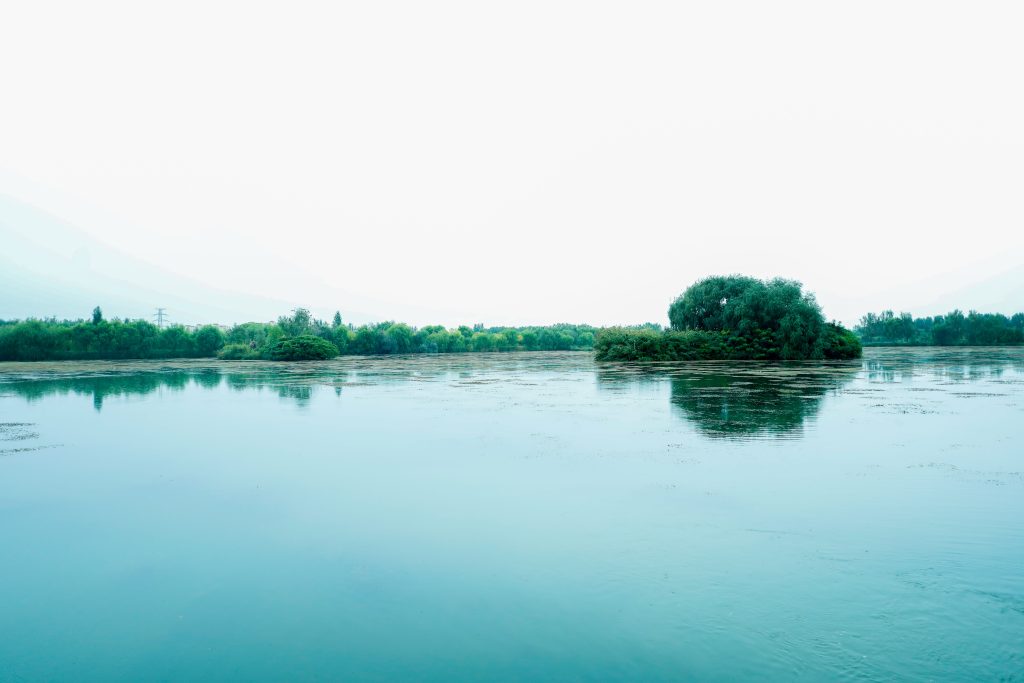
Furthermore, it transformed desolate dirt into public wetland parks with integrated river transport networks and family infrastructure where citizens now gather. By re-engineering the region’s hydrology, Aksu proved that even the most hostile terrain can be anchored in place if ecological planning is bold enough.
The Maldives Connection: Engineering vs. Nature
In the Maldives, our response to rising seas has largely focused on physical engineering. We reclaim land from lagoon beds to build elevated safe havens like Hulhumalé, construct heavy concrete seawalls, and attempt to restore coastal mangrove buffers.
Where Aksu’s success rested on relentless, long-term state planning and public participation, our own approach reveals glaring contradictions.
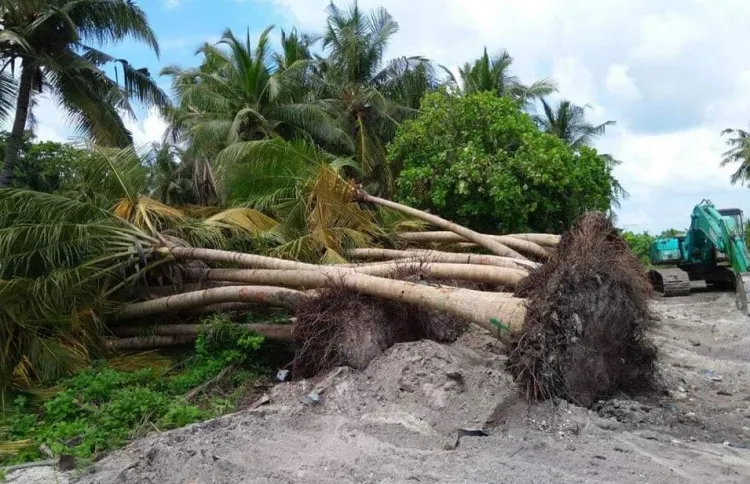
For decades, resort developers—frequently enabled by local councils and national regulators—have uprooted mature coconut palms and crucial trees from local islands to landscape luxury tourist resorts. The local population frequently documents these losses, and news outlets regularly report on entire shorelines stripped of their natural anchors. Yet meaningful enforcement remains virtually absent.
In Xinjiang, the government initiated massive state campaigns to foster nature where nothing grew.
Back home, where our very existence depends on preserving every root holding our fragile island topsoil together, we tolerate actions that actively dismantle the natural shields we already possess.
If low-lying island nations hope to survive the coming decades, political willpower must match the scale of the crisis—safeguarding natural defenses with the same rigor as built infrastructure.
Socio-Economic Payoff: From Survival to Prosperity
Aksu’s green wall was conceived as a defensive shield against desertification, but it rapidly evolved into an economic engine for the entire prefecture. The stabilized microclimate turned barren earth into fertile ground for high-value cash crops, most notably the famous high-sugar Aksu apple, alongside massive harvests of walnuts and red jujubes.


To turn this agricultural boom into long-term commercial strength, the region backed its farmers with substantial infrastructure. The RMB 1.65 billion (USD 246.1 million) Xinjiang Agricultural Trade Centre was constructed as a massive 1,000-mu (164.74 acres) processing hub. Featuring 200,000 tonnes of cold storage capacity, it handles up to 400,000 tonnes of produce annually for over 1,300 businesses.
The crucial takeaway for island nations fighting environmental threats is clear. Climate adaptation does not have to be a pure financial drain.
Stepping into the Xinjiang Agricultural Trade Centre brings the scale of this ecological transformation into sharp focus. The hub functions as the vital economic spine for regional agriculture, serving 1,369 businesses and directly supporting 1,659 vendor households who sell their harvests through the facility.
Interestingly, while 20 percent of vendor families are locals, 80 percent are from other mainland Chinese provinces, whose produce is sent to the trade centre for processing and resale. Fleet trucks roll in daily to haul produce out across vast national highway networks. The trade center acts primarily as a domestic distribution giant; while vast quantities of fruit reach every corner of mainland China, only a small fraction is sent for export abroad.
When defense is paired with smart development, ecological protection can yield entirely new economic engines—from sustainable aquaculture and renewable energy grids to climate-smart urban design.
Protecting a fragile landscape isn’t merely an expense of survival—it is an investment that pays massive economic dividends when backed by long-term industrial infrastructure.
Life Reclaimed: The Oasis of Aksu Wetland Park
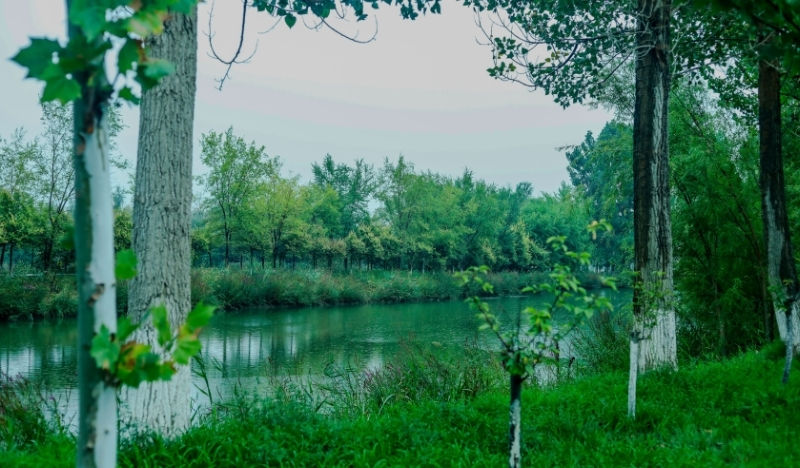
The true success of Aksu’s environmental engineering isn’t found on official blueprints or trade statistics—it is felt directly within the Aksu National Wetland Park. Located right alongside the green belt, what was once a harsh expanse of shifting sand has been transformed into a recreational haven for local families and visitors.

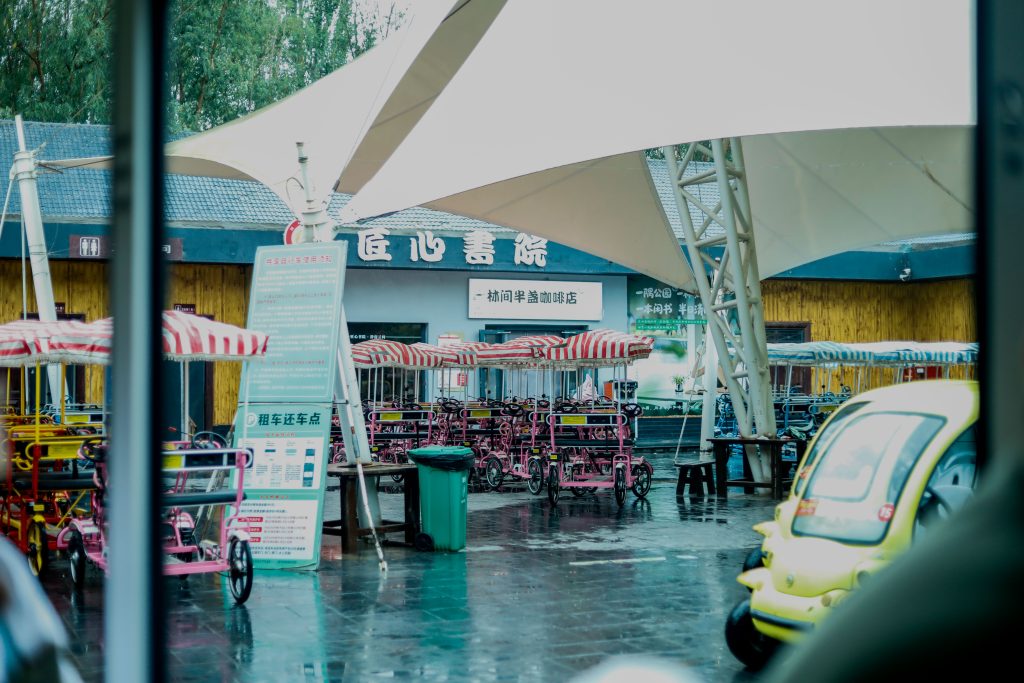
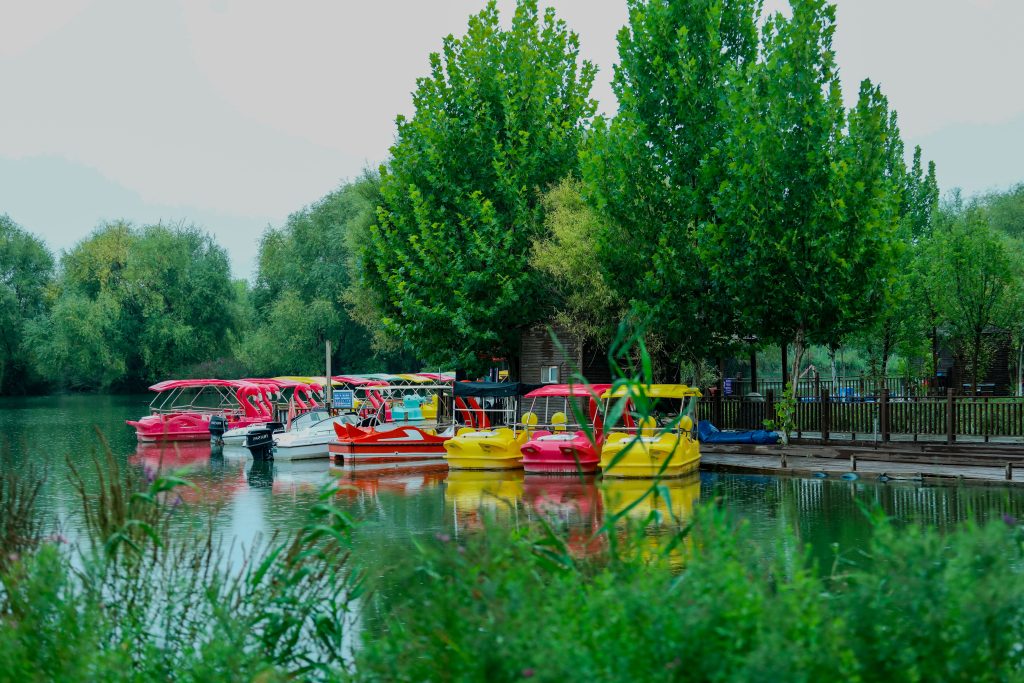
The river channels engineered straight through the desert are no longer just survival lines for saplings. They have become winding waterways filled with excursion boats, where families float through calm waters surrounded by lush vegetation.
The park is alive with sound and color. Over 200 species of wild birds have returned to nest in the restored marshlands, flying over orchards heavy with local fruits—from sweet apricots to the region’s famous apples. Boardwalks, viewing towers, and shaded pathways stretch across the park, allowing parents and children to walk through green corridors that did not exist a generation ago.
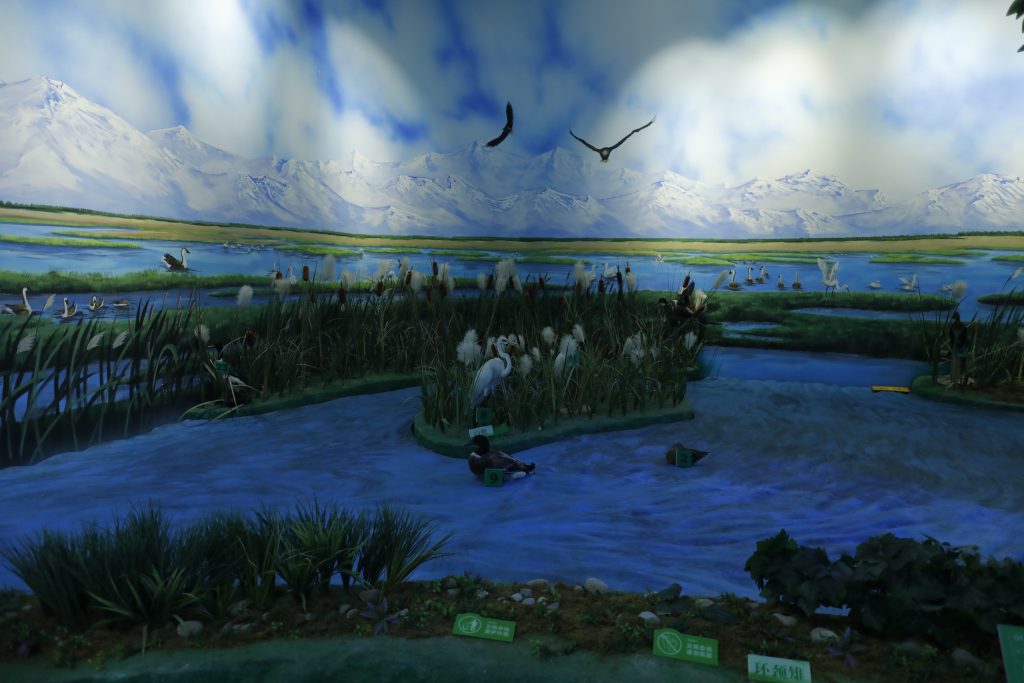
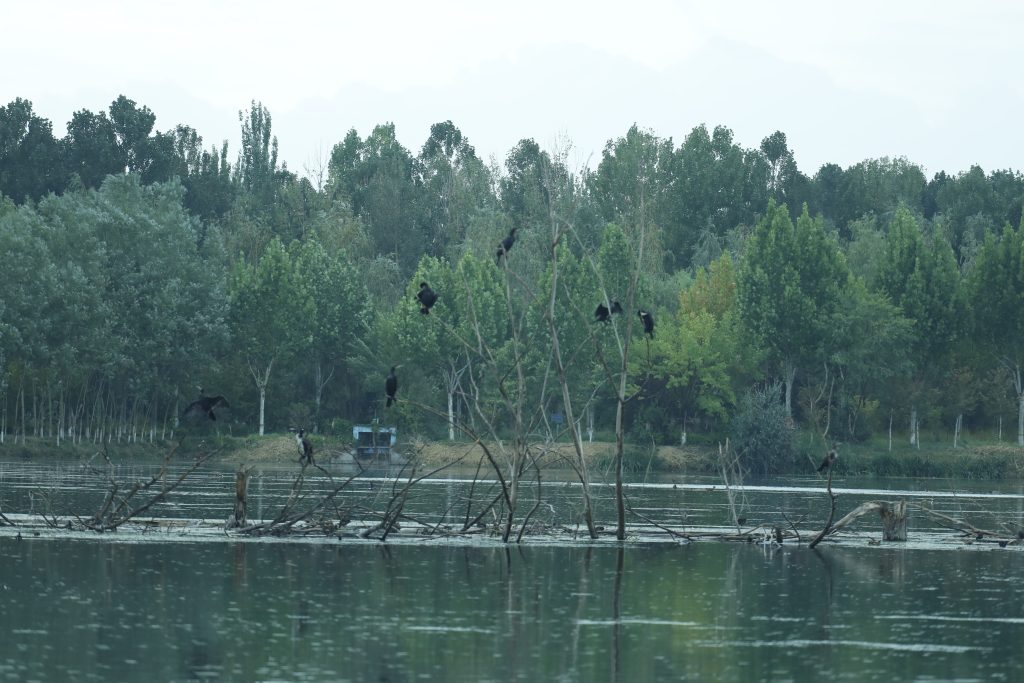
Seeing children ride boat currents through a desert oasis hits home for an island visitor. It proves that environmental engineering is not merely about defense—it is about restoring quality of life to spaces once threatened with extinction.
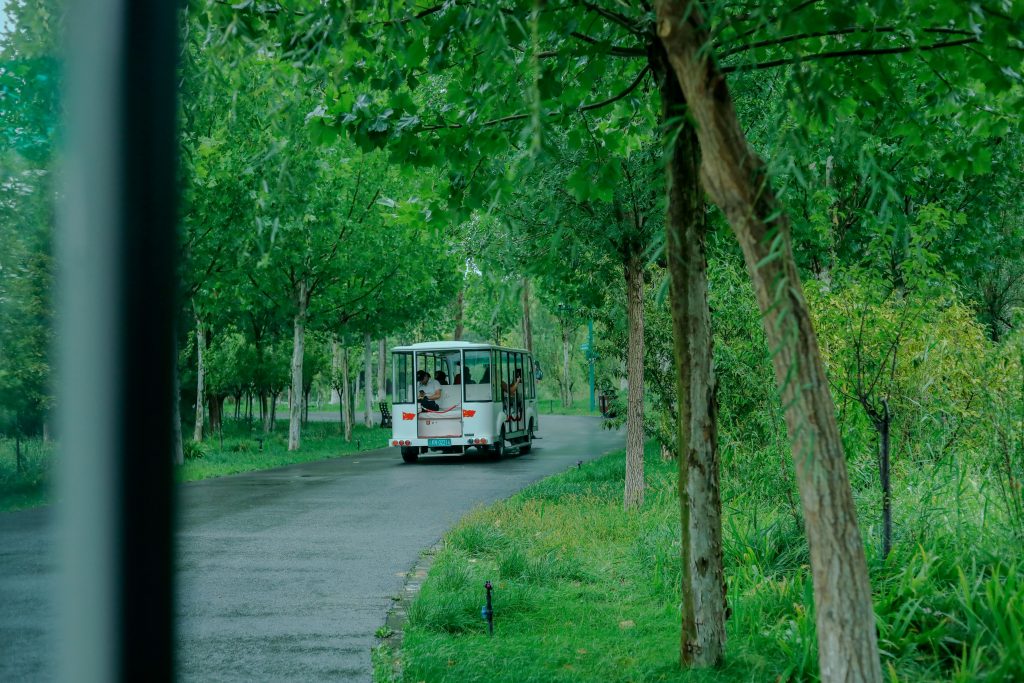
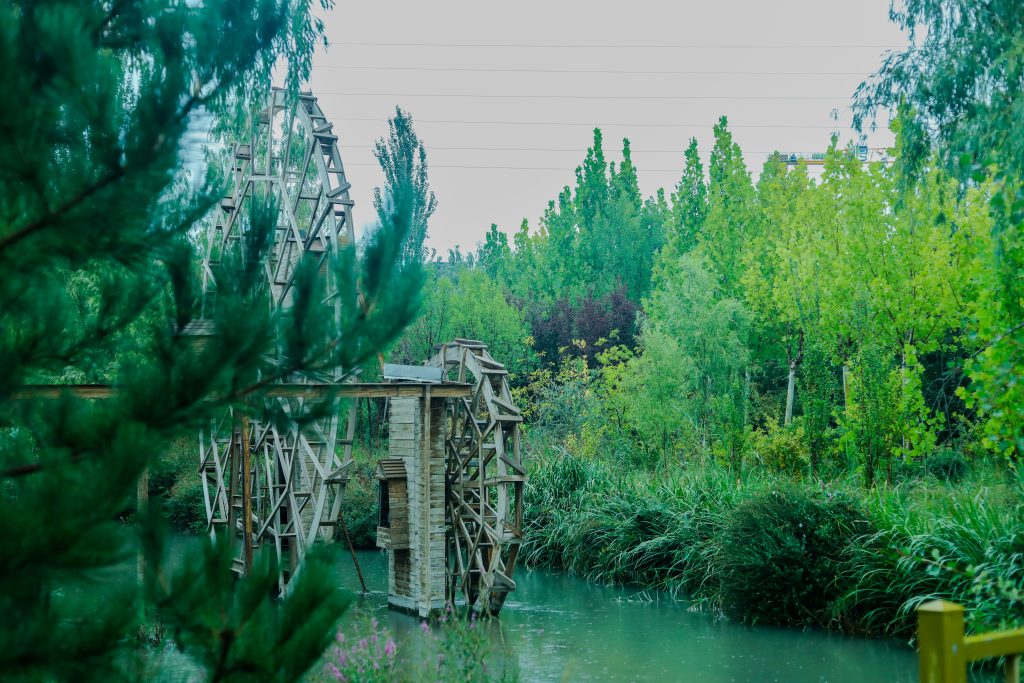
Transforming a hostile landscape into a public sanctuary demonstrates that environmental resilience, at its best, gives land back to the people who call it home.
Shared Lessons in Global Resilience
Whether standing on the hot, dry rim of Southern Xinjiang’s desert or on a narrow atoll in the middle of the Indian Ocean, human ingenuity and collective mobilization remain humanity’s strongest shield against environmental threats.
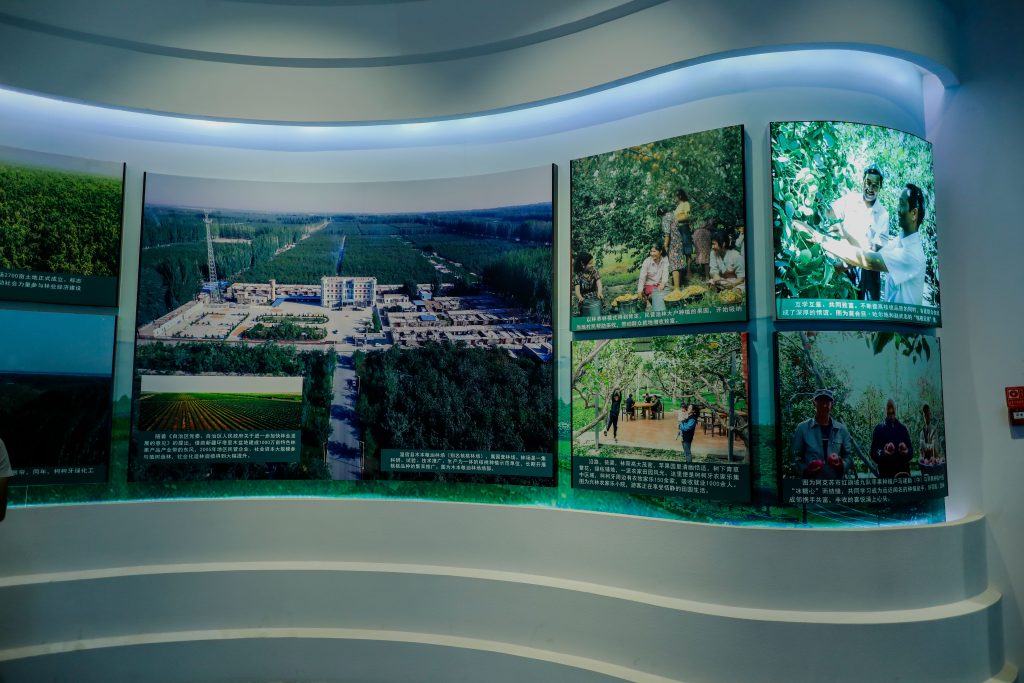
Aksu stands as living proof of what happens when clear vision, civil engineering, and sustained public participation line up against relentless natural forces.
Observing Aksu’s dramatic transformation from a dusty wasteland into a thriving agricultural and urban hub offers a powerful dose of practical optimism for low-lying island nations pioneering their own survival.
Changing global climates will test the absolute limits of vulnerable geographies, but human determination can still rewrite the outcome—if only we choose to match the ambition and continuity that survival demands.