

There is a distinct, almost forgotten magic in getting lost in a book. It is the quiet stillness of turning a crisp paper page, the slow immersion into a world built entirely out of ink and imagination, and the familiar weight of a dog-eared novel passed from hand to hand until its spine softens. For generations, literature was not merely a pastime; it was a slow, deliberate conversation between writer and reader—one that demanded patience, empathy, and sustained focus.
Today, that rhythm is being systematically dismantled. Across the globe, and sharply across the Maldives, the act of reading has undergone a quiet, troubling downgrade. People are technically reading more words every single day than at any point in human history, yet, the cognitive depth of that engagement has collapsed. Instead of sinking into chapters, modern readers skim captions, scroll through notifications, and scan fragmented headlines. In the Maldives—a nation with a proud oral and literary heritage that celebrates a near-universal literacy rate—this trend exposes a glaring systematic failure. While access to text has never been wider, the institutional habits required to cultivate deep, analytical readers are being hollowed out from primary school classrooms all the way to university lecture halls.


From Communal Print to Fragmented Screens
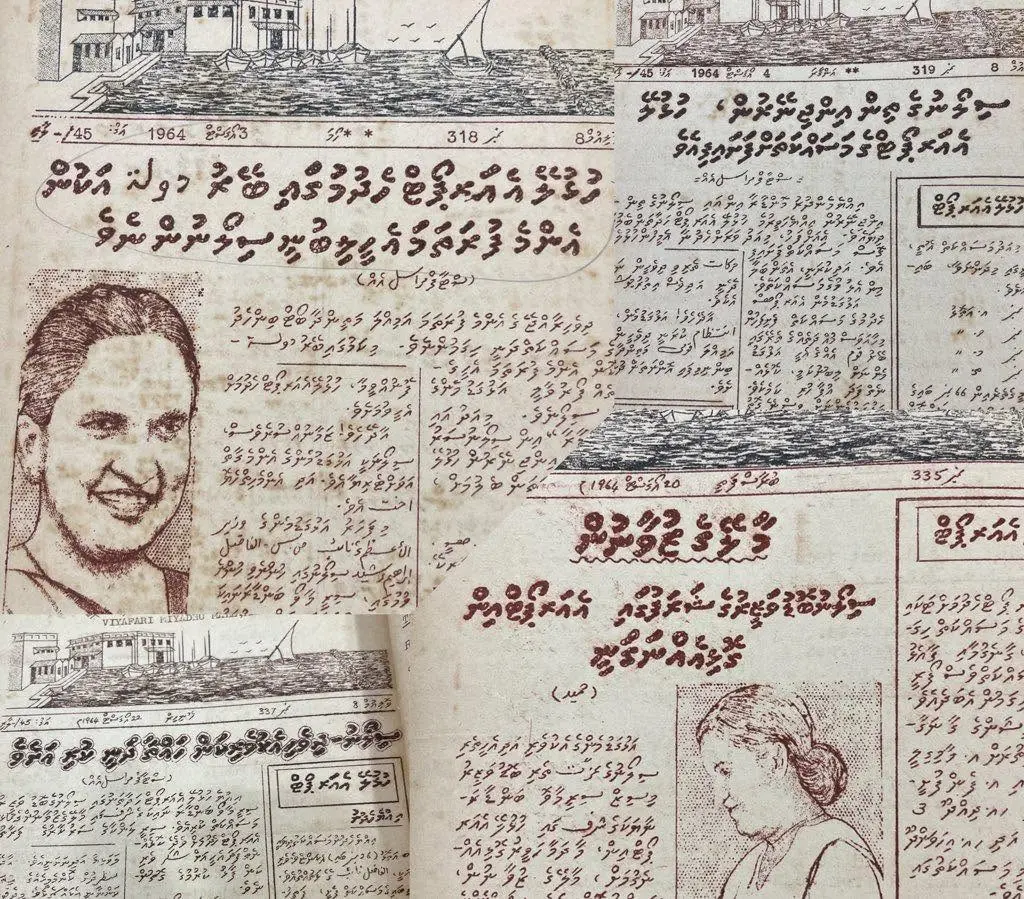
Photo: Lucas Jaleel
To grasp the full extent of what has been lost, one must look back at an era when scarcity made the printed word precious. Decades ago, before high-speed internet and smartphones connected every island to the global digital stream, physical books and periodicals were prized communal assets. In Malé and across the atolls, households shared well-worn novels, religious texts, and local magazines until the pages frayed at the edges.
Local literary publications such as Faiythoora served as vital incubators for Dhivehi prose, poetry, and historical commentary, while print newspapers like Haveeru and Aafathis anchored daily public discourse. Serialized Dhivehi fiction captivated readers week after week, seamlessly blending traditional storytelling rhythms—rooted in raivaru, bandhi, and local folklore—with modern narrative forms. Reading was simultaneously a solitary refuge and a shared cultural anchor; stories were borrowed, debated over evening tea, and treated as serious intellectual engagement rather than passive background noise.
Fast-forward to the present, and the landscape looks starkly different. The contemporary Maldivian reader is mobile-first, bilingual, and trapped inside a hyper-visual attention economy. Among younger demographics, recreational reading has largely migrated toward English-language digital content, driven by global pop culture, streaming ecosystems, and social media platforms. While this bilingual fluency opens doors to international media and global commerce, it has come at the direct expense of Dhivehi literature. Local authors, editors, and publishers routinely lament shrinking print runs and dwindling leisure reading in the mother tongue, signaling a slow, quiet erosion of linguistic depth and cultural continuity.
While small pockets of print enthusiasm survive in Malé—through independent book clubs, specialty café reading nights, and viral “BookTok” spikes for commercial fantasy and romance—these trends mask a deeper structural reality. Passing social media hype and niche urban gatherings cannot compensate for the disappearance of a nationwide, systemic culture of sustained, critical reading.
Failing the Reader: A Critique of Curriculum Reform

Nowhere is this erosion more visible than inside the Maldivian education system, where well-intentioned reforms have inadvertently stripped away the very exercises that build analytical minds.
Under older schooling frameworks, reading was treated as a rigorous intellectual discipline rather than optional enrichment activity. Students were routinely required to complete structured reading comprehensions that demanded close textual analysis, write detailed book reviews, and engage deeply with set literary works. Writing proper book reviews forced students to read texts from cover to cover, track character arcs, evaluate an author’s underlying thesis, and articulate an independent, reasoned judgement. Similarly, traditional comprehension exercises trained young minds to sit patiently with dense, unfamiliar passages, decode subtext, and extract nuanced meaning without digital shortcuts.
Following the rollout of the competency-based National Curriculum Framework in 2015, the education system pivoted aggressively toward “modern,” activity-driven pedagogies. On paper, the ambition was laudable: to move away from rigid rote memorization and foster holistic, 21st-century learners. In practice, however, classroom implementation has frequently sacrificed intellectual depth for administrative convenience. Traditional book reviews and rigorous, sustained reading comprehensions have largely vanished from everyday classroom routines, replaced by fragmented worksheets, visual slide decks, and bite-sized tasks designed for quick standardized assessment.
This systemic shift has created a troubling developmental gap. By sidelining long-form reading and critical book evaluations, the curriculum has removed the primary mechanisms through which children learn how to interrogate a text rather than merely skim it. Educators across the archipelago increasingly note that while today’s students can rapidly scan a screen for surface-level facts, many struggle to follow a complex twenty-page argument, retain narrative threads, or synthesize competing ideas. In trying to modernize teaching, the system has quietly abandoned the slow, uncomfortable cognitive work that actually produces critical thinkers.
Global Ripples: US Book Bans and Local Shelves

Compounding these domestic curriculum failures is the Maldives’ heavy reliance on imported English-language publishing ecosystems, leaving local bookshelves surprisingly vulnerable to ideological battles fought thousands of miles away. In recent years, an aggressive wave of organized book challenges and bans across school districts and public libraries in the United States has sent tangible shockwaves through international book distribution networks.
When major American school systems pull titles from shelves over themes involving race, politics, identity, or complex social realities, the commercial calculus for global publishers shifts immediately. Print runs for challenged or potentially controversial young adult and contemporary titles are scaled back, international licensing slows down, and major publishing houses become noticeably more risk-averse in commissioning bold, thought-provoking literature. For Maldivian bookstores, school librarians, and local distributors who source their inventory through US and UK publishing catalogs, this translates directly into a narrower, more sanitized pool of available titles—alongside steeper import costs for independent or socially complex works.
Paradoxically, censorship abroad fuels unregulated digital workarounds at home. Driven by the classic “Streisand effect,” young Maldivians active on global social media platforms frequently encounter viral debates surrounding banned American books. Unable to find these titles on local shelves—either due to global supply bottlenecks or the Maldives’ own regulatory screening under domestic cultural and religious guidelines—tech-savvy readers turn immediately to e-books, international digital storefronts, and informal file-sharing networks. As a result, physical bookshelves grow safer and narrower, while uncensored digital consumption thrives quietly behind closed screens, entirely disconnected from structured academic guidance or thoughtful mentorship.
Higher Education and AI: Institutionalising the Shortcut
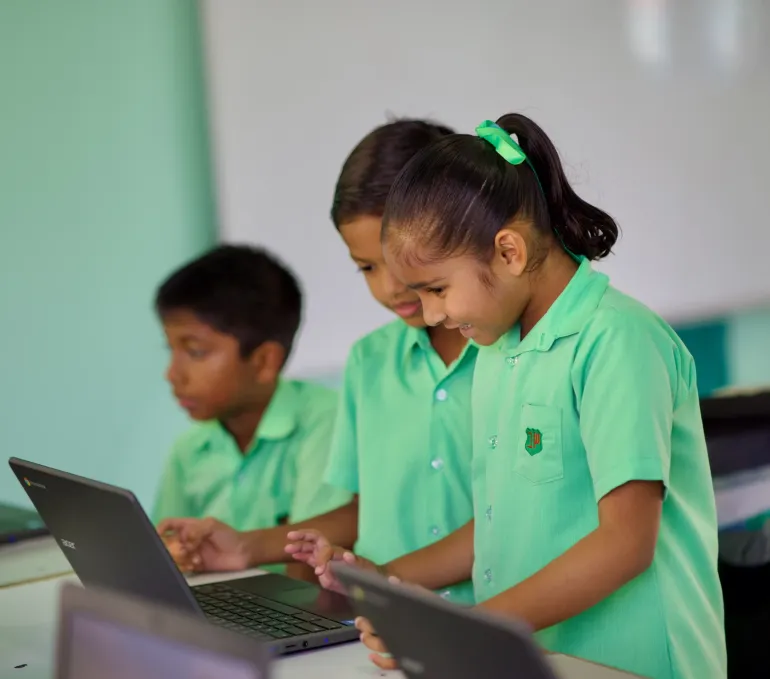
Photo: UNICEF Maldives/Shaari
If primary and secondary schools have weakened deep reading, higher education and modern media are finishing the job. Over the past decade, Maldivian media’s shift from print dailies to real-time news portals and social feeds has conditioned audiences to consume information in rapid bursts, leaving investigative journalism and long-form essays starved for attention.
In higher education, this impatience has collided with generative AI. Rather than defending academic rigour, many Maldivian colleges and universities encourage—or tacitly allow—students to rely on AI tools to summarise dense journals, extract bullet points from lengthy research papers, and assemble literature reviews in minutes.
Framed as “efficiency” and “AI literacy,” this reliance on shortcuts carries a steep cost. Wrestling with a thirty-page research paper—questioning methodology, spotting flaws, and tracing an argument—is the essence of higher learning. Normalising AI summaries trains students to accept pre-digested conclusions without verifying evidence, producing graduates who can prompt a chatbot but struggle to independently audit a complex contract, policy brief, or market report.
Meanwhile, Dhivehi stands at a crossroads. Because it remains a low-resource language in global AI development, unchecked reliance on English-centric tools risks further marginalising local literature. Yet used deliberately, AI transcription and text-to-speech tools could digitise ageing Dhivehi archives and bring Maldivian heritage to a mobile-first generation through accessible audiobooks.
The Corporate and Policy Imperative
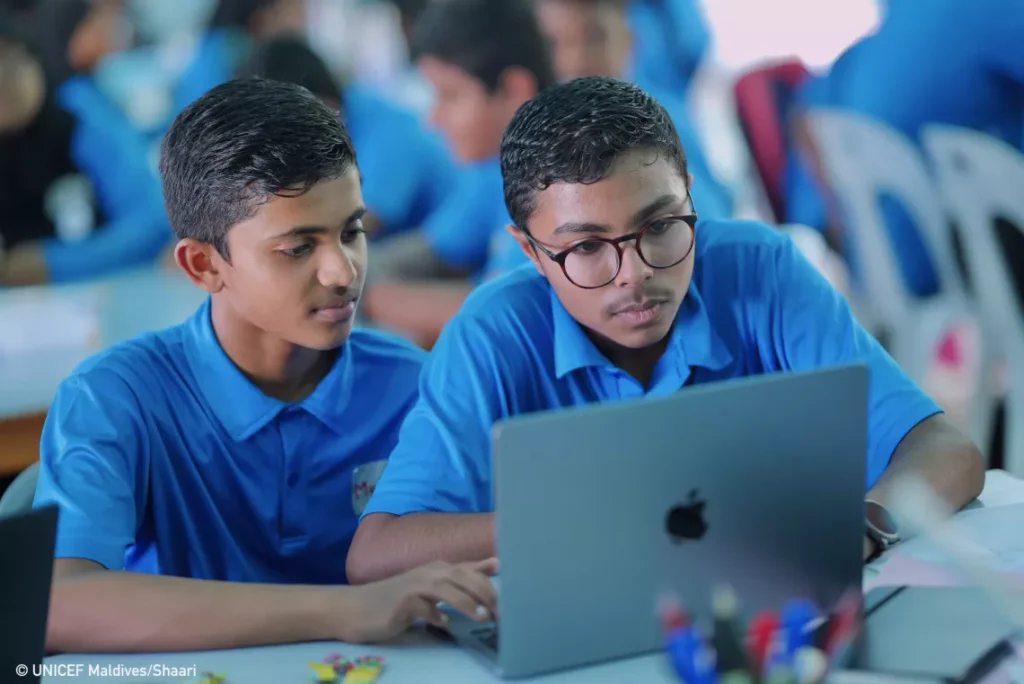
Photo: UNICEF Maldives/Shaari
For the Maldives’ corporate sector and policymakers, the collapse of deep reading is not a harmless generational quirk—it is a looming human-capital crisis. As the nation pushes to diversify its economy beyond traditional tourism into financial services, digital technology, maritime logistics, and knowledge-driven enterprise, employers urgently require a workforce capable of sustained concentration, rigorous critical thinking, and independent judgment.
Those cognitive muscles cannot be automated, nor can they be built on a diet of fragmented slide decks and AI-generated summaries. Reversing this decline demands an honest, uncompromising reckoning from education leaders. The Ministry of Education and curriculum developers must move beyond surface-level competency checklists and restore the foundational exercises that genuinely cultivate analytical rigor: structured, close-reading comprehensions, mandatory full-length book reviews, and dedicated classroom hours for uninterrupted reading. Higher education institutions, meanwhile, must draw a firm pedagogical boundary—teaching students to use AI as an analytical aid rather than a crutch that replaces reading primary academic literature.
Ultimately, a nation’s progress cannot be measured solely by its literacy statistics or the speed of its digital adoption; it is defined by the depth of thought its citizens are capable of sustaining. The quiet resilience of a book—its demand that we slow down, sit with complexity, and engage with an idea from start to finish—remains irreplaceable. Reclaiming the Maldives’ reading culture does not require rejecting modernity, but rather refusing to let convenience hollow out curiosity. If educators, policymakers, and business leaders act with conviction today, the next generation of Maldivians will not merely skim the surface of an algorithmic world—they will possess the intellectual depth to shape it.