

Making Students Wear Ties is a ‘Harm Inflicted on Them,’ Says Dr Hameed
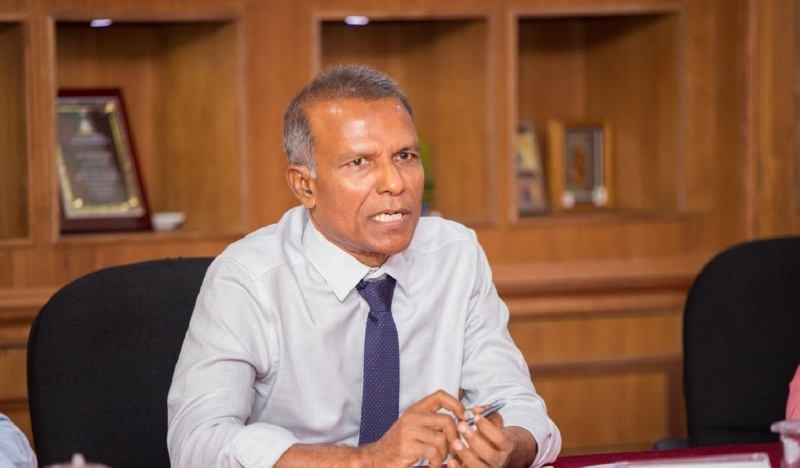
Former MNU chancellor Dr. Hassan Hameed.
Making students wear ties as part of school uniforms amounts to harm inflicted on them, former chancellor of the Maldives National University (MNU) Dr Hassan Hameed has said, arguing that school attire must reflect the country’s hot and humid climate.
Writing on his blog, Dr Hameed criticised the Education Ministry’s plan to standardise school uniforms nationwide. Commenting on the revised uniform code, he said items such as ties, coats and vests are styles suited to colder countries and are ill-adapted to Maldivian conditions, where such requirements place unnecessary physical strain on students.
advertisement
advertisement

He further added that making ties compulsory in school uniforms under the pretext of preparing students for working life is akin to deceiving them. He argued that the rationale behind introducing ties does not reflect the realities of the Maldivian labour market. He said that only a small proportion of school leavers will eventually work in professions that require formal attire such as ties, noting that around one third of the current workforce comprises foreigners and that key sectors including fisheries, agriculture and manual trades do not involve such dress codes.
Dr Hameed said obliging students to wear ties would also be impractical in the Maldives’ hot and humid climate, causing discomfort and excessive perspiration that could reduce students’ ability to concentrate in class. He added that wider use of air conditioning to offset discomfort would increase operational costs for schools. If ties are deemed necessary, he said, teachers should also be required to wear them.
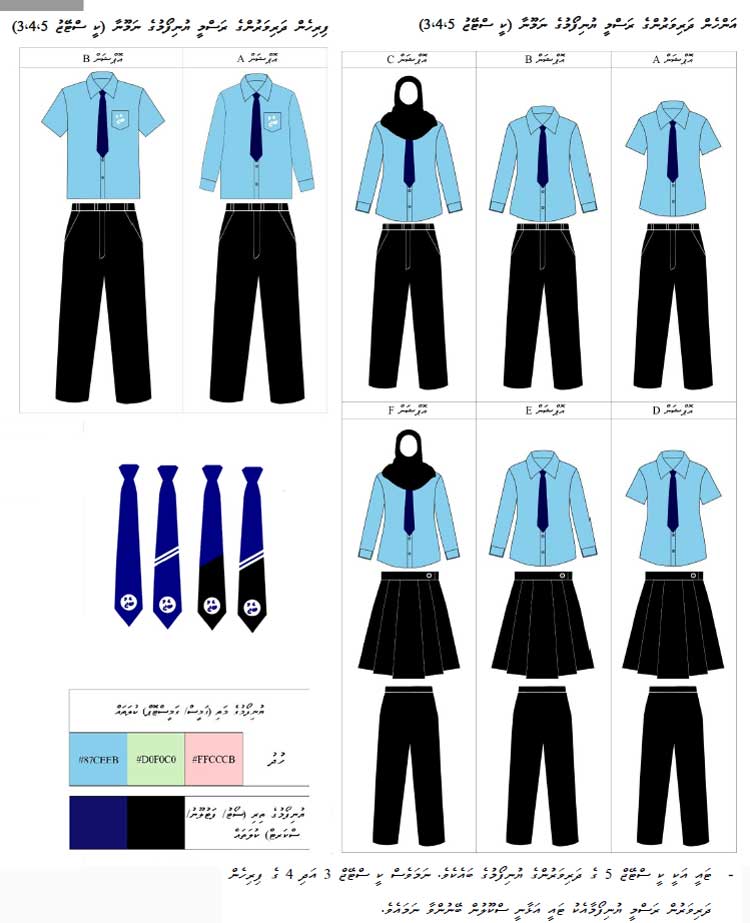
The Ministry of Education announced last month that it will introduce a revised uniform code for government schools from the 2027 academic year, following consultations with school management teams. Under the new rules, ties will be mandatory for students in Key Stage 5, covering grades 11 and 12, while individual schools may decide whether students in Key Stages 3 and 4 are required to wear them. The code also requires school badges to be displayed on ties.
Dr Hameed argued that this approach contradicts the Ministry’s stated aim of standardisation, as making ties optional for some grades undermines uniformity. He also questioned the Ministry’s claim that the new code would reduce financial strain on parents, saying that requiring ties—along with custom school badges—would increase costs rather than lower them.
He further noted that the Ministry has said the revised uniform code is intended to improve mobility for students, but argued that adding ties would have the opposite effect. “This is presented as a practical reform, yet it introduces elements that are unnecessary and burdensome,” he wrote.
Beyond ties, the revised code introduces several other changes that have sparked public debate. The guidelines allow male students in grades nine to 12 to keep neatly trimmed beards and moustaches, reversing a previous ban. From grade four onwards, female students will be required to wear skirts with trousers underneath, regardless of whether they wear the hijab, with an option for either long or short sleeves. The Ministry has said the changes aim to make uniforms more accessible and to align school colours with national and ministerial branding.
The announcement has drawn criticism from parents and members of the public, some of whom have described the rules as impractical for the climate and for mixed-gender school activities. Others have questioned the mandatory skirt requirement for students who do not wear the hijab, arguing they should be allowed to wear trousers alone. Concerns have also been raised that the emphasis on specific colours reflects personal preferences rather than practical needs, with some critics describing the code as overly restrictive and indicative of wider gender bias.
Dr Hameed stressed that the primary purpose of a school uniform is to promote equality and unity among students, preventing visible socio-economic differences that could affect peer relationships or teacher attitudes. He said uniforms help foster a shared sense of identity and common purpose.
He acknowledged that some countries, such as Finland and Canada, do not mandate school uniforms, while others that do—such as Sri Lanka—provide uniforms to students free of charge several times a year. He also noted that the Maldivian government distributed clothing for school uniforms in the 1950s.
While the new code will not take effect until 2027, Dr Hameed said significant amendments are needed and expressed confidence that further changes would be made over the coming year as public discussion continues.