


President Plans to Re-establish Judicial Council, Reform Court Administration
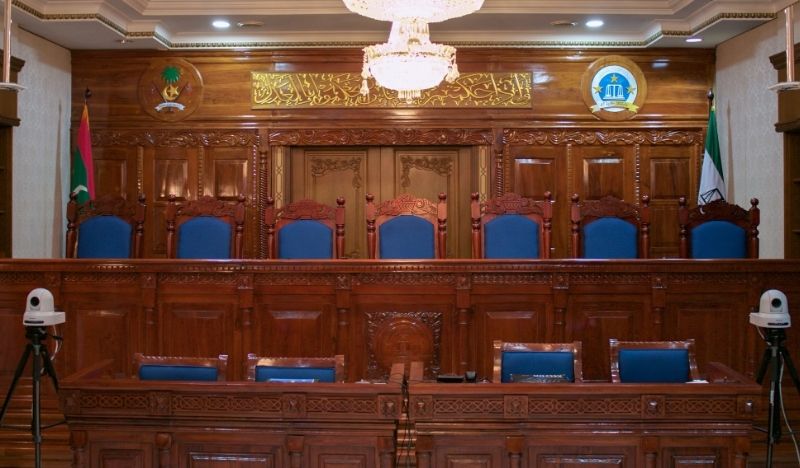
Supreme Court
President Dr Mohamed Muizzu said today that the government intends to re-establish the Judicial Council and end the current arrangement where the Department of Judicial Administration (DJA) operates under the Judicial Service Commission (JSC), as part of wider judicial reforms.
Speaking at a press conference held at the President’s Office, he said the previous Maldivian Democratic Party (MDP) administration made several changes that influenced the judiciary. He said one of the key decisions involved placing the DJA under the JSC, which he described as an arrangement that could allow indirect government influence over judicial matters.
advertisement

“As part of our judicial reform, we intend to amend the situation where the DJA is under the control of the JSC, and revert it to the way it was originally under the Judicature Act and the Courts Act,” he said.
Muizzu noted that a Judicial Council previously existed but was dissolved in 2011 during the first MDP administration. He described the council as a professional body made up of the Chief Justice, Supreme Court judges, and the chief judges of the High Court and superior courts, formed to facilitate technical discussions within the judiciary.
The President said the government would introduce legislative changes to re-establish the Judicial Council and restructure accountability within the judicial system. He added that he wanted the DJA to be accountable to the Chief Justice and the Judicial Council.
He said transferring accountability of the Chief Judicial Administrator to the Judicial Council and Chief Justice would strengthen the court system. He also said he intended to reform the current structure in island courts, where administrative heads hold significant authority, adding that judges should instead remain the highest judicial authority while administrators handle administrative functions.
However, Muizzu said the results of the 4 April referendum, alongside the local council and Women’s Development Committee elections, showed that the public does not support reforms that require constitutional amendments.
He said the government would respect the outcome and would not pursue further constitutional changes beyond those already outlined. He added that ongoing reform plans include setting a fixed number of parliamentary seats and introducing quotas for women and young people in Parliament through legal amendments.