

Minister Saeed Blames Dollar Black Market Price Hikes on News Headlines
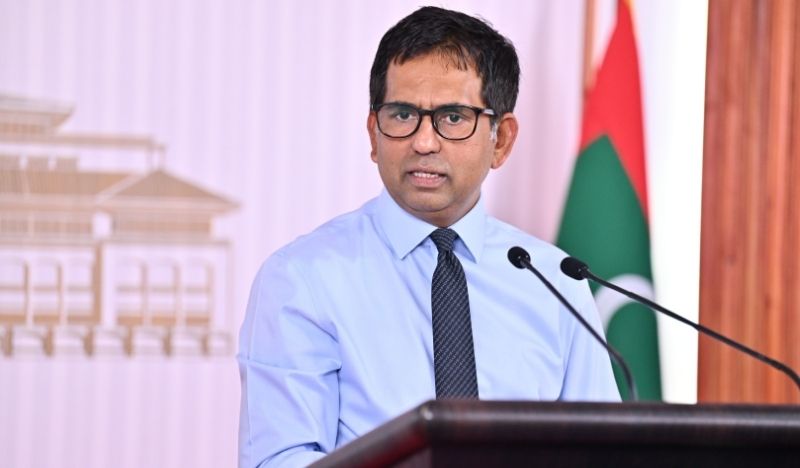
Minister of Economic Development, Transport and Trade Mohamed Saeed speaking at a press conference held at the President’s Office on July 14, 2026 | Photo: President’s Office
Economic Minister Mohamed Saeed has acknowledged the existence of a dollar black market in the Maldives but claimed that headlines published by some news outlets are contributing to daily increases in the unofficial exchange rate.
Speaking on state media’s programme Iqthisaadhuge Dhe Faraiy (Two Sides of the Economy) last night, Saeed said he had heard reports of the dollar rate fluctuating between MVR 21, MVR 22 and MVR 23.
advertisement

Saeed criticised reports that publish the black-market dollar rate in headlines, arguing that such coverage creates panic and can influence the market.
“When you wake up in the morning, there might be a headline stating today’s dollar rate is MVR 22. Doing that causes a larger blunt impact on a small economy like ours,” Saeed said.
The minister characterised such reporting as an attempt to create panic, spread what he described as “fake news” and manipulate the market.
His comments come as the unofficial exchange rate has reached a record level. USD black-market rate tracking platforms currently show the dollar trading at around MVR 22.23, significantly above the official selling rate of MVR 15.42 set by the Maldives Monetary Authority (MMA).
The latest unofficial rate is MVR 6.80 higher than the official rate, representing a premium of approximately 44 per cent.
The black-market rate has also surpassed the peak recorded during the COVID-19 period under the administration of former President Ibrahim Mohamed Solih, when the dollar reached MVR 18.80. The rate stood at around MVR 19 towards the end of Solih’s term.
The unofficial rate has continued to climb since 2024, rising from around MVR 20.70 last year to MVR 21.75 earlier this week before reaching approximately MVR 22.22 today.
Developments at the Bank of Maldives (BML) and figures from the MMA indicate that the country’s foreign currency constraints extend beyond demand for online services and overseas purchases.
The pressure is also linked to sovereign debt repayments, the Maldives’ high dependence on imports and the need to allocate limited foreign currency among households, students, businesses and essential public needs.