

Majlis Unanimously Approves Landmark Bill Legalizing Homeschooling in the Maldives
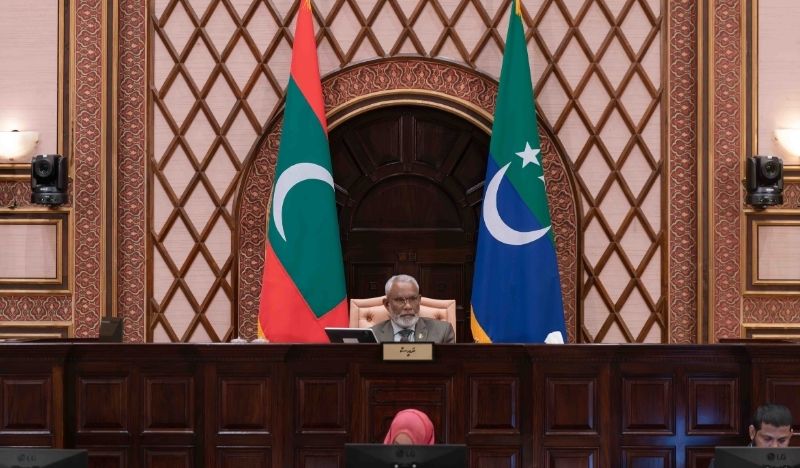
The People’s Majlis today, unanimously voted to accept a government-sponsored amendment to the Education Act establishing the Maldives’ first statutory framework for homeschooling, even as the legislation triggered fierce debate over wealth discrimination, religious radicalization, and child safeguarding.
Sponsored on behalf of the administration by Huraa MP Dr Anaara Naeem, the bill passed its first reading with a 41–0 vote and was forwarded to committee for detailed review.
advertisement

advertisement

The proposed legislation amends the Education Act to permit parents to educate children outside conventional school settings under specified conditions, primarily targeting students with severe physical disabilities, debilitating mental health challenges, or other exceptional circumstances.
Under the amendments, children whose severe developmental conditions preclude participation in both traditional classrooms and structured home education frameworks would also be granted exemptions from compulsory education mandates.
Additionally, the bill statutorily anchors the start of the national academic year in January while empowering the Ministry of Education to set tutor standards, track student learning outcomes, and oversee curriculum adherence.
Despite securing unanimous passage on the floor, the bill drew sharp criticism from opposition and independent lawmakers during preliminary debate, centered on equity and ideological abuse.
Kanditheemu MP Ameen Faisal warned that Section 16(b)(2), which requires parents or guardians to formally demonstrate the financial capacity required to sustain home instruction before obtaining approval creates an exclusionary, two-tier system.
“Imposing financial capacity as a statutory condition for homeschooling is discriminatory,” Ameen Faisal argued. “This requirement risks disenfranchising and completely depriving children from families in need who genuinely require alternative learning arrangements.”
Lawmakers also sounded alarms regarding child welfare and oversight enforcement. Galolhu South MP Meekail Naseem cautioned that weak regulatory safeguards could be weaponized by hardline religious elements who oppose formal secular schooling.
“There are currently many individuals adhering to extremist ideologies who keep their children out of school,” Meekail said, questioning the bill’s reliance on island councils for monitoring.
“The regulatory mechanism established under this bill is exceedingly weak. It delegates this responsibility to local councils, raising serious questions over whether this oversight can function effectively in practice.”
Hanimaadhoo MP Abdul Ghafoor Moosa challenged the government’s underlying research, asserting that national educational policy should prioritize training qualified teachers and modernizing school infrastructure rather than fragmenting delivery models without rigorous empirical study.
Beyond the chamber, the legislation has sparked sharp political resistance.
Maldivian Democratic Party (MDP) Chairperson and former President Mohamed Nasheed called for public demonstrations against the measure, branding the initiative a “Concubine Bill” (Jaariyaa Bill).
Opponents and rights advocates contend that the proposed homeschooling provisions offer a legal loophole that could be exploited to systematically withdraw young girls from formal classrooms, isolating them from public life and pushing them into domestic servitude.