


PG Seeks Death Penalty for 17, Life Without Parole for 94 Under Amended Drugs Act
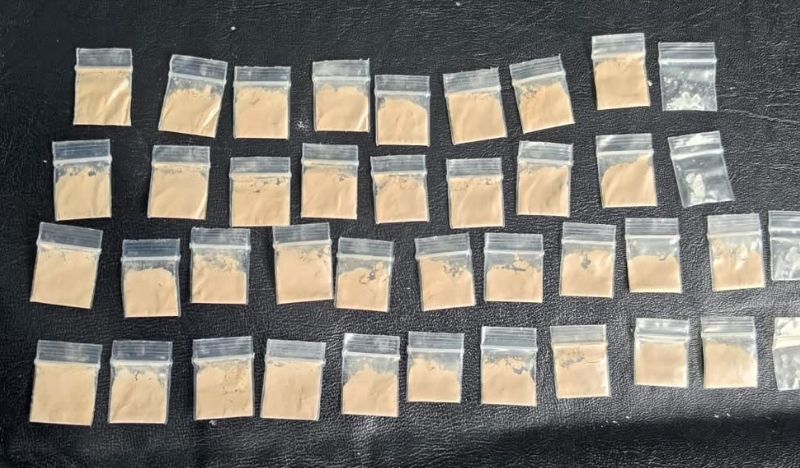
Suspected illicit drugs confiscated during an earlier police operation. | Photo: Maldives Police Service
The Prosecutor General’s Office (PGO) has sought the death penalty against 17 individuals across 11 separate cases since landmark amendments to the Drugs Act came into effect on March 6, 2026.
During the eight months following the enforcement of the Third Amendment to the Drugs Act, prosecutors have taken a hard line against major trafficking rings, initiating capital charges against 17 defendants and pursuing non-commutable life sentences for another 94 suspects, official Right to Information (RTI) records obtained by MV+ show.
advertisement

advertisement

According to official PGO disclosures, all 11 capital cases remain in preliminary stages and are currently pending before courts of first instance.
None of the 11 capital trials have concluded, and no death sentences have been handed down to date.
As a result, no cases have reached the mandatory final sentencing review before the Supreme Court of the Maldives. Under the amended law, capital punishment cannot be carried out unless the full bench of the Supreme Court unanimously determines that the sentence is warranted.
In addition to capital cases, the PGO confirmed that 94 suspects are standing trial under provisions carrying mandatory life imprisonment without parole. Verdicts in those cases also remain pending.
Under the amended legal framework, all 111 individuals facing either capital charges or life without parole are legally precluded from plea agreements or charge reductions.
The PGO noted that no plea bargain applications or sentence reduction requests have been submitted by the defendants, resulting in zero agreements or reductions granted since the provisions took effect.
The amended law, which applies capital punishment to trafficking offenses exceeding 350 grams of cannabis, 250 grams of diamorphine (heroin), or 100 grams of other Schedule One illicit drugs, replaced the previous 25-year maximum ceiling under the Drugs Act. Life sentences now require imprisonment for the remainder of a convict’s natural life, removing eligibility for parole, sentence alterations, or presidential pardons.
On April 23, Minister of Homeland Security, Labour and Technology Ali Ihusaan addressed concerns during a press conference at the President’s Office, denying that the administration was using capital punishment to drum up public support. Ihusaan said enforcement will proceed once the Supreme Court settles the procedural framework governing executions.
The policy shift has triggered sharp pushback from human rights groups. On April 19, a coalition of ten international and local non-governmental organizations including Human Rights Watch, the International Federation for Human Rights, Harm Reduction International, and the Maldivian Democracy Network, issued a joint statement urging the government to scrap the measures. The groups called on Maldivian authorities to maintain the moratorium, repeal the drug-related capital provisions, and work toward the full abolition of the death penalty.
Official figures released by the Drug Court for September this year show that 1,118 individuals are currently undergoing court-mandated rehabilitation across various treatment phases. Of those bound by court orders, 629 individuals have been in treatment for under a year, while 375 people have been enrolled in rehabilitation programmes for between one and three years.
According to police statistics, law enforcement authorities have logged 2,197 drug-related cases so far this year, exceeding the total of 2,066 cases recorded throughout the entirety of last year.