

Converting Project Ayla Into SEZ Cost Maldives USD 70 Million in Annual Tax Revenue, Says Shamheed
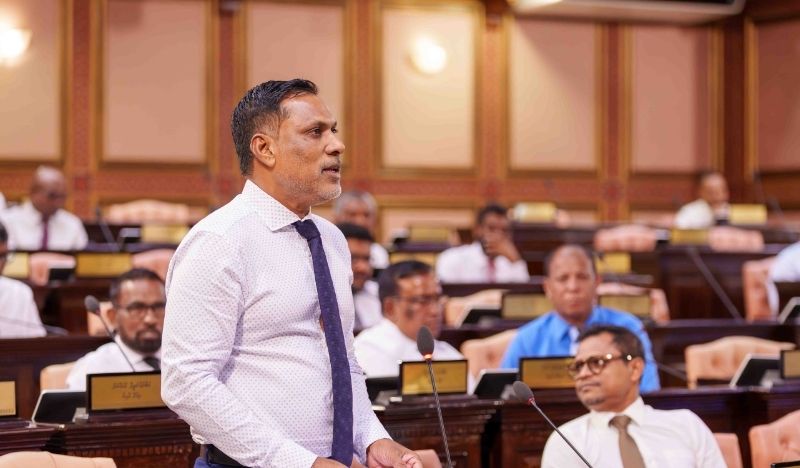
South Hulhumalé MP Dr Ahmed Shamheed. | Photo: People’s Majlis
South Hulhumalé MP Dr Ahmed Shamheed has claimed that converting Project Ayla in Noonu Atoll into a Special Economic Zone (SEZ) has cost the Maldives around USD 70 million in annual tax revenue that the State would otherwise have received under the original development arrangement.
Speaking on Raajje TV, Shamheed criticised the changes made to the project under the current government, arguing that the original plan formulated during the previous Maldivian Democratic Party (MDP) administration would have secured tax revenue for the State.
advertisement

advertisement

He said he opposed the decision to designate the development as an SEZ, alleging that the government had amended the legal framework at the investor’s request and surrendered revenue that the country was entitled to collect.
Shamheed said large-scale foreign investment projects such as Ras Malé might be necessary when the Maldives has no other options, but stressed that each project must be assessed based on its terms and benefits to the country.
He distinguished Ras Malé from Project Ayla, arguing that the latter’s arrangement gave foreign operators extensive control over a development comparable in size to Kulhudhuffushi, with limited opportunities for Maldivians to reside there. He also questioned the level of Maldivian state oversight over the project.
The USD 70 million figure cited by Shamheed was not independently verified in his remarks.
Project Ayla and the SEZ arrangement
Project Ayla is a proposed USD 790 million development in Noonu Atoll, covering Dhigufaru, Dhekenanfaru and Kuramaadhoo Falhu. The project, developed by Crystal Holdings Private Limited, was designated a Special Economic Zone in December 2025.
The planned development includes luxury residences, a resort, a marina, healthcare and hospitality education facilities, and agriculture and aquaculture projects. The SEZ framework is intended to attract foreign investment through incentives and a dedicated regulatory arrangement.
Shamheed’s criticism centres on the change from the original development plan and the tax concessions he says followed the SEZ designation. His remarks raise questions about the public revenue the Maldives may receive from major foreign investments and the terms under which such projects are approved.
Ras Malé also faces scrutiny
His comments come amid continuing debate over Ras Malé, the government’s major development project with UAE-based Eagle Hills.
The project envisages a large-scale waterfront and marina development on reclaimed land, with residential, commercial and tourism facilities. Under the announced arrangement, approximately 500 hectares are allocated for the development under a long-term lease.
The government has said Ras Malé will generate revenue through taxes, a 10 per cent share of commercial property sales revenue and a four per cent fee on property transactions. President Dr Mohamed Muizzu has maintained that the land is being leased rather than sold.
However, opposition figures and other critics have questioned the agreement’s terms, the length of the lease and the extent of public disclosure. The government has defended the project as a means of attracting investment, creating jobs and expanding housing opportunities.
Shamheed’s remarks highlight the broader debate over whether the benefits of major foreign-backed developments justify the incentives offered to investors, particularly where tax revenue and the State’s long-term control are concerned.