

Gov’t Spending Rises 19 Percent as PSIP Expenditure Falls 30 Percent
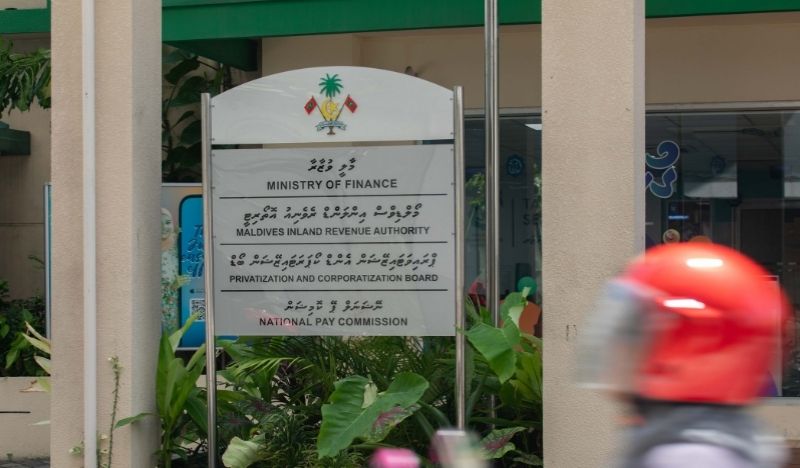
Name board with several government offices, including the Ministry of Finance | Photo: MV+
The Maldives’ fiscal position moved into deficit this year as government expenditure grew considerably faster than revenue, according to the Ministry of Finance and Public Enterprises’ latest Weekly Fiscal Developments report.
Cumulative revenue and grants reached MVR 27.12 billion by 13 August, an increase of 10.4 percent from MVR 24.56 billion during the corresponding period last year. However, expenditure rose by 19.3 percent to MVR 28.07 billion from MVR 23.54 billion.
advertisement

advertisement

The difference resulted in an overall deficit of MVR 950.3 million, reversing the MVR 1.02 billion surplus recorded at the same point in 2025. This represents a deterioration of nearly MVR 1.97 billion in the fiscal balance.
The primary balance, which excludes financing and interest costs, remained in surplus at MVR 2.38 billion. However, it was 41.6 percent lower than the MVR 4.07 billion primary surplus recorded last year. Financing and interest costs increased by 9.1 percent to MVR 3.33 billion.
Tax collections accounted for most government income, reaching MVR 21.07 billion and representing nearly 78 percent of total revenue and grants. This was an increase of 11.9 percent compared with the same period in 2025.
Business and property tax revenue rose by 20.6 percent to MVR 5.44 billion, while Goods and Services Tax collections increased by 7.9 percent to MVR 10.73 billion. Tourism Goods and Services Tax generated MVR 7.25 billion, compared with MVR 6.80 billion last year, and was also the largest source of additional revenue during the latest week.
Non-tax revenue grew at a slower rate, increasing by 1.9 percent to MVR 5.59 billion. Property income rose to MVR 1.68 billion, supported by higher resort rent and land acquisition and conversion fees. However, fees and charges declined to MVR 2.25 billion from MVR 2.53 billion.
The sharper rise in expenditure was primarily concentrated in recurrent spending, which increased by 20.9 percent to MVR 24.50 billion. Recurrent expenditure accounted for more than 87 percent of total spending during the period.
Administrative and operational expenses rose by 27.4 percent to MVR 15.04 billion. Within this category, subsidy expenditure increased by 78.4 percent, reaching MVR 3.49 billion from MVR 1.95 billion last year. The Ministry identified subsidies as the largest source of additional expenditure during the latest week.
Spending on salaries, wages and pensions also increased by 11.2 percent to MVR 9.38 billion.
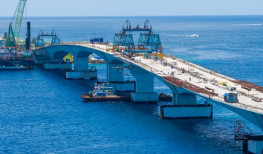
Capital expenditure reached MVR 3.57 billion, up 9.1 percent from the corresponding period last year. However, expenditure under the Public Sector Investment Programme fell by 30 percent to MVR 3.62 billion, largely reflecting lower spending on transport infrastructure.
Transport infrastructure expenditure declined from MVR 3.59 billion to MVR 1.21 billion. In contrast, spending increased in areas including land management, public housing, water and sanitation, and primary and secondary education.
Loan repayments, which are reported separately and are not included in the overall expenditure calculation, rose from MVR 3.94 billion to MVR 9.72 billion.
Government securities outstanding stood at MVR 99.01 billion as of 10 August, of which MVR 97.46 billion consisted of domestic instruments and MVR 1.54 billion was classified as external instruments.
The Ministry noted that expenditure figures reflect posted transactions, which may not yet have been settled in cash. Revenue and expenditure data may also change as reconciliation work continues.