

Majlis Committee to Summon Parole Board Over Controversial Release of Drug Kingpin ‘Abucha’
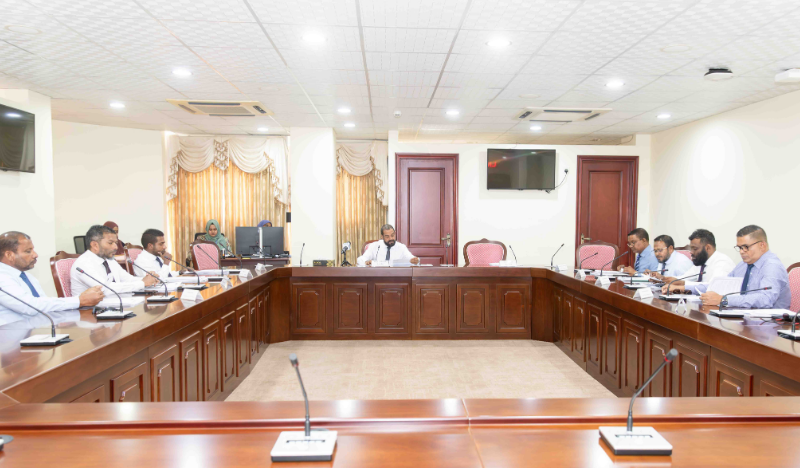
The Judiciary Committee of the People’s Majlis — Photo: Majilis
The Judiciary Committee of the People’s Majlis has voted unanimously to summon members of the Parole Board for questioning following the brief, unlawful release of convicted drug kingpin Abdulla Ibrahim (Abucha).
The parliamentary inquiry was launched following a submission by Galolhu North MP Mohamed Ibrahim, who called for a thorough review of the administrative proceedings that led to the convict’s conditional release.
Abucha was sentenced to 25 years in prison in May last year after being convicted of attempting to import 98.6 kilograms of illicit narcotics into the Maldives.
Under the Prisons and Parole Act, inmates serving prison sentences become eligible for parole upon fulfilling specific conditions, including completing a required portion of their sentence, demonstrating good conduct, undergoing rehabilitation, and posing no threat to public safety.
The Prosecutor General’s Office had initially filed two charges against Abdulla Ibrahim carrying a combined maximum penalty of 50 years imprisonment (25 years for each charge).
However, following a guilty plea, the court reduced the sentence by half through a plea deal, handing down a total of 25 years alongside a fine of MVR 100,000.
After deducting time spent in pre-trial detention, his remaining custodial term was set at 21 years.
Under Article 131 of the Prisons and Parole Act, parole eligibility for major drug offences is calculated based on serving half of the longest single sentence, which equals 6.25 years rather than the aggregate total.
Although Abucha had served roughly six years in custody, authorities found that the statutory eligibility timeframes had been improperly calculated.
Upon becoming aware of the release, Minister of Homeland Security and Technology Ali Ihusan instructed the Parole Board to review its decision. The board subsequently revoked the parole, and Abucha was re-arrested and returned to Maafushi Prison on 6 October.
In the aftermath of the oversight, President Dr Mohamed Muizzu dismissed nine members of the Parole Board. The government noted that initial reviews showed no deliberate malice or corrupt intent on the part of the board members.
During yesterday’s committee meeting, lawmakers across party lines emphasised that administrative dismissals alone do not address institutional failings.
Ruling People’s National Congress (PNC) MP for Hulhudhoo, Mohamed Shahid, stressed that Parliament has a constitutional duty to investigate how a high-profile convict was allowed back into the community.
“Simply removing the individual tasked with that responsibility or dismissing the person from their post does not resolve this issue,” Shahid stated, calling for complete transparency regarding the board’s decision-making process.
The Judiciary Committee has requested the full administrative file from the Ministry of Homeland Security and Technology and will hear testimony from all board members who served when the release was approved.
The third amendment to the Drugs Act, introducing the death penalty for those convicted of smuggling drugs into the Maldives, came into effect on 6 March. Under the new provisions, the Supreme Court of the Maldives may impose the death penalty if it unanimously determines that the sentence is warranted. The law applies to those trafficking more than 350 grams of cannabis, 250 grams of diamorphine (heroin), or 100 grams of other illicit drugs.
The legislation also removes the previous 25-year maximum prison sentence under the Drugs Act. It amends life sentences to mean imprisonment for the remainder of a convict’s natural life. Life imprisonment without parole now applies to individuals convicted of serious drug offenses, while offenses punishable by life imprisonment or death cannot be reduced, altered, or pardoned. Plea agreements are no longer permitted in such cases.