

Maldives Advocates for Capacity-Driven Commonwealth Partnerships
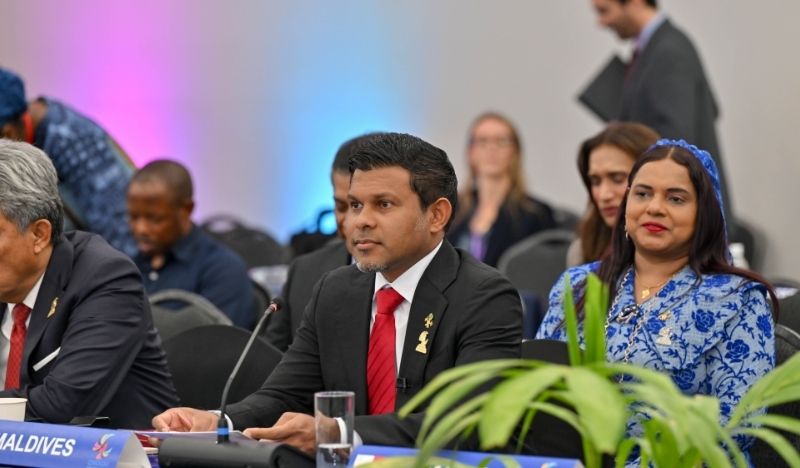
For the Maldives, he linked these partnerships to the Government’s ambition to achieve developed-nation status by 2040. | Photo: The President’s Office
Commonwealth partnerships should build the institutions and skills countries need to pursue their own development goals, Vice President Hussain Mohamed Latheef has said, calling for cooperation that supports greater national self-reliance.
Addressing Executive Session II of the Commonwealth Heads of Government Meeting (CHOGM) in St John’s, Antigua and Barbuda, the Vice President outlined three priorities for more resilient partnerships: strengthening institutional capacity and empowering people to lead, respecting national objectives and encouraging self-reliance, and turning shared challenges into collective action.
advertisement

advertisement

He said cooperation should develop lasting capacity beyond immediate needs, while respecting national interests and allowing each member state to determine its own development path. A stronger Commonwealth, he said, would enable every nation to build on its own strengths.
The approach places national development priorities at the centre of cooperation. The Vice President called for members to share expertise, provide practical support and develop joint solutions in areas ranging from climate resilience to digital transformation.
For the Maldives, he linked these partnerships to the Government’s ambition to achieve developed-nation status by 2040. He highlighted targets for the digital economy to contribute 15 per cent of GDP by 2030 and for renewable sources to account for 33 per cent of the country’s energy by 2028.
The Vice President described these goals as part of President Dr Mohamed Muizzu’s vision for a more resilient Maldives. He said people, particularly young people, would both drive national development and benefit from it, making investment in their skills, knowledge and opportunities central to achieving that vision.
He also highlighted the external pressures that can limit countries’ ability to pursue long-term goals. Global supply chain disruptions and economic uncertainty, he said, continue to constrain investment and development capacity.
Against those pressures, the Vice President called for Commonwealth partnerships that support national efforts through stronger institutions, practical cooperation and collective responses to shared problems.