
Maldives Establishes Emissions Monitoring Framework Under Climate Emergency Act
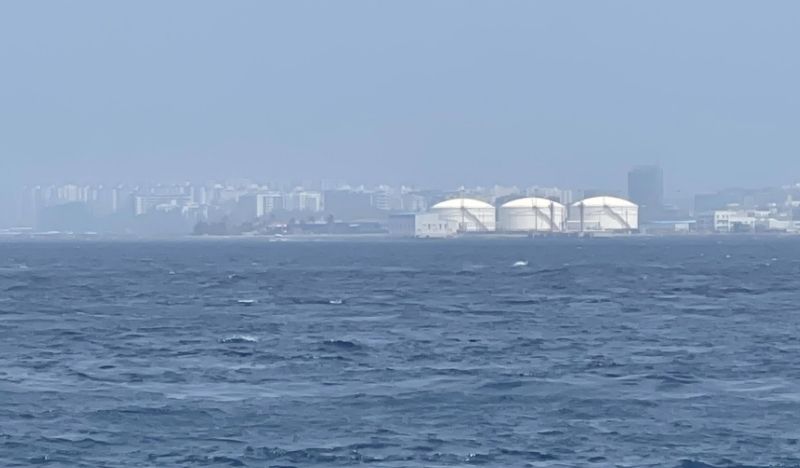
Haze from pollution over Hulhumale earlier in 2026. | Photo: MV+
The government has published new regulations establishing a national framework for measuring and verifying greenhouse gas emissions, marking a key step in implementing the Maldives’ Climate Emergency Act.
Published in the Government Gazette on Thursday, the regulations came into effect immediately and will be implemented by the Ministry of Climate Change, Environment and Energy.
advertisement

According to the regulation, it sets out the administrative procedures for measuring, recording and verifying the volume of greenhouse gases emitted into the atmosphere by the Maldives. It also establishes how emissions data will be collected, shared among relevant government agencies and verified.
The framework is intended to support the country’s efforts to measure and manage greenhouse gas emissions by defining the processes required for emissions monitoring, reporting and verification.
The regulation also provides a standardised system for collecting data from relevant sectors and institutions, enabling the government to develop a more comprehensive national greenhouse gas inventory and strengthen climate policy planning.
The publication comes as air quality has increasingly become a public concern in the Maldives, with haze from large-scale forest and peatland fires in neighbouring countries periodically affecting visibility and air quality across the archipelago.
Environmental advocates and several public figures have called on the government to pursue bilateral discussions with countries identified as major sources of transboundary haze pollution. They have argued that, while the Maldives contributes only a small fraction of global greenhouse gas emissions, the country remains vulnerable to air pollution originating beyond its borders.