

Nasheed Warns MDP Against Embracing Xenophobic and Ultra-Nationalist Rhetoric
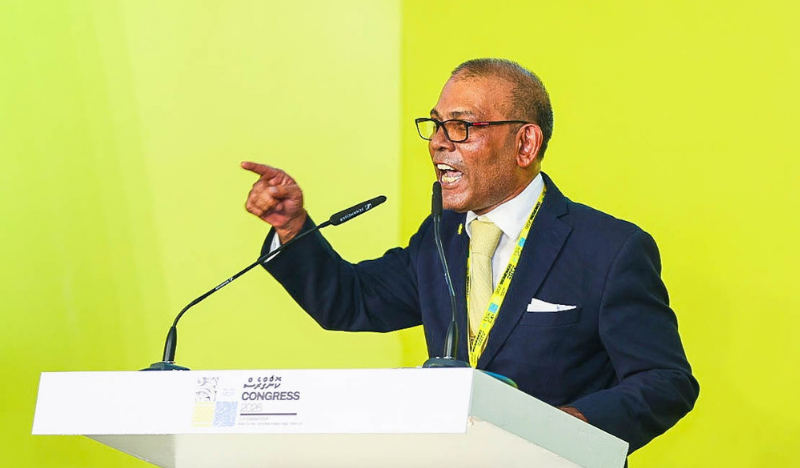
MDP Chairperson and former President Mohamed Nasheed — Photo: MDP
Maldivian Democratic Party (MDP) Chairperson and former President Mohamed Nasheed has sounded a sharp alarm over the main opposition party’s political trajectory, warning that a growing willingness to adopt xenophobic, populist, and ultra-nationalist narratives risks eroding its foundational identity and alienating its core electorate.
In a post shared on X, Nasheed expressed “serious concern” that the MDP is drifting away from the core tenets of openness, pluralism, and democratic reform that defined its founding movement.
advertisement

advertisement

The recent trajectory of the MDP is cause for serious concern. We once championed openness, pluralism, and democratic reform. Now we appear increasingly willing to embrace xenophobic and ultra nationalistic rhetoric. This is a departure from the founding ideals that defined the MDP’s political identity and inspired many of its earliest supporters. A growing number within the party seem convinced that electoral success depends on manufacturing populist outrage and mobilising public sentiment through fear and division. Yet this strategy risks undermining the very constituency that has historically sustained the MDP. Voters who are multicultural, liberal, and open minded. Alienating this core base in pursuit of short term political gains is not only misguided but strategically self defeating. It is worth recalling the campaign built around the slogan Birakaa Nulaa Majaa Kurun. Far from diminishing support, that message broadened the party’s appeal, attracting an estimated twenty thousand additional votes without significantly repelling others. By contrast, invoking religion as a political tool and promoting unfounded narratives, such as the claim that “Zionists are taking over the country”, does nothing to strengthen the party’s credibility. Such rhetoric is not only baseless; it corrodes public discourse and diminishes the seriousness of national politics. The MDP stands at a crossroads. If it continues down this path, it risks eroding its identity and forfeiting the values that once distinguished it. It is my hope that principled members will intervene to prevent the party from embracing a self destructive course. May Allah grant us the wisdom and strength to uphold integrity in our politics.— Mohamed Nasheed (@MohamedNasheed) November 1, 2026
While Nasheed did not explicitly mention a specific initiative, his remarks are widely understood to target the escalating opposition rhetoric surrounding the government’s plans to award the multi-billion-dollar “Maldives Waterfront and Marina” development to UAE-based firm Eagle Hills. Several prominent MDP members have actively campaigned against the scheme, which grants 500 hectares of reclaimed land in Ras Malé under a 99-year lease.
Nasheed cautioned against a rising faction within party ranks that prioritizes manufacturing populist outrage and fear over principled political engagement.
“A growing number within the party seem convinced that electoral success depends on manufacturing populist outrage and mobilising public sentiment through fear and division,” Nasheed wrote. “Yet this strategy risks undermining the very constituency that has historically sustained the MDP. Voters who are multicultural, liberal, and open minded. Alienating this core base in pursuit of short term political gains is not only misguided but strategically self defeating.”
Pointing to the party’s past electoral successes, the former president highlighted the MDP’s landmark campaign slogan, Birakaa Nulaa Majaa Kurun, arguing that progressive, inclusive messaging historically expanded the party’s coalition by an estimated 20,000 votes without repelling moderate supporters.
Nasheed drew a sharp contrast between that approach and recent rhetoric, criticizing the weaponization of religious sentiment and the promotion of unsubstantiated political conspiracies, specifically citing claims that “Zionists are taking over the country.”
“Such rhetoric is not only baseless; it corrodes public discourse and diminishes the seriousness of national politics,” Nasheed said, warning that exploiting these themes damages the party’s credibility.
The chairperson concluded that the party now faces a critical juncture and urged principled members to steer the organization back toward its original principles.
“The MDP stands at a crossroads. If it continues down this path, it risks eroding its identity and forfeiting the values that once distinguished it,” Nasheed stated, appealing to members to intervene and prevent the party from embracing what he described as a self-destructive course.
The warning underscores visible philosophical tensions emerging across the opposition front, standing in sharp contrast to the aggressive posture struck by other key party figures.
Former Economic Development Minister Fayyaz Ismail, who is campaigning for the MDP’s presidential primary ticket for the 2028 election with Nasheed’s backing, recently cautioned that any ruling People’s National Congress (PNC) figure participating in secretive land deals would “forever be branded a traitor.”
He further pledged that a future MDP government would unilaterally revoke agreements executed without public consent, warning that major global powers could exert undue coercion over a small island developing nation.
Other contenders vying for the party’s presidential primary ticket have adopted an identical stance, presenting a united opposition front against the government’s flagship land concessions despite Nasheed’s call for moderation.