


New ‘National Intelligence Service’ Name Could Cause Confusion, Warns Former CP Hameed
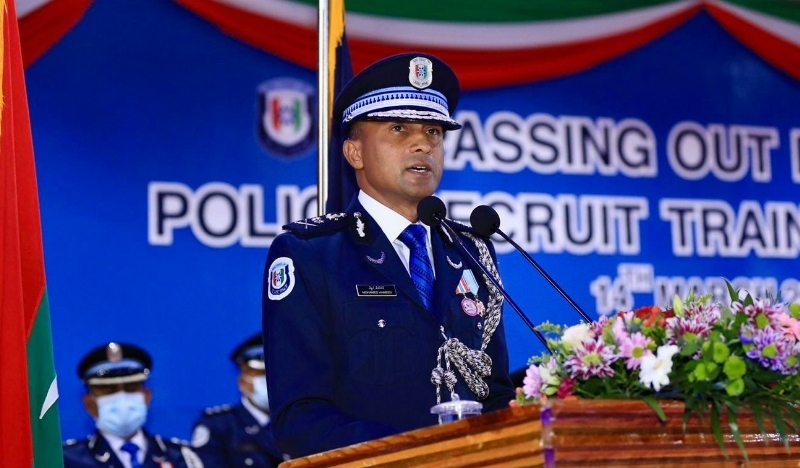
Former commissioner of police Mohamed Hameed addressing police graduates during a ceremony in 2021.
Former Commissioner of Police Mohamed Hameed has criticised the Maldives Police Service’s decision to rename its intelligence division as the “National Intelligence Service”, warning that the move could create confusion about the role and authority of the police within the country’s security framework, as well as amongst external partners.
The concerns were raised in a Medium post published after the Maldives Police Service announced a major organisational restructuring yesterday, that included the creation of a command-level unit named the National Intelligence Service.
advertisement

Hameed said the issue was not whether police should maintain a strong intelligence capability, but rather the implications of describing a police intelligence function as a national intelligence service.
“A modern police service needs a professional intelligence function to support investigations, crime prevention, public safety, counter-terrorism work, organised crime responses and internal security,” he wrote.
ގައުމުގެ ސަލާމަތީ މަންޒަރު، ދައުލަތުގެ ވެރިންނަށް ބުނެދިނުމުގައި އިންޓެލިޖެންސް މަސައްކަތްކުރާ ވަކިވަކި މުއައްސަސާތައް ނުހަނު މުހިއްމުވާއިރު، ފުލުހުންގެ އިންޓެލިޖެންްސްގެ ނަން”ނެޝަނަލް އިންޓެލިޖެންސް ސަރވިސް“ އަށް ފުލުހުން އަމިއްލައަށް ބަދަލުކުރުން ގޯސް! https://t.co/kt7OYeAgD8— Mohamed Hameed (@M_Hameedh) June 2, 2026
“But there is a clear difference between having a strong police intelligence function and calling it a national intelligence service.”
According to Hameed, the designation could create the impression that the police are assuming an apex national intelligence role, despite the absence of legislation establishing such a body or defining its mandate, authority and oversight mechanisms.
He argued that a national intelligence service cannot be created through an internal restructuring exercise and should instead be established through legislation, policy development, consultation and democratic oversight.
“Without that legal foundation, the name itself becomes problematic,” Hameed said, warning that it could create confusion both within Maldivian security institutions and among international partners engaged in intelligence and security cooperation with the Maldives.
The former commissioner also stressed that intelligence gathering and analysis in the Maldives has traditionally been shared among multiple institutions, including the police, the Maldives National Defence Force, Customs and Immigration.
He said national security threats such as terrorism, organised crime, cyber threats, narcotics trafficking, maritime security and border risks cut across institutional boundaries and require coordination between agencies rather than the elevation of a single institution.
Hameed argued that the country’s priority should be establishing a formal national intelligence coordination framework that clearly defines institutional responsibilities and information-sharing mechanisms.
“There must be clarity on who collects what, who analyses what, who shares what, who leads on which threat, and how intelligence is elevated to national leadership,” he wrote.
The comments follow the Maldives Police Service’s announcement of a new 14-command organisational structure aimed at strengthening administrative management and operational efficiency.
Under the new framework, the police intelligence function has been reorganised under a command-level division named the National Intelligence Service. Other command-level divisions include the Office of the Commissioner, Professional Standards, Central Investigations, Forensic Services, Internal Security and Operational Support, and regional policing commands.
Police have said the restructuring is intended to improve coordination between divisions, strengthen operational effectiveness and support a more community-oriented policing approach.