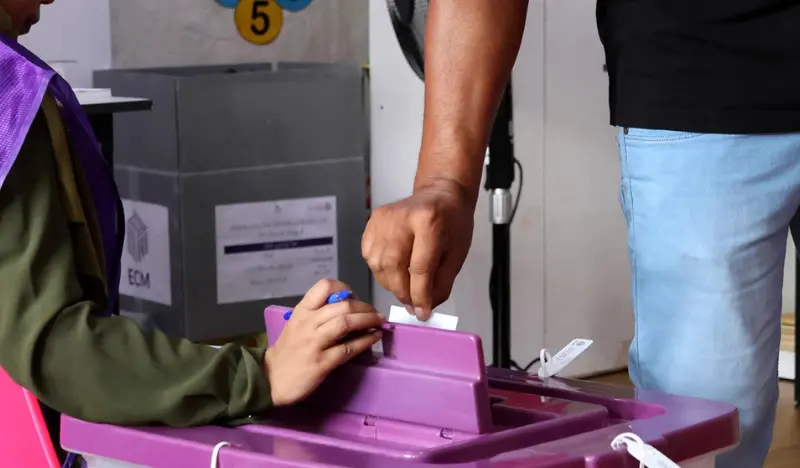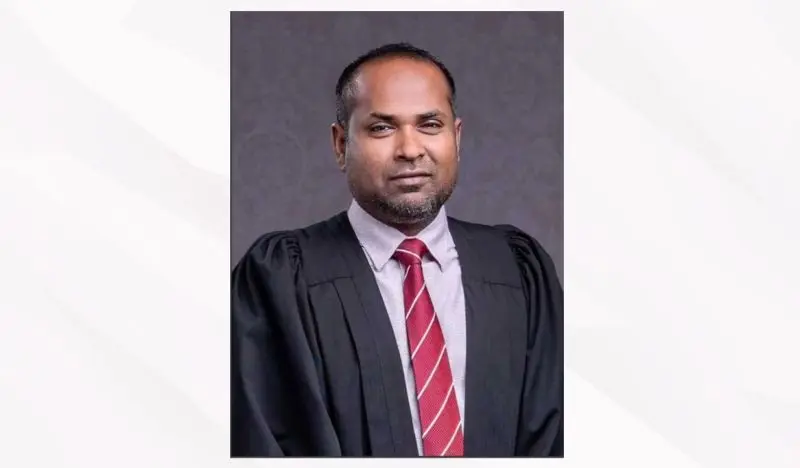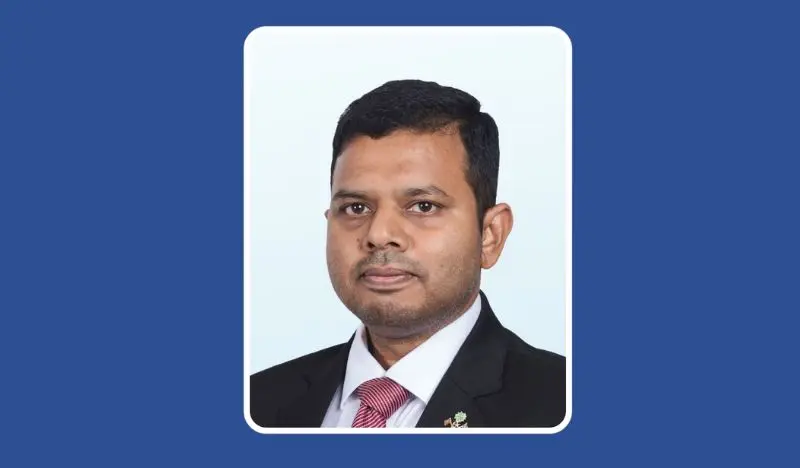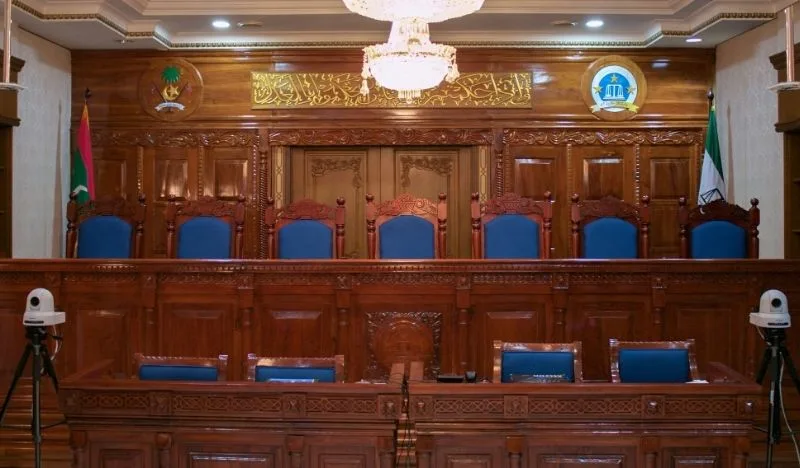

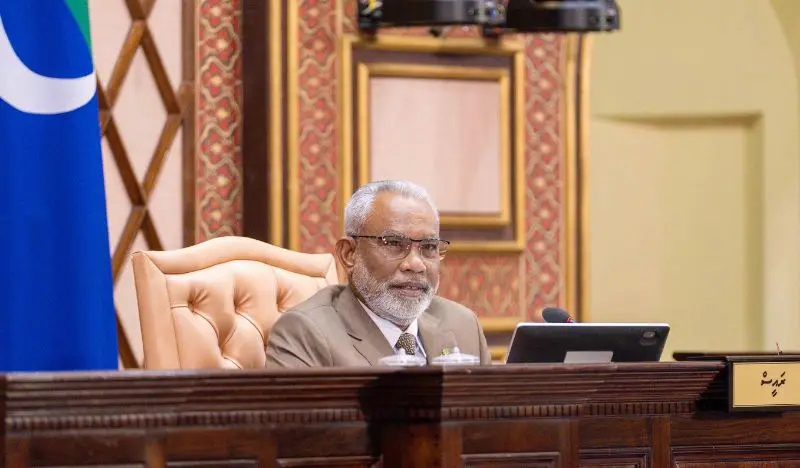
The People’s Majlis voted today to extend its ongoing third parliamentary session until December 15 in order to complete legislative work on four high-profile, controversial government bills currently at the committee stage.
The motion to extend the session was proposed at the start of today’s sitting by Speaker of Parliament Abdul Raheem Abdulla. When put to a vote during the afternoon sitting, the extension passed with 43 votes in favor and 11 against out of 54 participating members. The four bills, submitted by the administration on November 9 cover real estate regulation, capital punishment, defamation damages, and immigration.


Under the Standing Orders of the People’s Majlis, the parliamentary calendar is structured into three sessions per year:
- First Session: 1 February to 15 May (convened annually with the Presidential Address)
- Second Session: 1 June to 15 August
- Third Session: 1 October until the end of November
During the previous second session, Parliament extended its regular August 15 deadline twice, first to August 20 and subsequently to August 27, holding its final sitting on August 26 to clear pending legislative work before entering its scheduled recess.
The proposed Real Estate Bill, which has already been opened for public and political party consultation, seeks to establish a statutory framework to regulate property developers, govern transactions, and introduce buyer protection mechanisms across commercial and residential developments. Its core objectives include instituting mandatory developer registration and operational standards, defining contractual and financial safeguards for unit buyers, establishing state compliance monitoring, and promoting transparency across the expanding real estate sector.
Alongside the real estate legislation is a new 50-page Maldives Immigration Bill that enforces a permanent ban on entry into the Maldives for Israeli passport holders.
The government has also introduced a landmark bill establishing a statutory framework for sentencing and enforcing the death penalty, officially designating hanging as the method of capital punishment. Sponsored on behalf of the administration by Guraidhoo MP Hanan Mohamed Rasheed, the legislation outlines procedural guidelines balancing constitutional mandates, international standards, and the rights of victims and convicts.
Under the bill, executions will be barred from public view and carried out by the Maldives Correctional Service under the direction of a seven-member oversight panel, which must set the exact execution date and time within 30 days of its formation.
Rounding out the legislative package is the Bill on the Right to Protection of Name and Reputation, sponsored by Vilimalé MP Mohamed Ismail, which allows defamation claims of up to MVR 500,000 in damages.
The bill broadly defines defamation to cover any representation that causes a person to be ridiculed, hated, shunned, held in lower esteem, or suffer financial and commercial harm, potentially extending legal liability beyond spoken and written words to non-verbal conduct, including gestures and facial expressions.