

Parliament Passes Organ Transplant Bill After Reconsideration, Restores Ban on Detainee Donations
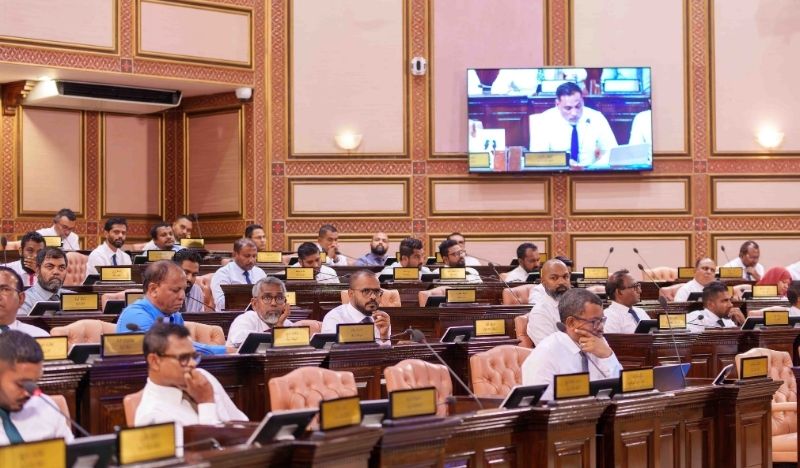
Parliament sitting on June 29, 2026 | Photo: Parliament
The People’s Majlis has passed the Human Organ Transplantation Bill with three key amendments after reconsidering the legislation following concerns raised by President Dr Mohamed Muizzu.
The bill was returned to Parliament by the President after amendments introduced during the parliamentary review process allowed individuals in detention to donate organs.
advertisement

In a letter sent to Parliament, President Muizzu expressed concern that detainees may not be in a position to provide consent for organ donation without pressure or influence due to their restricted circumstances.
“It seems unlikely that detainees are subject to special circumstances where their free will and liberty are guided, and they can consent to something like organ donation with full consent and without coercion of any kind,” the President stated in his letter.
Following the President’s request for reconsideration, the bill was sent back to the Social Affairs Committee for further review.
The committee reintroduced two subsections that had previously been removed from Section 7 of the bill. Under the revised provisions, organ donors cannot be individuals under state care, individuals suspected of a crime, or individuals serving a judicial sentence.
The President’s letter further stated that individuals in detention are in a unique situation where their personal choices and freedom are restricted, making it difficult to determine whether consent to donate an organ is provided freely and without coercion.
He also noted that even in countries where detainees and inmates are permitted to donate organs, additional criteria and safeguards are applied beyond the requirements for ordinary donors.
The President said allowing such donations without establishing additional guidelines and procedures could create challenges in implementing the law.
Other amendments introduced during the committee stage included changes to penalties for unlawful organ removal and transplantation.
The previous version of the bill included provisions requiring qisas (retaliatory punishment in kind) and diya (blood money) in cases where an organ was removed without consent or transplanted unlawfully.
These provisions have now been removed, with the revised bill stating that such offences will carry a fine between MVR 150,000 and MVR 250,000, along with imprisonment ranging from 12 to 18 months.
The bill was also amended regarding the timeframe for drafting regulations. While the earlier version stated that regulations must be formulated within 180 days of ratification, this was changed due to inconsistencies with other provisions of the legislation.
Under the revised wording, regulations must be formulated within 180 days from the date the law comes into effect.
The bill states that the law will come into effect 180 days after ratification, and that an Organ Transplant Council must be established within 60 days from the date the law takes effect.
After the Social Affairs Committee’s report containing the amendments was presented to the floor, the bill was passed unanimously with all 58 members present voting in favour.