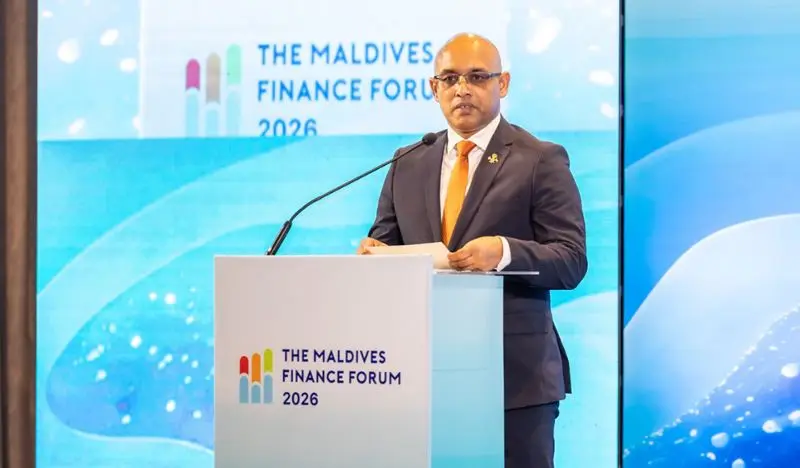

The Maldives must prioritise environmentally sustainable investments to strengthen its economic resilience and protect the financial security of future generations, the Chief Executive Officer of the Maldives Pension Administration Office, Yazmeed Mohamed, has said.
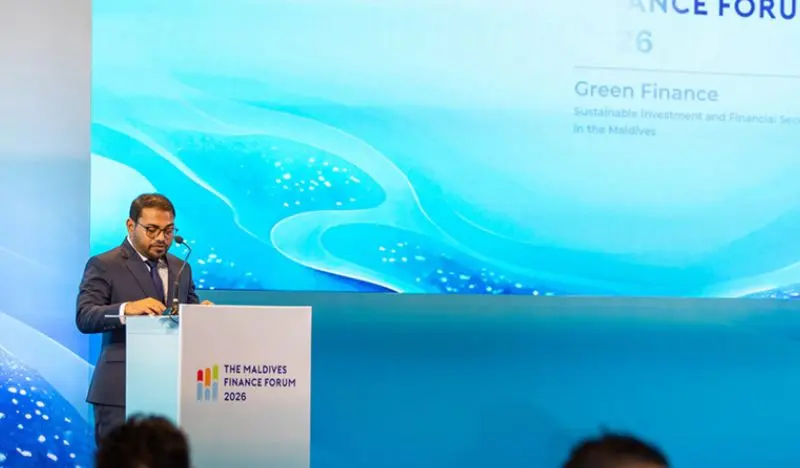
Delivering the opening address at the 13th Maldives Finance Forum at DusitD2 Feydhoo Maldives, Yazmeed outlined the direct link between climate threats and long-term pension stability. The Pension Office and UNDP Maldives jointly organised the event under the theme Green Finance: Sustainable Investment and Financial Security in the Maldives.


Yazmeed noted that approximately 80 per cent of Maldivian islands sit less than one metre above sea level. He warned that climate-related damage to vital sectors—including fisheries, tourism, and small businesses—would reduce household incomes, disrupt pension contributions, and heighten financial risks.
“Strengthening the resilience of the national economy is not a secondary option for us. It is a mandatory prerequisite to safeguarding the financial future of our members,” Yazmeed told delegates.
As the country’s largest institutional investor, the pension fund surpassed MVR 30 billion this year. Data published on the Pension Office’s portal shows that assets under management reached MVR 30.3 billion as of 30 September 2026, with 204,549 participants enrolled in the Maldives Retirement Pension Scheme (MRPS).
“The decisions we make today will directly determine the financial security of our members and pensioners in the distant future,” Yazmeed said.
To secure long-term growth, the Pension Office is diversifying its domestic portfolio and seeking new opportunities in climate financing and projects that meet Environmental, Social, and Governance (ESG) standards. However, Yazmeed stressed that environmental goals must align with the institution’s fiduciary duties.
“Green investment does not mean abandoning financial discipline,” he said. “Every investment must operate within a strong governance framework, undergo proper risk assessment, and prove financially viable.”
He added that the office will prioritise opportunities that combine environmental sustainability with reliable financial returns.
Yazmeed also acknowledged national progress in building a sustainable finance ecosystem, citing new financing strategies, climate risk assessments, environmental reporting standards, and improved access to international climate funds. These developments create new avenues for investment in renewable energy, climate-resilient infrastructure, and the blue economy.
Despite these policy advances, Yazmeed maintained that regulations alone cannot drive change. Unlocking green capital requires bankable projects, sound financial frameworks, robust risk management, and strong investor confidence. He called on the government, regulators, financial institutions, and businesses to collaborate in building a sustainable financial system.
Held annually since 2012, the Maldives Finance Forum convenes policymakers, regulators, financial institutions, and development partners. This year’s discussions focus on identifying practical solutions, financial instruments, and strategies to overcome barriers to green finance in the Maldives over the next two to three years.